Shiraz
Shiraz
Shiraz, alongside Isfahan and Kashan, ranks among Iran's most visited cities. Discover the highlights that make this destination unmissable.
Shiraz, alongside Isfahan and Kashan, ranks among Iran's most visited cities. Discover the highlights that make this destination unmissable.
As twilight descends, the marble tomb of Hafez glows brilliantly amid the orange groves and roses the poet celebrated so eloquently in his ghazals. Beyond this monument, the cenotaphs of Saadi and Kwaju Kermani stand as places of remembrance that stir visitors' souls. Though this Zand royal capital relinquished its throne to Tehran in 1786, Shiraz maintains supreme standing in Persian art, literature, and culture. Its leafy gardens, ancient mosques, vibrant bazaar, and rich historical heritage make Shiraz an essential destination for a romantic getaway or family escape lasting a few days. Book your flight to Shiraz today and discover what awaits you on a romantic journey through Iran.
A Glimpse into History
Travelers will be captivated by this city's thousand-year past, governed by the Umayyad Caliphate from the 17th century, seized by the Safarids around 850 and the Buyids in 933, before the Safavid dynasty arrived in the early 16th century. The founder of Shiraz was Muhammad ibn Yusuf al-Thaqafi. Though its official founding dates to 693, the site's name appears in numerous prehistoric sources—witness the inscriptions on Persepolis tablets and clay impressions found among the Sassanid ruins of Qasr-e-Abu Nasr. Scholars propose a probable date around 700 B.C.
Shiraz's architecture evolved through successive dynasties. By the 10th century, it was already regarded as a significant city under Buyid rule, which controlled the entire Fars region. Trade in wine, cotton, and grain flourished. Weavers held prominent positions, preferring to sell their tapestries at Shiraz's market rather than elsewhere—a telling sign of the city's prosperity. The city entrance, which boasted a dozen districts, was defended by eight gates.
The 13th century witnessed Shiraz's cultural golden age. Under local patronage, poetry, literature, and philosophy flourished so abundantly that the city earned the honorable epithet "the Athens of Iran." Scientific knowledge advanced as well. By the late 14th century, the population had grown to nearly 70,000 residents.
The year 1762 marked a second golden age: Karim Khan, ending Safavid dominance, ascended the throne and established his capital at Shiraz. He transformed it into a royal quarter complete with a citadel, mosque, and covered marketplace. Karim Khan restored the city walls, which were unfortunately destroyed 25 years later by the Qajars. Shiraz lost its royal capital status to Tehran. Nevertheless, its prestige endured as the royal court elite made it a summer retreat, adorning it with impressive gardens and palaces.
Shiraz takes pride in being the birthplace of numerous literary giants. The city's name is inseparable from Hafez, a venerable 14th-century Sufi who elevated Persian poetry to its apex. All Iranians hold him in the highest regard, memorizing his verses and invoking his wise words in proverbial expressions. Saadi and Khaju Kermani—two celebrated writers—also hailed from Shiraz. In the second half of the 18th century, regent Karim Khan restored their respective tombs, creating structures with colonnades crowned by refined arabesque copper domes. Today, the tombs of these three poets serve as national memorials.
Today
Some 800 km from Tehran, Shiraz, capital of Fars Province, is Iran's fifth-largest city by population. It is home to approximately 1.9 million people according to the latest 2016 census. Its predominant place in Iran's tourism landscape stems from two factors. First, Shiraz boasts exceptional environmental quality: its orange groves, date palms, and palm trees are legendary. Irrigation canals enable the cultivation of diverse horticultural species, so much so that wine and flowers have become the city's principal symbols. Second, its historic patrimony is considerable: Shiraz was a major economic and cultural center of ancient Persia, with the historic Grand Bazaar standing as testament. Its caravanserais, mosques, and merchant galleries chronicle Shiraz's development since the Islamic era.
Its calling extends beyond that of a commercial metropolis in southwestern Iran. An incomparable city of art and history, the aptly named "Athens of Iran" possesses all the credentials of a premier tourism destination.
Must-See Attractions
Alluring, verdant, and romantic, Shiraz offers a wealth of attractions to explore.
Natural Heritage
Eram Garden: Created 800 years ago as part of a palatial estate, Eram Garden is an outstanding example of Persian royal gardens. In the local language, Eram means "garden of paradise." The park's botanical richness—with roses, pomegranates, date palms, and countless other species—will take your breath away. Its 2011 UNESCO World Heritage listing is thoroughly deserved. For a fleeting moment, visitors find themselves transported to a 19th-century Persian shah, strolling past the central pool and advancing toward the splendid pavilion adorned with ceramics.
Religious Heritage
The Pink Mosque: Mirza Hasan Ali Nasir al Molk, a Qajar dynasty shah, lent his name to this charming mosque standing in the Gawd-i Araban quarter, near the Shah-Cheragh sanctuary. Inaugurated around 1888, the mosque showcases exceptional architectural details: pink tiles, geometrically patterned stained glass, and ornate carpets. A visit is essential both for its status as an architectural jewel of the city and because the entrance fee benefits the poor—the foundation managing the site dedicates part of its revenue to charitable causes.
The Vakil Mosque: This 250-year-old edifice was constructed by order of Karim Khan, founder of the Zand dynasty. This shah held the title of Vakil, or regent, from which the mosque takes its name. Linger in its shabestan (prayer chamber), supported by charming spiral columns adorned with acanthus leaves. The ceiling treatment, courtyard bas-reliefs, and floral motifs of the iwan demonstrate unparalleled mastery of ceramic art.
Museums and Monuments
Karim Khan Citadel: When the Zand tribe's first sovereign ascended the throne in 1760, he commissioned a fortress northwest of Shiraz. The Arg of Karim Khan follows a medieval castle plan: rectangular in form, enclosed by thick walls and flanked at each side by four towers measuring 14 meters in height. Within lie palaces, apartments, and an orange grove courtyard.
Qavam House: Founded in the 18th century, this luxurious historic residence testifies to the influence of the merchant classes of its era. It was owned by Mirza Ibrahim Khan, a Qavam descendant. The garden, dotted with flowers and fruit trees and threaded with small fountains, invites leisurely wandering.
Gate of the Quran: A true symbol of the city, it functions much like Paris's Arc de Triomphe or Berlin's Brandenburg Gate. Located northeast of the city on the road from Marvdasht to Isfahan, this monument defines Shiraz's character.
Tomb of Hafez: Adjacent to the Gate of the Quran, Hafez's tomb is one of Shiraz's flagship monuments. Reaching the tomb requires a pleasant stroll through the Musalla gardens: amid rose gardens and orange blossoms, Hafez rests in a marble vault beneath a columned pavilion. For the record, Hafez stands as the most revered of Iranian poets. The mausoleum's design was the work of French architect and archaeologist André Godard. As a major tourist attraction in its own right, the pavilion's dome illuminates each evening. The site draws young couples and families alike.
Tomb of Saadi: Do not overlook the burial site of Saadi, a medieval court poet. While Hafez focused primarily on love, gardens, and tavern life, Saadi's poems addressed ethical questions, such as the elimination of social inequality. The current structure rehabilitates an original 13th-century tomb built by a Mongol vizier. You will enjoy strolling through the lovely park dotted with cypress trees or taking refreshment in the teahouses. As you consult the poet's profound verses inscribed on the tomb's walls, the walk takes on a meditative quality.
Tomb of Kwaju Kermani: Built in 1315 to commemorate Kwaju Kermani, a celebrated traveling poet, this monument is, for its tranquility and riverside setting, a recommended spot for lovers. Easily identifiable north of Shiraz, it overlooks the Gate of the Quran.
Vakil Bazaar
Vakil Bazaar, which has existed for over 800 years, is a bustling and colorful marketplace. Tourists love to wander its passages, mingling with crowds and connecting with locals. Be sure to shop for fine treasures: Persian carpets, traditional shoes or handbags, jewelry, ceramics, and more. You will not be disappointed by its picturesque and authentic charm.
Best Season to Visit Shiraz
Unlike business tourism, leisure tourism depends closely on climatic conditions. The region enjoys a semi-arid climate: summers are dry and scorching, with temperatures reaching 38°C; winters are relatively mild compared to other provinces (5.3°C in January), though most rainfall concentrates during this period. For a vacation in Shiraz, spring is your best choice. By early April, temperatures warm comfortably without approaching June's oppressive heat; flowers bloom during this season, rendering walks through the gardens magical.
No direct flights connect major European cities to Shiraz. Foreign visitors must fly to Tehran first, then connect to Shiraz's international airport.
The destination lies just 1.5 flight hours from the Iranian capital. Upon arrival at Shahid Dastghaib Airport—Shiraz's alternate name—you can reach the city center by taxi or private shuttle. By taxi, the driver will deposit you at your hotel for €1.50 to €2.20. A shuttle ride is typically arranged by your hotel.
You Will Love…
wandering through the historic Vakil Bazaar;
taking home spices, copper items, or Persian carpets, the crown jewel of local craftsmanship;
visiting Saadi's tomb;
witnessing the nighttime illumination of Hafez's tomb;
exploring the Pink Mosque, one of the city's notable symbols;
photographing Karim Khan Citadel;
capturing Eram Garden in your travel journal;
savoring the authentic flavors of the region.
Attractions in Shiraz
See all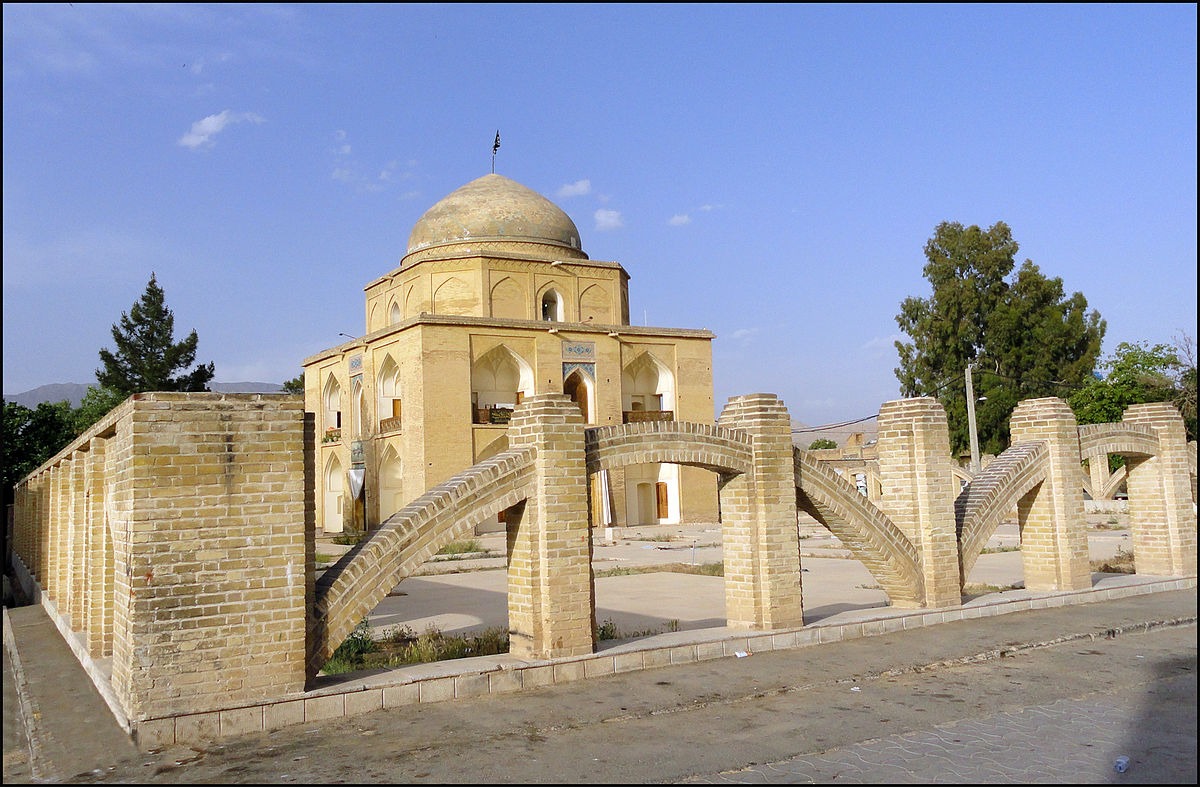
Sanctuaire de Bibidokhtaran
Mausolée chiite de Shiraz fondé sous les Ilkhanides et reconstruit par les Zand au XVIIIe siècle, classé monument national iranien depuis 2009.
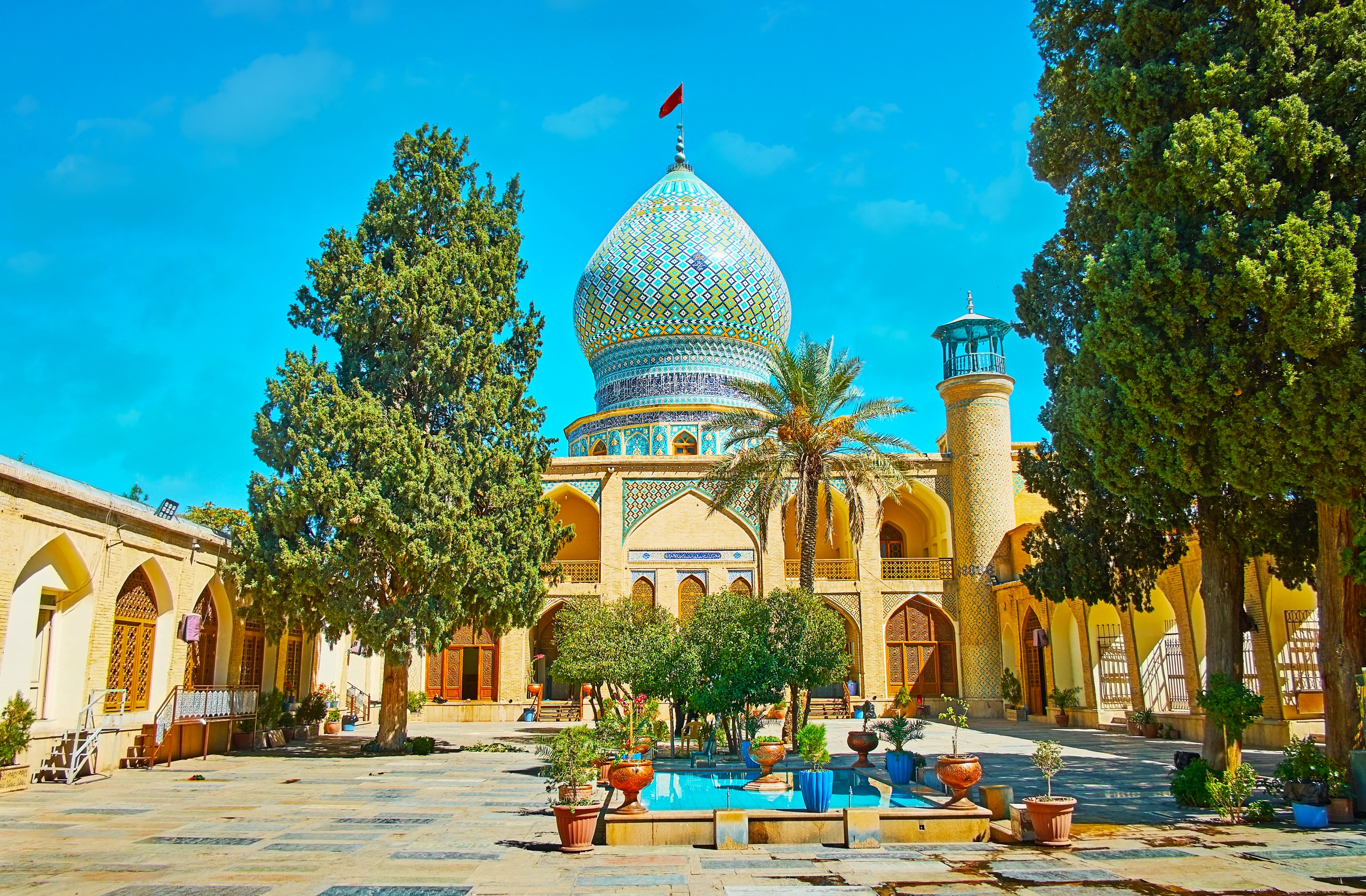
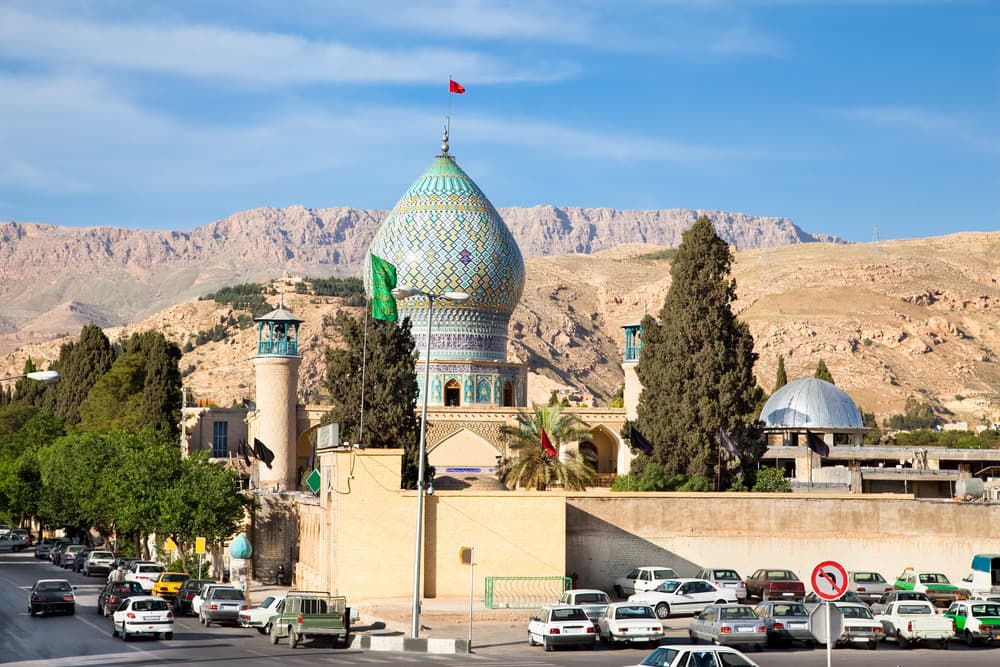
Mausolée de Ali
Tombe-jardin chiite du XIXe siècle au cœur de Shiraz, le mausolée d'Ali Ebne Hamzeh se distingue par sa façade ocre, son dôme de verre et ses intérieurs en mosaïques de miroirs.
Citadelle de Karim Khan (Arg-e Karim Khan)
L'Arg-e Karim Khan est la forteresse résidentielle du XVIIIe siècle qui symbolise Chiraz. Ses tours rondes légèrement inclinées, ses fresques figuratives et sa cour à bassin en font un monument civil majeur de l'Iran.
Bazar Vakil
Au cœur de Chiraz, le Bazar Vakil déploie ses galeries voûtées en brique sous des puits de lumière. Épices, kilims tribaux et cuivres gravés dans un marché vivant du XVIIIe siècle.
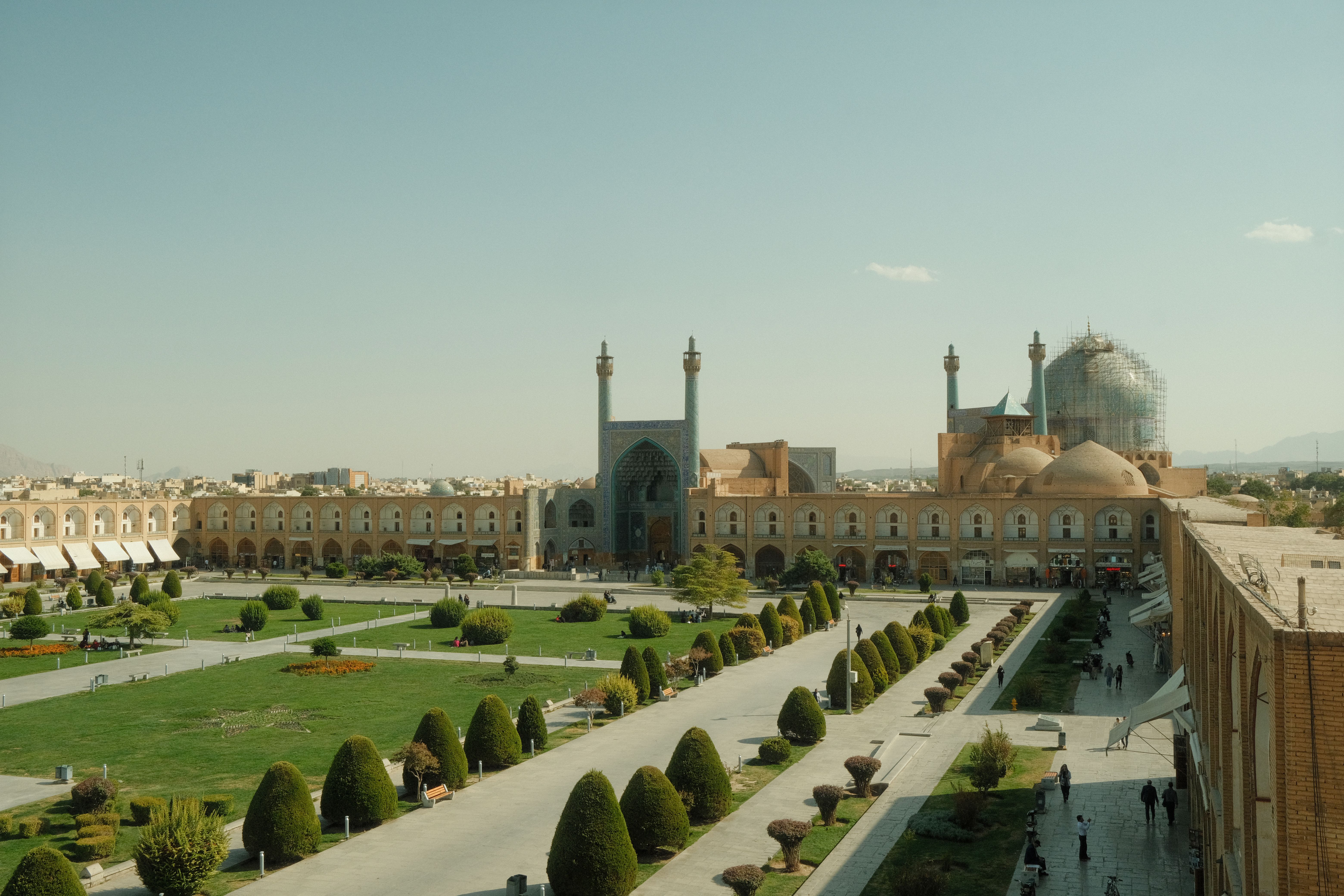
Mosquée et mausolée de Shah-e Cheragh
Shah-e Cheragh, « Roi de la Lumière », est le grand sanctuaire chiite de Chiraz. Ses salles entièrement recouvertes de mosaïques de miroirs et ses coupoles dorées en font l'un des sites religieux les plus impressionnants d'Iran.
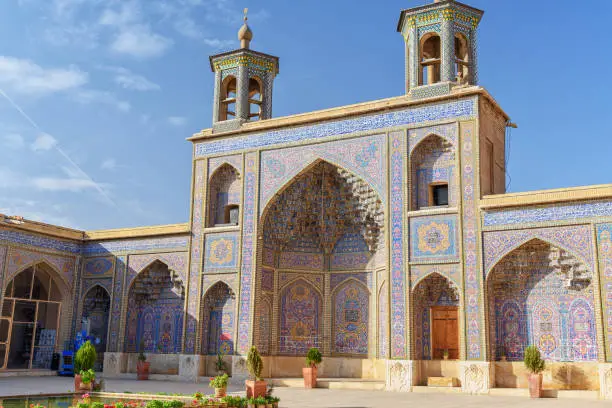
Mosquée Nasir ol-Molk
La mosquée Nasir ol-Molk, dite « mosquée rose », est célèbre pour ses vitraux qui projettent chaque matin un tapis de lumière colorée sur ses tapis persans. Un site qadjare unique au cœur de Chiraz.
Want to discover this destination?
Our local advisors design your tailor-made trip.