Hormuz Island
Hormuz Island
A former Portuguese stronghold in the Strait of Hormuz, Hormuz Island captivates with its red earth landscapes, multicolored beaches, and colonial ruins—just 30 minutes by ferry from Bandar Abbas.
Hormuz Island rises in the Strait of Hormuz, just a few kilometers south of Bandar Abbas. Once a major Portuguese fortress, it stands out for its red earth landscapes, ochre cliffs, and multicolored sand beaches. Rarely visited by foreign tourists, it offers an authentic escape: fishing villages, colonial ruins, and a geological palette unique to Iran.
Essential Information at a Glance
- Access: Ferry from Bandar Abbas port — approximately 30 minutes crossing.
- Dress Code: Iranian dress codes apply (women: hijab required).
- Suggested Duration: a full day; possible as a day excursion from Bandar Abbas.
- Season: October to March — summer heat in the Persian Gulf is extreme.
What to See
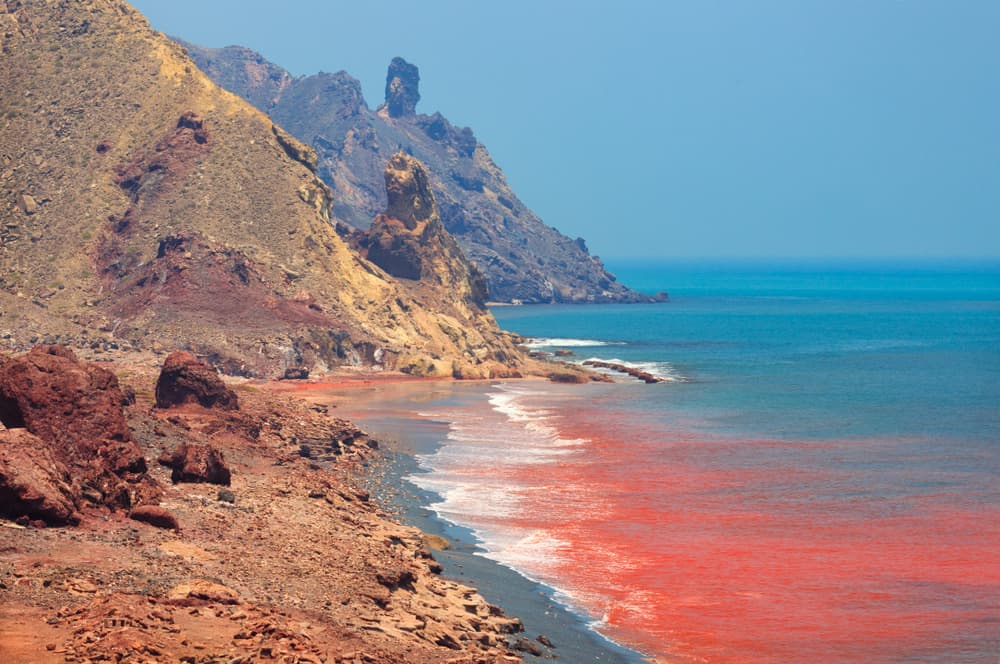
The island is renowned for its red earth rich in iron oxide, used locally as spice and pigment. The coastline alternates between multicolored sand beaches (red, yellow, violet) and cliffs sculpted by erosion. The Portuguese fort in ruins overlooks the northern coast. The main village clusters a few low-rise houses, fishing boats, and dried fish stalls.
History and Context
Hormuz was a major trading post in the Persian Gulf between the 13th and 16th centuries. The Portuguese seized it in 1515 and built a fort to control maritime traffic between Asia and Europe. In 1622, an Iranian-British alliance expelled the Portuguese; trade shifted to Bandar Abbas, condemning the island to slow decline. The ruins of the fort and a Portuguese church still testify to this era.
Highlights of Your Visit
The Portuguese Fort
Built in the early 16th century, the fort retains its coral stone walls and bastions. The view of the Strait from the ramparts alone justifies the climb. Inside stand the remains of a cistern and chapel.
The Valley of Solitude and Colored Lands
The island's interior reveals spectacular geological formations: red, yellow, and violet clays succeed one another over several kilometers. Locals mix red earth with oil to create sorkh, a local condiment sold in Bandar Abbas markets.
The Red Sand Beach
Unique in Iran, this beach owes its color to high hematite concentration. It is accessible on foot or by moto-taxi from the pier.
The Fishing Village
Local life revolves around fishing. Women wear colored burqa (the traditional facial mask of the Gulf), distinctive of Bandari culture. A few small restaurants serve grilled fish and saffron rice.
Etiquette and Visiting Rules
- Hijab mandatory for women starting from the ferry.
- Ask permission before photographing residents, especially women.
- Respect prayer areas in the village.
Photography Tips
Morning light (before 10 a.m.) and late afternoon intensify the contrast of the red earth. The fort photographs best from the northern beach, with the Strait in the background. Avoid midday: white light erases geological nuances.
Location and Access
The island lies in the Strait of Hormuz, in Hormozgan Province. The natural starting point is Bandar Abbas, the provincial capital connected to Tehran by plane and road. Regular ferries operate from Bandar Abbas port. On the island, moto-taxis and a few vehicles provide transportation to sites. Wheelchair accessibility is limited due to unmade roads.
In the Vicinity
- Bandar Abbas — lively port city, embarkation point, and logistics hub for exploring the Persian Gulf.
- Qeshm Island — Iran's largest island, featuring the Hara mangrove forest and the Valley of the Stars.
- Kish Island — a free trade zone in the Gulf, known for its beaches and ruins of the ancient city of Harireh.
Frequently asked questions
October to March offers comfortable temperatures. Summer (June-September) is stifling in the Persian Gulf and not recommended.
Yes. The ferry takes about 30 minutes and the main sites (fort, colored earth, red beach) can be visited in a day. A few basic accommodations exist on the island for those who wish to stay overnight.
No special authorization is required beyond a standard Iranian visa. The island is open to foreign visitors.
Always ask permission from people you wish to photograph, especially women wearing traditional burqa. Geological landscapes and the fort have no restrictions.
Qeshm Island, accessible from Bandar Abbas, complements a Hormuz visit perfectly with its mangrove landscapes and rocky formations of the Valley of the Stars.
Want to discover this destination?
Our local advisors design your tailor-made trip.