Kashan
Kashan
Between Tehran and Isfahan, Kashan unveils merchant mansions with sculpted stuccowork, the UNESCO-listed Fin Garden, Qamsar rose water, and the Maranjab Desert.
Luxurious, lush, brimming with artistic curiosities, Kashan remains an underexplored destination in Iran. A pity, really, since the city overflows with places of interest.
Introduction
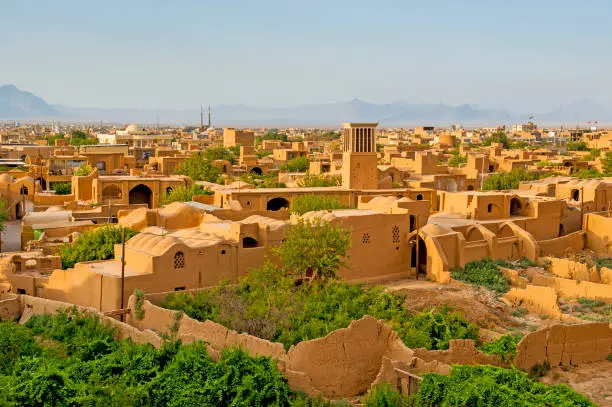
Located in central Iran, on the route between Tehran and Isfahan, the town of Kashan is an oasis of cool freshness set against the desert. It's hard not to fall in love with this garden city, which prides itself on the splendor of its architecture, the prestige of its ceramics, and the opulence of its ornamental tapestries. Long before tourism took hold, the 16th-century Safavid sovereigns established summer and winter palaces in Kashan as royal retreats. The Fin Garden, regarded as the crowning jewel of traditional Persian gardens, enjoys phenomenal success with visitors. A lover of medieval treasures? Kashan offers you an open-air museum! If you have the spirit of an adventurer, an exhilarating experience awaits you in the Maranjab Desert and its vast salt lake.
Historical Notes
The site was occupied thousands of years ago, dating back to the Upper Paleolithic period. Stone tools found near the Sefid-Ab spring attest to this. The painted figures discovered in burial sites at the Tepe Sialk site confirm it further. Excavations unearthed clay vessels among the oldest in the world; the quality of the patterns was initially crude, then improved over time. Other evidence, such as the Sialk ziggurat—a pyramidal structure with multiple terraces supporting a temple at its summit—suggests that the region was the cradle of an important prehistoric civilization.
Archives remain silent on Kashan's Islamic conquest. Like other Persian territories, it likely became part of the Caliphate of Omar around the 7th century. Legend speaks of a Sasanid soldier named Abu-Lu'lu'ah who was held prisoner after the Battle of Kadisiya. Valued for his carpentry skills, the slave earned his master's favor, who allowed him to live in his own residence in Medina, the Muslim capital. During the morning prayer (Fajr), Abu-Lu'lu'ah struck down Caliph Umar al-Khattab with a concealed dagger hidden in the folds of his robe. The tomb of this criminal warrior, hailed as a national hero, remains visible to this day.
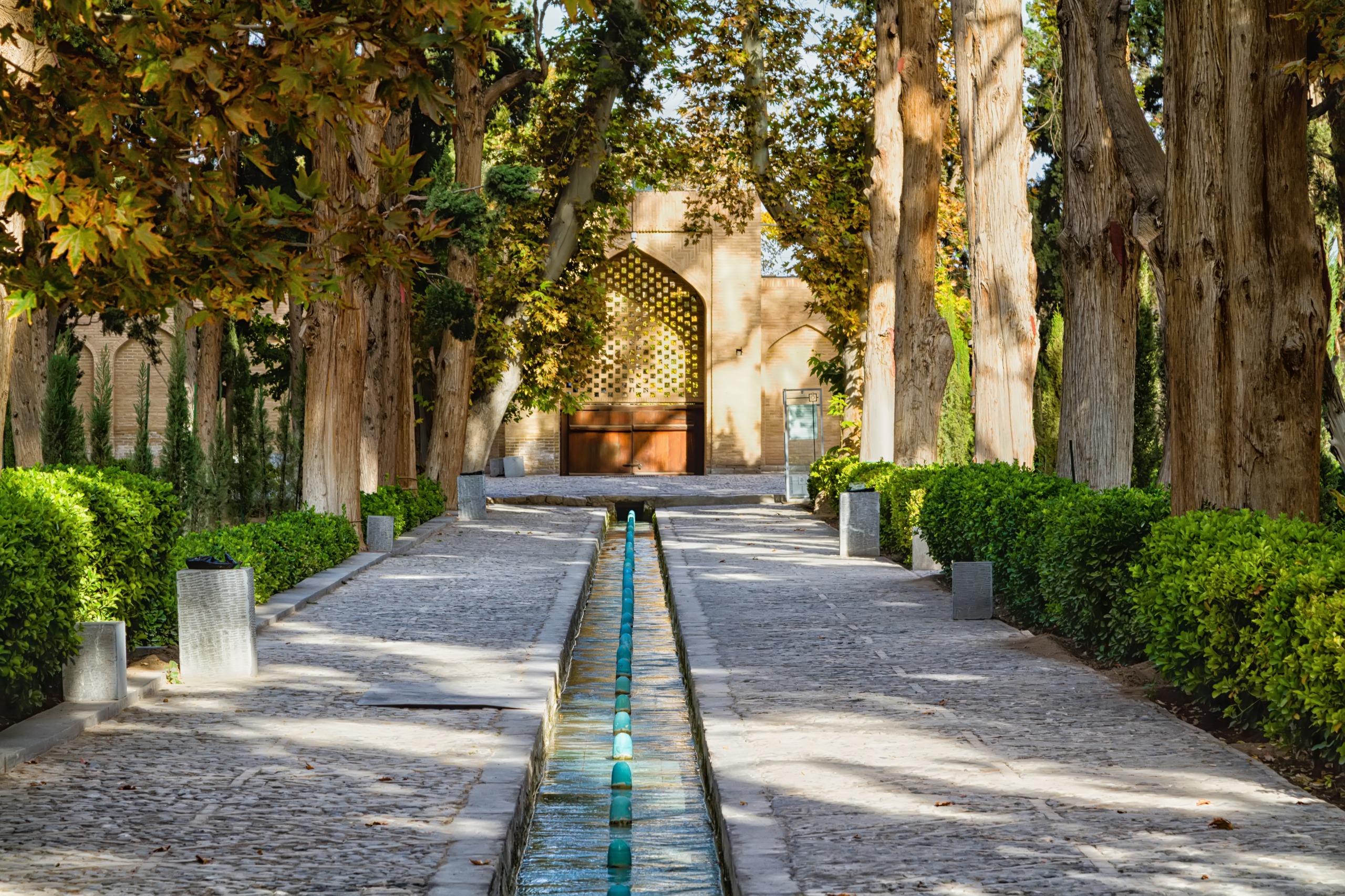
In the Middle Ages, Kashan reached its peak during the Safavid era of Iran, spanning the 16th to 18th centuries. The kings of this dynasty orchestrated an artistic, intellectual, and spiritual renaissance unparalleled in scope. The Fin Garden, with its cypresses and fountains, was an inheritance of this prosperous period. Serving as a leisure park for the royal court, it witnessed a tragic event: the execution in 1852 of the Grand Chancellor Amir Kabir, who breathed his last in one of the garden's royal bathhouses.
Today
Known worldwide as a hub of craftsmanship, pottery, and textiles, Kashan, a small town of 40,000 residents, is also a fashionable tourist destination in Isfahan Province. It sits 215.2 km from Isfahan and 244 km from the capital Tehran, distinguished by its air of bourgeois luxury, as evidenced by the mansions of wealthy merchants from the 18th and 19th centuries.
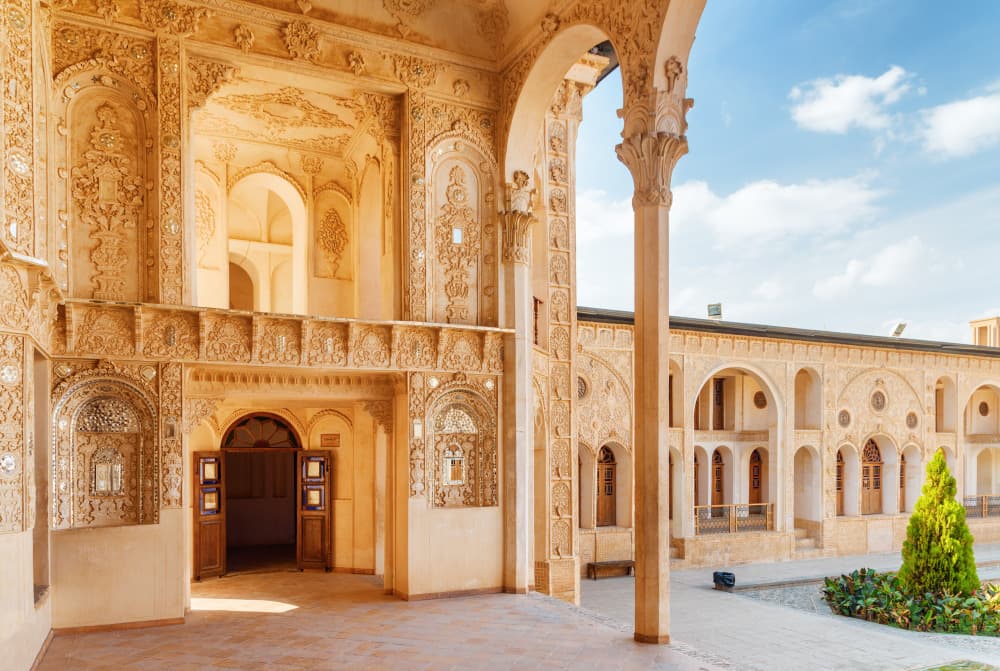
During the Qajar era, artisan families acquired immense social and political power through the tapestry industry, Iran's most lucrative sector. To display their prestige, they hired architects to build exceptional residential complexes: the building plans followed rigorous geometry, with courtyards featuring gardens and fountains, iwans embellished with stuccowork and mirrors, rooms equipped with cooling systems, and reception halls where Qajar monarchs are depicted in luminous portraits. These distinctive residences boasted princely comfort.
With the support of Iran's Cultural Heritage Organization, the Kashan government has taken great care to restore numerous monuments. Additional measures to boost tourism include visa simplification, improved transportation, and enhanced hotel services, but above all UNESCO recognition of the Fin Garden, which achieved international acclaim in 2012. The aim is straightforward: to ensure travelers enjoy themselves and return.
What to See and Do On Site…
For now, the number of tourist arrivals falls far short of reflecting the city's true appeal. It would be almost criminal to miss so many historical, architectural, and cultural attractions!
Royal Gardens
The Fin Garden: treat yourself to a leisurely stroll through this former royal park, where the shah and court dignitaries would stop when stepping away from their official duties. Graced with marble basins from which water cascades in rhythmic fountains, the central pool is bordered by cypresses, shrubs, and various flower varieties. This verdant abundance in the heart of the desert is a unique spectacle. After admiring the ceiling of the hashti, whose light accentuates the geometric décor, and progressing through the central pavilion adorned with ceramics, you will agree that the Fin Garden rightfully deserves its place on humanity's world heritage list. Tourists have no excuse—the site is only 10 minutes' drive southwest of Kashan.
Religious Heritage
- Agha Bozorg Mosque: don't miss the incredibly photogenic Agha Bozorg Mosque, with its pink façade turning golden yellow and russet as evening falls. Built over 300 years ago, the building faithfully follows the classical plan: two grand iwans topped by a honeycomb-shaped dome, an interior courtyard with fountain and orchards. It's a beloved spot for a walk to cool off in the shade and escape the crowds!
- Meydan Mosque: Kashan's oldest mosque stands on the south side of Sang-e Ghadimi Square, not far from the bazaar. Demolished by Mongol forces and later rebuilt by Khaje Emad ed-Din, the sanctuary stands out for its entrance portal combining architectural elements typical of Persia. The attraction mainly lies in the shimmering mosaic tiles covering the mihrab.
Persian Residential Heritage
The Tabatabaei House: completed in 1880, the Tabatabaei House is a historic manor owned by the eponymous family, renowned for carpet manufacturing. The project was entrusted to Ustad Ali Maryam, a 19th-century architect and engineer. Featuring some forty rooms, the house boasts skillfully carved stuccowork framing doors, balconies, and the reception hall walls, with openings featuring decorative stained glass that offers a cheerful play of light. The Tabatabaei Manor is undoubtedly one of the finest expressions of Persian bourgeois architecture.
- The Boroudjerdi House: with its three badguirs (wind catchers) and a grand hall crowned with a glass ceiling, the Boroudjerdi Manor reflects the interior of a well-to-do 19th-century Persian home. As you progress through the garden, you'll notice the manor is divided into two sections: the biruni, an outer quarter for men, where public affairs and banquets take place, and the andaruni, a private quarter for women. The building was commissioned by merchant Haji Mehdi Boroudjerdi for his wife, who is herself a descendant of the Tabatabaei family. Her parents gave her hand on the condition that a magnificent property be built in her name. Whether it was a marriage of convenience or a marriage of wealth, the young suitor gladly accepted the arrangement. Yet Haji Mehdi Boroudjerdi's wife would wait eighteen years before receiving the property transfer.
- The Abassi House: the same bas-reliefs, the same stucco ornaments, and the same ceilings with resplendent geometric patterns are found in the Abassi House. However, the visit offers an extra feature: you can explore secret passages. Today, the establishment has been converted into a museum, tea salon, and restaurant for tourists.
Archaeological Heritage
- The Tepe Sialk Archaeological Site: near the village of Fin, the Tepe Sialk mound is an essential point of interest in Kashan. If archaeologists' estimates are correct, human settlement at the site dates back 5,000 to 6,000 years B.C. Since time immemorial, the region has been crossed by the Cheshmeh ye Soleiman, a mountain spring guaranteeing a permanent water supply. The ruins include utensils made of stone, bone, and ceramic. The site is believed to have witnessed the world's earliest metallurgical and pottery production.
Kashan Bazaar
It was designed during the Seljuk period for trade and underwent major renovations during the Safavid era. Tourists willingly stroll through it because it's one of Kashan's most lively and vibrant squares. The bazaar's architecture is an attraction in itself thanks to its central dome, which provides a skylight through fragments of glass and mirror. Lose yourself for a moment in its labyrinth of mosques, galleries, antique shops, and public bathhouses. Don't leave without purchasing a hand-woven Persian carpet.
Surrounding the Town…
Adventure seekers will certainly find their fill in the Maranjab Desert. In the village of Aran va Bigdol, about sixty kilometers from Kashan, an arid and hostile landscape, sculpted by wind, sand, and centuries of erosion, reveals itself to travelers. Traversing sand dunes, exploring the area by camel, spending a night in a caravanserai, visiting a massive salt lake, plus the friendly hospitality of nomads… The journey will delight many, especially those who enjoy venturing into the desert without straying far from main routes.
There are no round-trip flights from European capitals. To reach Kashan, the simplest approach is to book a flight to Tehran and, once you arrive at Imam Khomeini Airport, make your way downtown by bus, train, or taxi. VIP tourist buses are available from Tehran's southern station at 230,000 rials per person. If you're on a tighter budget, take a regular bus at 150,000 rials. You'll reach your destination after about 2.5 hours of travel.
To foster tourism development, the government opened Kashan Airport on June 2, 2016. Flights to Shiraz and Mashhad have been available since 2018. The national carrier Iran Air plans to serve additional cities in the coming years.
Best Season to Visit Kashan
Have you decided to visit Kashan for your next trip? Consider the climate. The desert dictates conditions in central Iran, with its record heat and exceptional dryness. In July and August, temperatures hover around 40°C. To explore the city's historic residences and enjoy outdoor activities, spring is your best bet. Trees are in full bloom in public parks, and days are relatively warm even if evenings remain cool. Autumn, stretching from September to October, is equally favorable, with a good umbrella as your companion. But summer and winter represent the low season for tourism.
You Would Enjoy…
- enjoying a guided tour of the Fin Garden, an accomplished masterpiece of Persian landscape art ;
- visiting the Tabatabaei residence ;
- savoring the paintings in the Boroudjerdi Manor ;
- posing for a photo in front of the Agha Bozorg Mosque façade ;
- exploring the magnificent ruins of Tepe Sialk ;
- soaking in the local atmosphere at Kashan Bazaar ;
- purchasing carpets, jewelry, or brocade robes as souvenirs ;
- learning the steps of ceramic production ;
- getting an adrenaline rush in the Maranjab Desert ;
- trying the city's best restaurants.
Attractions in Kashan
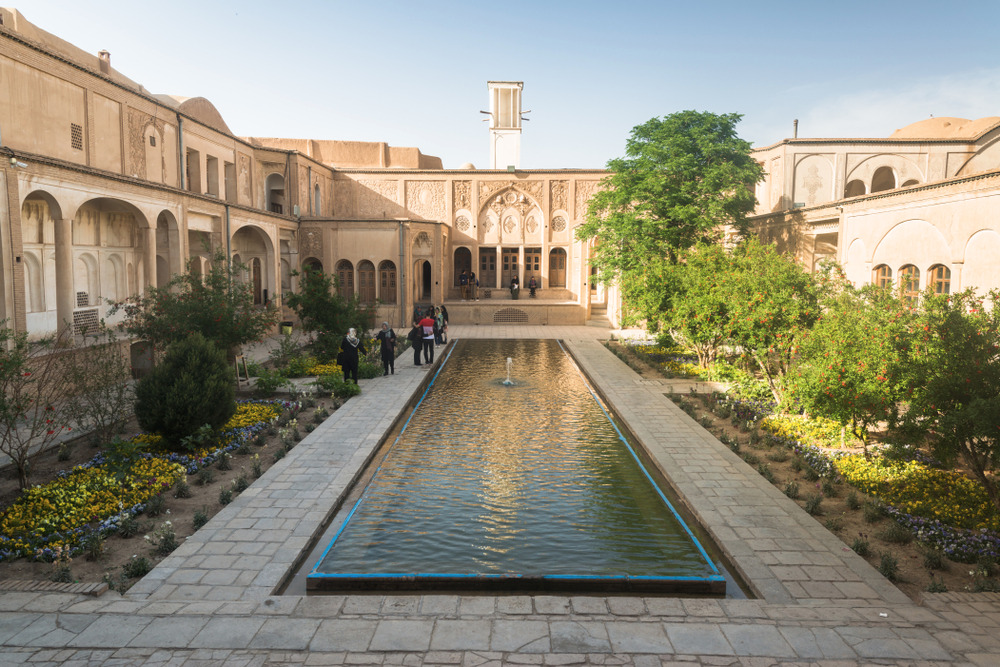
Résidence traditionnelle des Boroudjerdi
Bâtie de 1839 à 1857 pour un riche marchand de Kashan, la maison des Boroudjerdi illustre l'apogée de l'architecture domestique kadjar.
Jardin Fin
Inscrit à l'UNESCO en 2011, le jardin de Fin à Kashan illustre l'art des jardins persans, entre pavillons safavides, qanâts et mémoire du chancelier Amir Kabir.
Want to discover this destination?
Our local advisors design your tailor-made trip.