Mashhad
Mashhad
Mashhad, Iran's second-largest city, radiates around the Imam Reza sanctuary, the country's foremost Shia pilgrimage site. An animated bazaar, Khorasan saffron, and excursions to Tus and Nishapur complete the experience.
Mashhad is Iran's second-largest city and the primary pilgrimage center of Shia Islam in the country. Its prominence stems from the Imam Reza sanctuary, the eighth Shia imam, which attracts millions of devotees annually from Iran and across the globe. Beyond its spiritual significance, the city showcases vibrant bazaars, renowned gastronomy, and access to the landscapes of Khorasan.
Essential Information at a Glance
- Access: Mashhad International Airport (MHD), one of Iran's busiest; regular connections from Tehran and major Iranian cities.
- Urban transport: Metro, buses, and taxis available; the sanctuary is served by multiple metro lines.
- Dress code: Headscarf required for women, covering clothing for all; loan garments are available at the sanctuary entrance.
- Non-Muslim access: Non-Muslims are not permitted to enter the Imam Reza sanctuary.
- Recommended duration: 2 to 3 days for the city and surrounding areas.
- Best time to visit: Spring (March–May) and autumn (September–November) for pleasant weather.
What to See
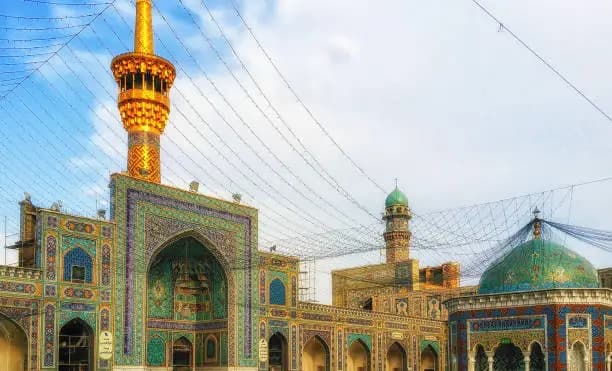
The Imam Reza sanctuary complex dominates the city: gilded domes, turquoise minarets, interior courtyards, and museums form a monumental architectural ensemble. Mashhad Bazaar, adjacent to the sanctuary, offers spices, saffron, carpets, and Khorasan craftsmanship. The city also features parks, museums, and the mausoleum of poet Ferdowsi at Tus, roughly thirty kilometers away.
History and Context
The name Mashhad means "place of martyrdom." Imam Reza died here in 818, likely poisoned at the order of the Abbasid caliph. His tomb rapidly became a site of devotion. The city flourished under the Timurides and Safavids, who elevated the sanctuary to a major religious and artistic center. Nader Shah, a native of Khorasan, briefly made it the capital of his empire in the 18th century.
Highlights of Your Visit
The Imam Reza Sanctuary
Reserved for Muslims, this complex ranks among the world's largest religious ensembles. Its interior courtyards, glazed tilework, and gold-covered domes represent a pinnacle of Iranian Islamic architecture. The nocturnal atmosphere, when thousands of pilgrims pray beneath the lights, proves particularly striking.
Mashhad Bazaar
Directly connected to the sanctuary, this bazaar specializes in religious items, Khorasan saffron, semi-precious stones, and carpets. It is one of Iran's liveliest markets, bustling at all hours.
Tus and the Ferdowsi Mausoleum
Roughly thirty kilometers from Mashhad, the ancient city of Tus houses the mausoleum of epic poet Ferdowsi, author of the Shahnameh. The monument, austere and imposing, stands as a place of reflection for lovers of Persian literature.
The Khorasan Museum
This museum presents archaeological and historical collections spanning millennia of civilization in the Khorasan region, from pre-Islamic periods through the Islamic era.
Etiquette and Visiting Rules
- Headscarves are mandatory for all women in public spaces and especially within the sanctuary.
- Clothing must cover arms and legs for both men and women.
- Non-Muslims cannot access the interior of the Imam Reza sanctuary.
- Conduct must remain respectful and discreet within and around the religious complex.
- Photography inside the sanctuary is subject to strict restrictions.
Photography Tips
The sanctuary's gilded domes and turquoise minarets photograph best from the rooftops of nearby hotels or adjacent public squares, particularly in late afternoon light. At night, the complex's illuminations offer spectacular imagery. At Tus, the Ferdowsi mausoleum lends itself well to natural-light portraiture. Always verify local restrictions before shooting.
Location and Access
Mashhad lies in northeastern Iran, in Khorasan Razavi Province, near the Afghan and Turkmen borders. The international airport operates flights from Tehran and other Iranian cities. The urban metro network facilitates travel to the sanctuary and downtown. Local agencies organize excursions to Tus and other regional sites.
Nearby Attractions
- Tus — ancient city home to the Ferdowsi mausoleum and significant archaeological remains.
- Nishapur — historic Khorasan city, birthplace of Omar Khayyam, approximately 120 km to the west.
- Kalat Naderi — natural and historic fortress in the mountains north of Mashhad.
Frequently asked questions
Yes, Mashhad welcomes all visitors. However, entry to the interior of the Imam Reza sanctuary is reserved for Muslims. Non-Muslims may explore the bazaar, museums, and surrounding sites such as Tus.
Spring (March to May) and autumn (September to November) offer pleasant temperatures. Summer can be hot and dry, while winter is cold with occasional snow.
Headscarves are mandatory for women throughout Iranian public spaces. Both men and women must wear clothing that covers their arms and legs. Loan garments are available at the sanctuary entrance.
The exteriors and public squares surrounding the sanctuary are generally photographable. Inside, restrictions are strict. Inquire on-site and follow the attendants' guidance.
Tus is reachable in half a day from Mashhad. Nishapur, roughly 120 km away, makes for a day-long excursion. A local agency can organize an itinerary combining these stops.
Two to three days allow you to visit the bazaar, museums, and make an excursion to Tus. To explore the broader Khorasan region, plan for additional time.
Want to discover this destination?
Our local advisors design your tailor-made trip.