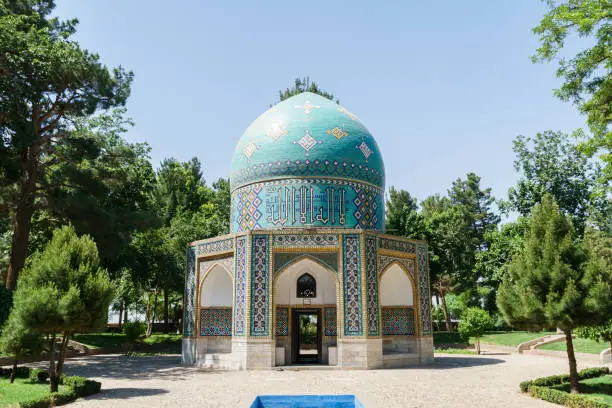
Isfahan and Kashan
A former Safavid capital with turquoise domes and an oasis town with buried merchant houses, Isfahan and Kashan condense the golden age of Persian architecture across 220 kilometres.
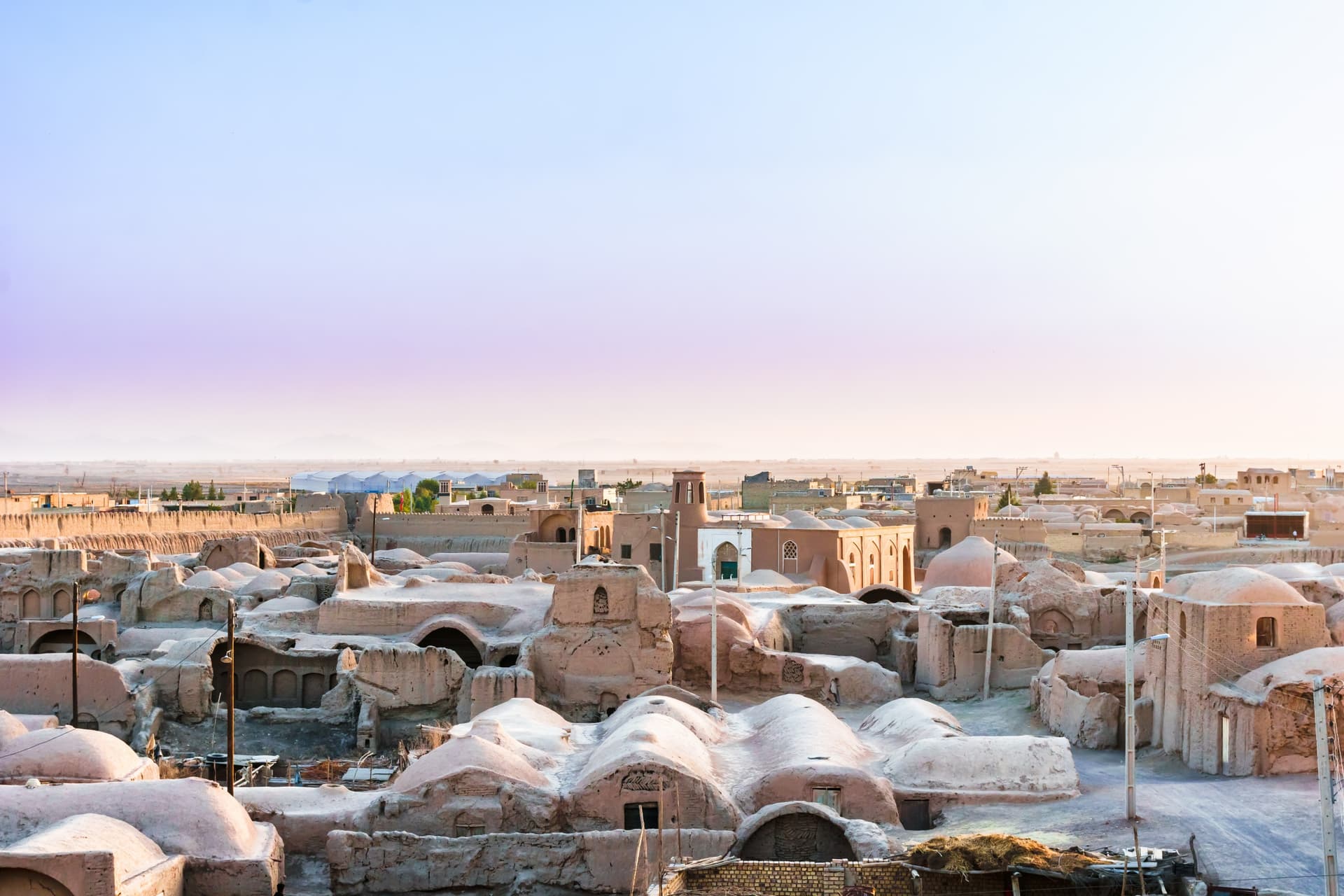
Isfahan and Kashan occupy a strip of Iran's central plateau at roughly 1,600 metres altitude, between the foothills of the Zagros to the west and the margins of the Dasht-e Kavir desert to the east. This is the geography of oasis towns: you drive for long stretches through arid landscapes, sometimes dotted with pistachio trees or saffron fields, before turquoise domes and walled gardens suddenly appear. This oasis logic shapes the architecture, urban planning, and local cuisine, all organised around scarce water and harsh light.
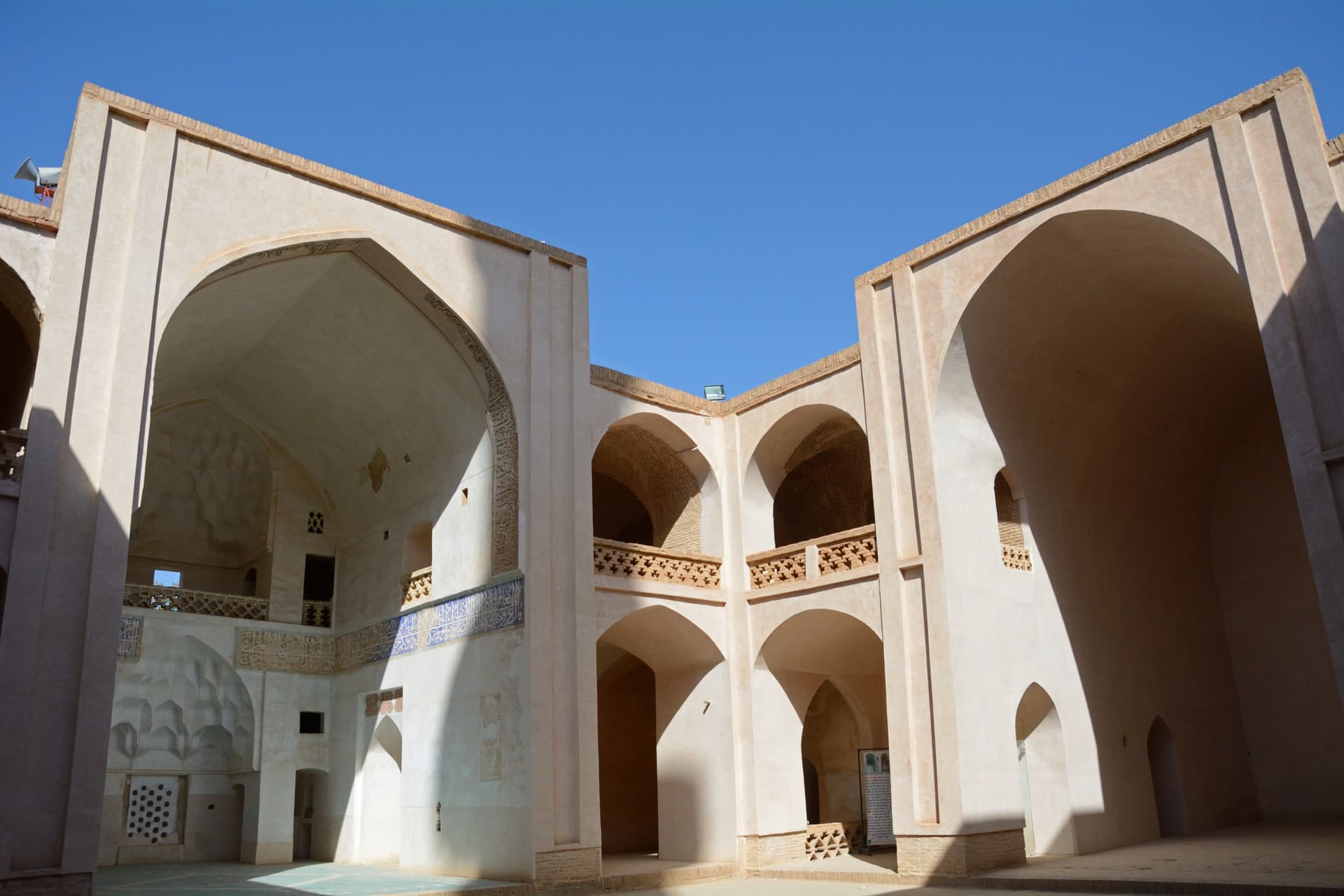
Isfahan, Iran's second city with roughly two million residents, became the capital of the Safavid empire from 1598 under Shah Abbas. The ruler commissioned Naqsh-e Jahan Square, 512 metres long, and a north-south axis, the Chahar Bagh, which still structures the city today. The Masjed-e Shah mosque and the Masjed-e Sheikh Lotfollah, both overlooking this square, illustrate two scales of Safavid architecture: one monumental and public, the other private and reserved for the royal family, without minaret or courtyard. The covered bazaar, nearly two kilometres long, connects the square to the Friday Mosque (Jameh), a UNESCO World Heritage site, whose four iwans encapsulate nine centuries of Iranian architectural evolution.
The Zayandeh River, flowing down from the Zagros, crosses the city from west to east. Eleven bridges span it, including the Si-o-se Pol (33 arches, 1602) and the Khaju (1650), designed simultaneously as dams, promenades, and audience halls. For the past fifteen years or so, the river has run dry for much of the year due to upstream agricultural withdrawals. Yet this detracts nothing from the social purpose of the bridges: Isfahanis gather there in the evening to sing beneath the arches, where the acoustics carry the voice. South of the river, the Armenian quarter of Jolfa, founded in 1606 when Armenian merchants were relocated there, preserves thirteen churches, including the Vank Cathedral, which blends Christian frescoes with Islamic muqarnas. Jolfa's cafés, around Vank Square, still serve Armenian pastries and cardamom coffee.
On the culinary side, Isfahan has its own specialities: beryani, minced lamb cooked on flatbread; khoresh-e mast, a sweet yoghurt and saffron stew served cold; and gaz, pistachio and tamarisk resin nougat. Artisans' workshops, grouped by craft throughout the bazaar, still work traditional khatam marquetry, enamel on copper (minakari), and stamped textile printing (qalamkar).
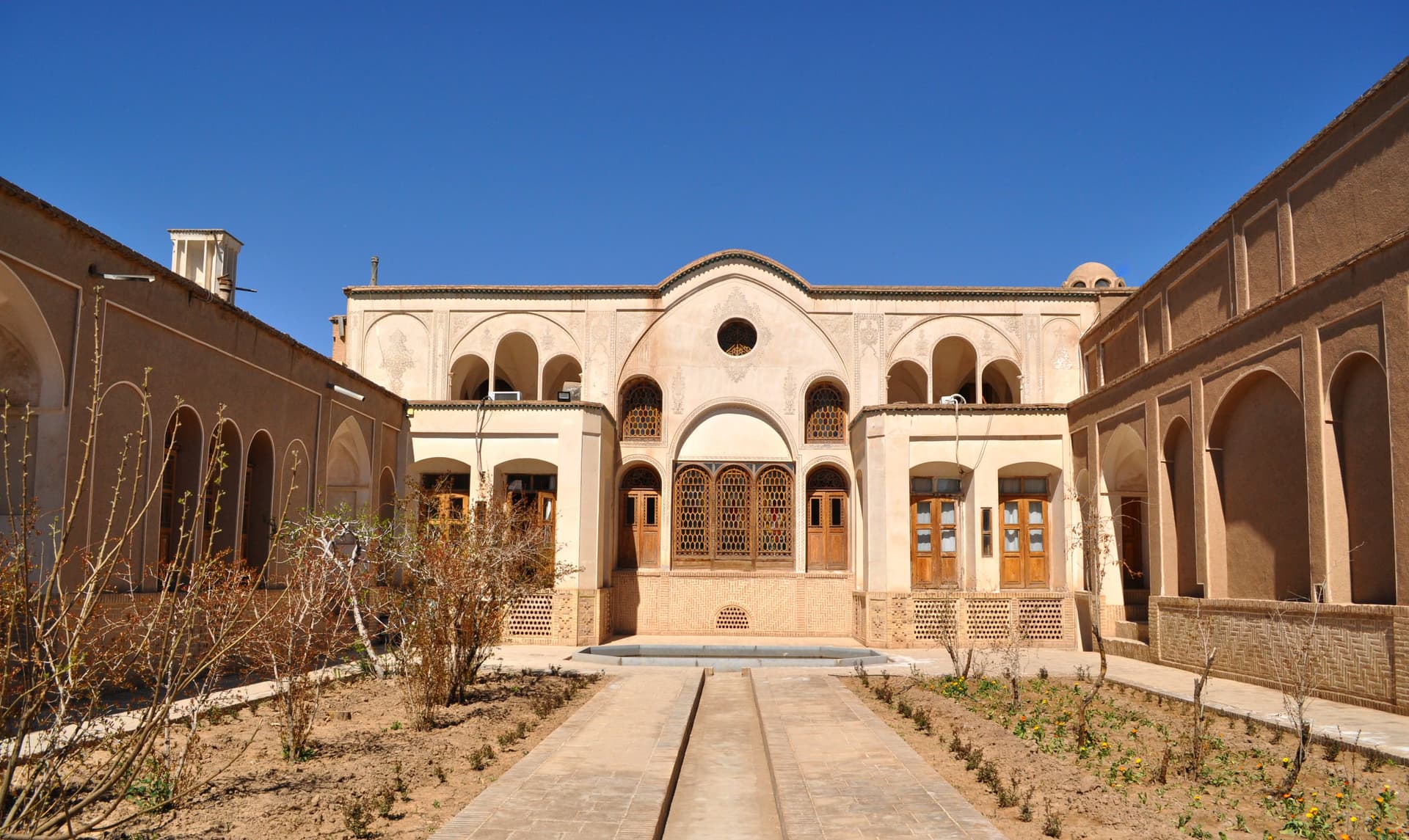
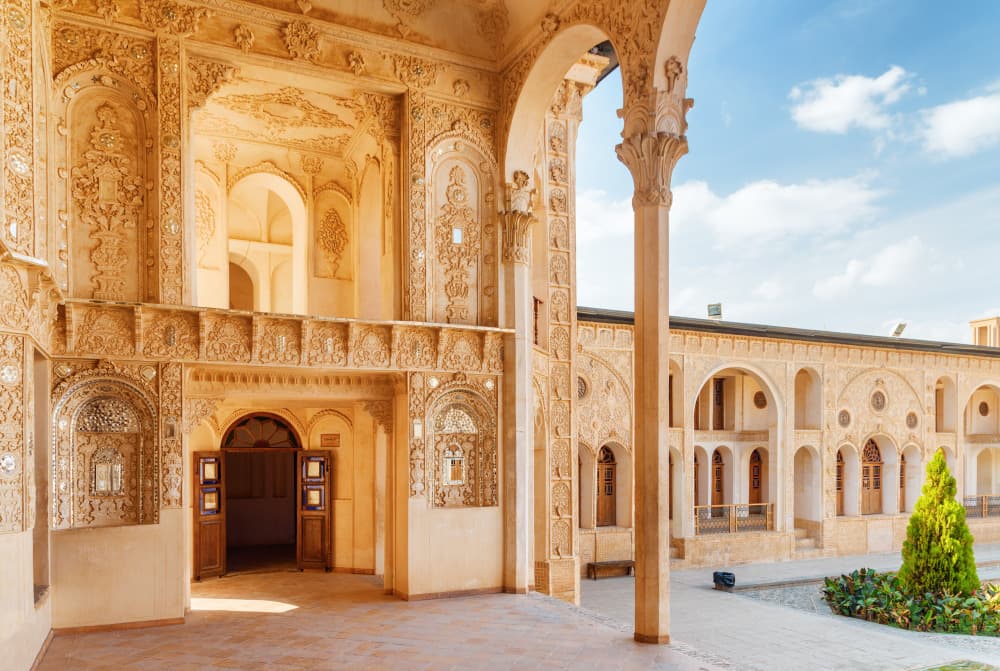
Some 220 kilometres north of Isfahan, on the road to Tehran, Kashan operates on a different register. It is a smaller city—roughly 400,000 residents—of merchants who grew wealthy in the nineteenth century through carpet and silk trade. They built deep-courted houses, sometimes buried five metres underground to escape the heat: the Tabatabaei, Borujerdi, and Ameri houses are open to visitors and reveal traditional climate engineering (badgir wind towers, basements, pools). The Fin gardens, on the city's outskirts, fed by the Soleymanieh spring, are one of nine Persian gardens inscribed on UNESCO's World Heritage List and preserve the classical quadripartite chahar bagh structure.
In late May, the village of Qamsar and those in the Niasar valley, in the mountains south-west of Kashan, enter golab-giri season—the distillation of Damask roses. Copper stills turn day and night for three to four weeks, and the rose water produced supplies kitchens, perfumeries, and religious rituals across the country. It is also during this season that the hilltop villages of Abyaneh, 80 kilometres south-west of Kashan, are most accessible: rammed-earth houses in red ochre, the Pahlavi dialect still spoken by elders.
Must-see experiences
Naqsh-e Jahan Square at the blue hour. We typically arrive around 5pm, when the Masjed-e Sheikh Lotfollah's domes shift from pink to deep blue. Carriages circle the central pool and Isfahan families picnic on the lawns.
Kashan's merchant houses. A linked tour of the Tabatabaei and Borujerdi houses, ten minutes' walk apart. Here you can read the thermal engineering of badgir towers and admire the richness of nineteenth-century painted stucco.
Singing beneath the Khaju bridge arches. At dusk, men come to sing Hafez or traditional songs in the brick vaults. The acoustics double the voice, the audience applauds in silence.
Rose distillation at Qamsar. From late May through early June, family workshops in Qamsar and Niasar distil roses in copper stills. The scent carries 200 metres in every direction, and you leave with a bottle of warm rose water.
The Armenian quarter of Jolfa. South of the Zayandeh River, the Vank Cathedral blends Christian iconography with Safavid décor. Nearby cafés serve cardamom coffee, enjoyed seated on the benches of the square.
When to visit
The best window runs from April through early June, then late September to mid-November. In spring, temperatures in Isfahan range between 12°C at night and 22 to 26°C by day, gardens are in bloom, and Qamsar's golab-giri peaks around 20 May. Autumn offers golden light on baked brick and dry days around 20°C, ideal for bazaar wandering.
July and August are challenging: Kashan regularly exceeds 40°C in the afternoon, Isfahan hovers around 36 to 38°C, and courtyard stonework retains heat late into the night. December to February are manageable but cold, with nights dipping to -2 or -3°C and occasional snow on the domes: the light is superb, but pack warm clothing as traditional houses converted to hotels are not always well-heated. Rain is rare everywhere, less than 150 mm annually in Isfahan, concentrated between December and March.
Practical advice
We recommend a minimum of 4 days in the region: 3 nights in Isfahan to absorb Naqsh-e Jahan Square, the bazaar, Jolfa, and the Friday Mosque without rushing, plus 1 night in Kashan on the way up to Tehran. If you include Abyaneh or the rose valley, allow an extra day. Isfahan has a domestic airport with flights to Tehran in 1 hour, but most of our travellers arrive by road from Kashan (2.5 hours) or from Yazd (4.5 to 5 hours).
The most natural combination is the classic axis of Tehran, Kashan, Isfahan, Yazd, Shiraz, which follows the historical caravan route and can be covered in 12 to 15 days. Those with more time extend towards Tabriz and the greener, more Armenian north-west. Hotel comfort is good in Isfahan, with several restored properties of standing around the square and in Jolfa, and excellent in Kashan, where former merchant houses have been converted into characterful boutique hotels. The region is particularly suited to travellers interested in architecture, crafts, and urban history; it is also very accessible to families and contemplative travellers, with short distances between sites.