Shiraz and Fars
Cradle of the Persian empire, Fars articulates Persepolis, the gardens of Shiraz and the Qashqai summer pastures of the Zagros over a minimum of three full days.
Fars occupies the southwestern plateau of Iran, between the Zagros ranges and the Maharlou salt depression. Shiraz, its provincial capital at 1,500 meters altitude, sets the tone: walled gardens, qanats inherited from the Achaemenids, and a poetic tradition that still structures social life. On Thursday evenings, families gather at the mausoleum of Hafez to read aloud the Divan, a book many know by heart. This region bears the original name of Persia, and it is here, in the Marvdasht plain, that Cyrus the Great and Darius built the first imperial capitals.
The landscape alternates cereal plains, citrus orchards around Kazerun, and high Zagros pastures where the Qashqai and Bakhtiari tribes move in June. Our English-speaking team in Tehran regularly organizes stays with these Turkish-speaking nomadic families, near Eqlid or Semirom, between June and September, when black tents rise at 2,500 meters. Hospitality unfolds around tea and sangak bread cooked on hot pebbles. Weaving gabbeh—thick woolen rugs with geometric patterns—occupies the women during long summer evenings.
Persepolis remains the historical anchor of the region. Founded by Darius I around 518 BCE, the ceremonial city spreads across a terrace of 125,000 square meters at the foot of Mount Rahmat. The bas-reliefs of the Apadana show the delegations of 23 subjugated peoples bringing their tribute: Medes in trousers, Bactrians leading a camel, Ethiopians carrying elephant tusks. We recommend arriving at opening, around 8am, both for the raking light on the reliefs and to avoid the 38°C heat of the afternoon in July. Twelve kilometers to the north, Naqsh-e Rostam holds the rock-cut tombs of Darius, Xerxes, Artaxerxes and Darius II, carved high into the cliff face, as well as seven Sassanid bas-reliefs celebrating the victories of Shapur I over Roman emperor Valerian.
Shiraz itself deserves two full days. The Nasir-ol-Molk Mosque, known as the Pink Mosque, reveals its play of colored stained glass on Persian carpets only between 8am and 10am in the morning, preferably in winter when the sun is low. The Vakil Bazaar, commissioned by Karim Khan Zand in the 18th century, groups under its brick vaults merchants of spices, Qashqai carpets and rose water from Qamsar. The Eram Garden, UNESCO-listed along with eight other Persian gardens, illustrates the concept of the chahar bagh, four parterres irrigated by an underground hydraulic system. For cuisine, kalam polo—rice with cabbage and ground meat meatballs perfumed with wild cumin—is a Shirazi specialty found in family restaurants in the Zand district.
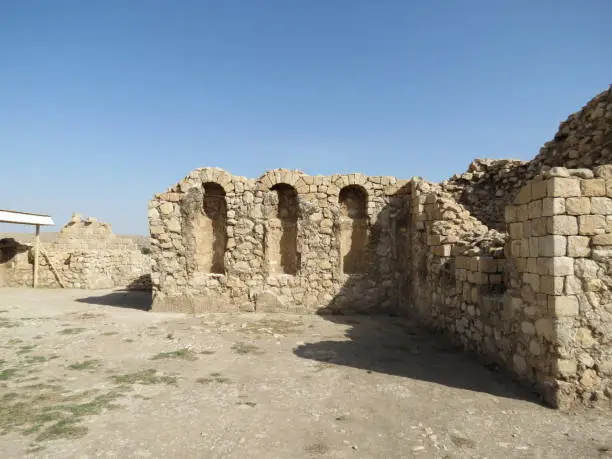
Further south, beyond the Tang-e Allahu Akbar pass, the road descends toward Firuzabad and the Sassanid remains of Gor, the first capital of Ardashir I in the 3rd century. The palace of Ardashir Khurreh, circular plan of 2 kilometers in diameter, prefigures the Islamic urbanism of Baghdad. Even further south, the Bishapur site preserves mosaics of Roman inspiration, cultural spoils from the war against Valerian. These Sassanid stops are rarely visited and usefully complement the Achaemenid narrative of Persepolis.
Pasargades, 130 kilometers northeast of Shiraz, closes the historical loop. The tomb of Cyrus, a simple stone sarcophagus on six steps, stands in a wind-swept plain. It is the oldest royal funerary monument in Iran, dated to 530 BCE, and the place where Alexander bowed according to Arrian. The simplicity of the site contrasts with the monumentality of Persepolis and tells another chapter, more archaic, in the formation of the Persian imperial idea.
To discover
Persepolis at dawn. Two-hour walk across the ceremonial terrace before the arrival of tour groups, with raking light on the 23 sculpted delegations of the Apadana. The rock-cut tombs of Naqsh-e Rostam follow 15 minutes by car.
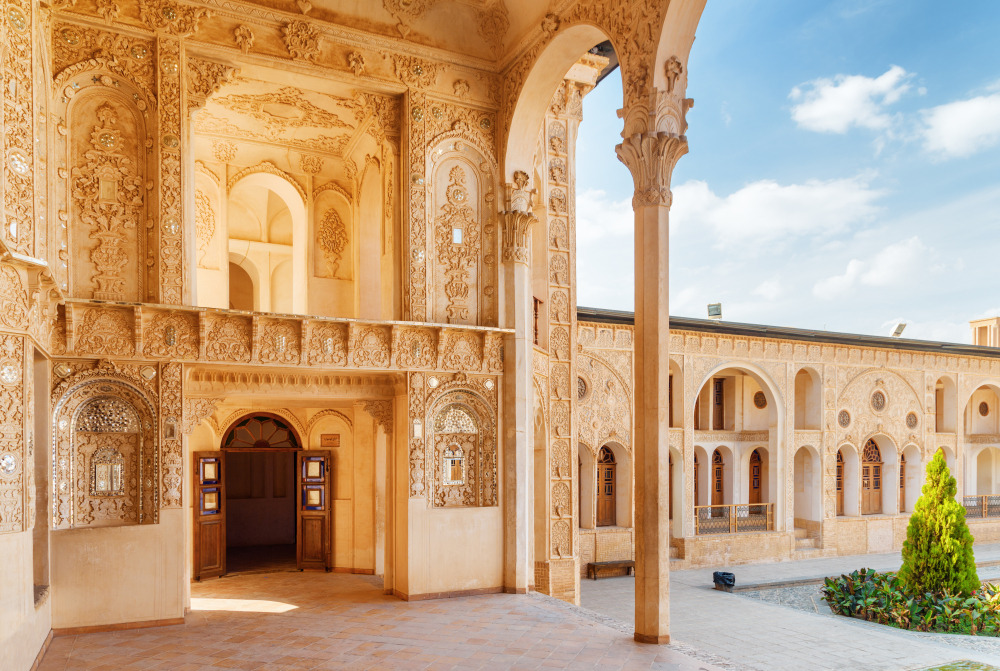
Stained glass of Nasir-ol-Molk. Between 8am and 10am, sunlight passes through colored glass and projects a moving mosaic on the carpets of the winter hall. The effect lasts approximately 90 minutes depending on the season.
Qashqai summer pastures of the Zagros. From June to September, a stay with a Turkish-speaking nomadic family at 2,500 meters altitude near Semirom or Eqlid. Wood-fire tea, gabbeh weaving and poetic evening in Azerbaijani Turkish.
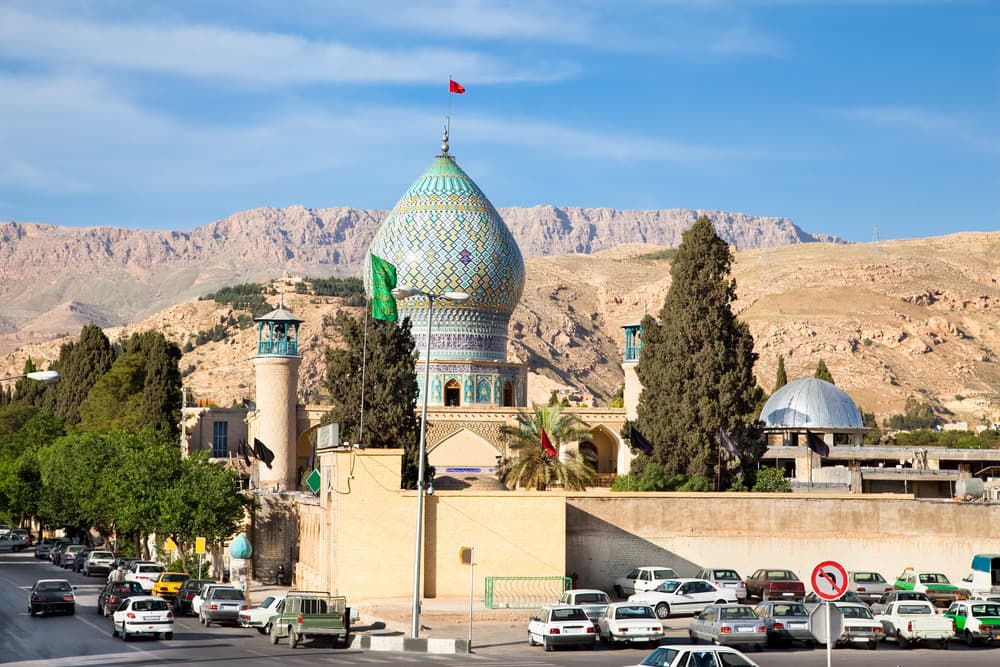
Evening at the mausoleum of Hafez. On Thursday evenings, Shirazis gather around the poet's tomb to read the Divan aloud. Garden café for saffron tea and faloodeh ice cream, vermicelli iced with rose water.
Sassanid remains of Firuzabad. Circular city of Gor founded by Ardashir I in the 3rd century, dressed stone palace and bas-reliefs carved into the cliff face. Nearly empty site, accessible by mountain road from Shiraz in 2.5 hours.
When to go
The best window for visiting Fars extends from mid-March to end of May, then from mid-September to early November. In spring, Shiraz is in bloom: orange trees in the Eram garden, Damask roses around Meymand. Temperatures swing between 12°C at night and 24°C during the day. Norouz, the Persian New Year around March 21, draws many Iranian visitors to Persepolis and Pasargades—plan early arrivals at sites. Autumn offers dry days around 22°C and cool nights, ideal for long walks across the Achaemenid terrace.
Summer is harsh in the Marvdasht plain, with peaks at 40°C in July and August, and Persepolis becomes impractical after 11am. Conversely, this is precisely when heading into the Zagros, toward Sepidan or Semirom, makes full sense: 25°C during the day, 12°C at night, and Qashqai encampments in place. Winter, December to February, sees Shiraz drop to 3°C at night with possible light snow, and passes toward Firuzabad may briefly close. The stained glass of Nasir-ol-Molk is then at its best, with the low sun striking the hall directly.
Practical advice
Allow 3 full days for essentials: one day Persepolis, Naqsh-e Rostam and Pasargades, one day Shiraz historic sites (Pink Mosque, Vakil Bazaar, mausoleums of Hafez and Saadi, Eram Garden), and one day for Firuzabad or a Qashqai stay in season. With 4 to 5 days, add Bishapur, the Shapour Grotto and a night at altitude. Shiraz International Airport receives daily flights from Tehran (1 hour 15 minutes) and connections from Doha and Istanbul. By road, allow 7 hours from Isfahan via Abadeh, or 6 hours from Yazd via Abarkuh and its thousand-year-old cypress.
The most natural combination is with Yazd and the central desert, then Isfahan and Kashan, heading up to Tehran: this is the classic 12 to 15-day axis covering the four historical capitals. Hotel comfort in Shiraz is good, with a few restored traditional houses in the old city and 4-star establishments near the Eram Garden. The region suits travelers interested in history and poetry, families with children from age 8 onwards (the bas-reliefs tell concrete stories), and those sensitive to gardens and light. Walkers will find their footing in the Zagros between June and September, staying with Qashqai families.