Bibi Dokhtaran Sanctuary
Bibi Dokhtaran Sanctuary
A Shia mausoleum in Shiraz founded under the Ilkhanids and rebuilt by the Zands in the 18th century, designated a national Iranian monument since 2009.
The Bibi Dokhtaran Sanctuary, located in Shiraz in southwestern Iran, is a Shia mausoleum listed among Iran's national monuments since July 9, 2009. Also known as Bibi Daftar or Bibi Daftaroon, it houses the tomb of a woman considered to be a descendant of the fourth Imam Ali Zayn al-Abidin.
Why visit the Bibi Dokhtaran Sanctuary
This mausoleum attracts travelers for three main reasons: its place in Shia religious history, its Persian tomb-garden architecture, and its location in the heart of old Shiraz, within close proximity to several of the city's major monuments. Less visited than the Shah Cheragh or Ali Ibn Hamza sanctuaries, it offers a quieter setting to observe Iranian funerary art and Zand mausoleum architecture.
Shiraz, the city where the poet Hafez spent his childhood, preserves a rare concentration of religious and civic monuments. The sanctuary is part of this remarkable heritage.
History and the figure of Bibi Dokhtaran
The sanctuary's foundation dates back to the High Middle Ages, during the Ilkhanid dynasty that ruled Persia in the 13th and 14th centuries. The name Bibi means "lady" in Persian: the sanctuary indeed houses a female figure, reputed to be a descendant of the fourth Imam Ali Zayn al-Abidin and Shahr Banû, daughter of a Sassanid emperor. This lineage, which connects the pre-Islamic Sassanid dynasty to the Prophet's bloodline, gives the site profound symbolic weight in Iranian Shia imagination.
The origin of the project is said to stem from the initiative of a court lady. Damaged by an earthquake, the building was rebuilt in the 18th century by the sovereign Mohammad Gholi of the Zand dynasty (1751-1794), who established Shiraz as the capital and undertook major embellishment works there. The current monument reflects this Zand restoration.
What to see on site
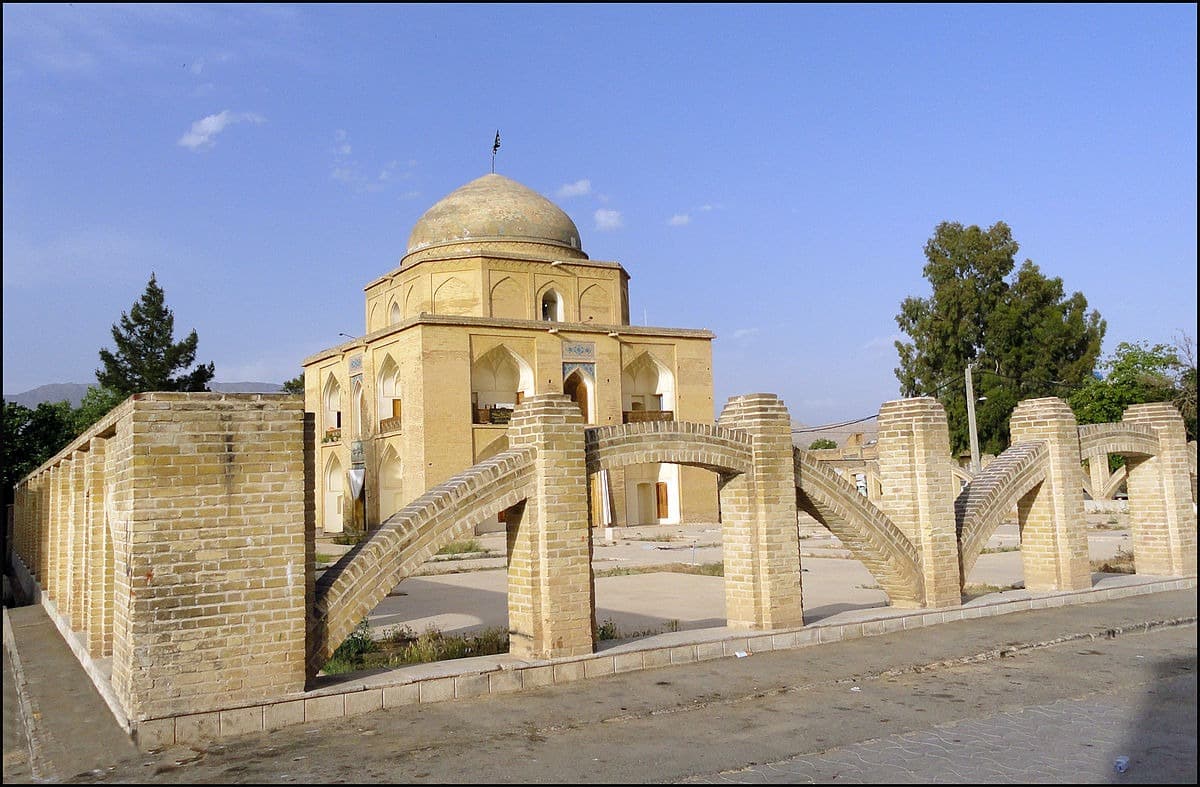
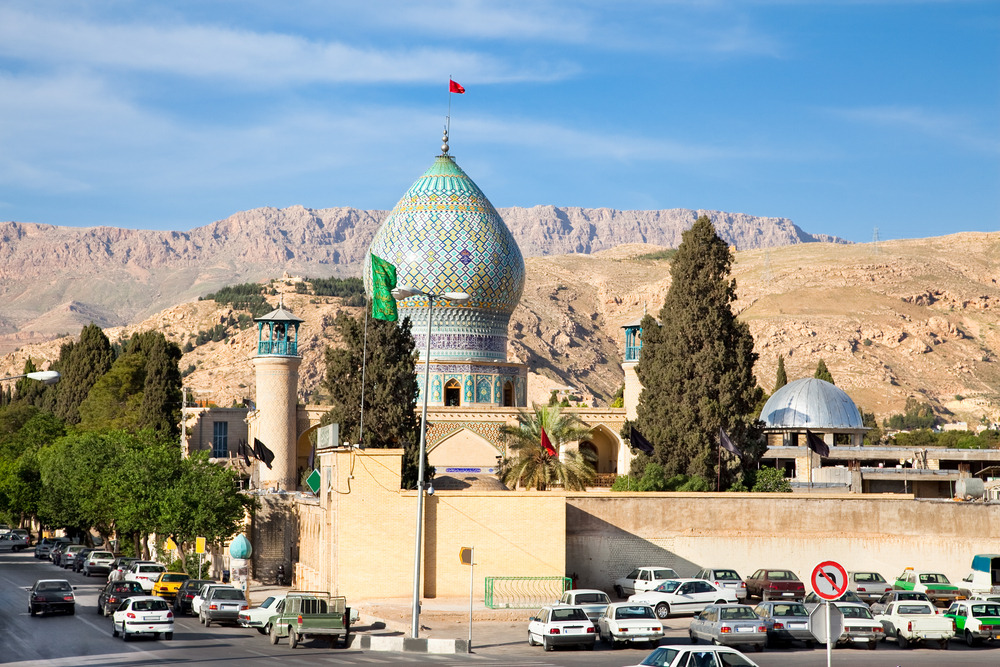
The sanctuary follows the tomb-garden model, typical of Persian funerary architecture. The main building presents a square plan across two stories, along with an underground section where the burial chamber is located. The whole is crowned by a dome characteristic of Iranian mausoleums.
Elements to observe:
- the dome and its decoration, most expressive in the raking light of late afternoon;
- the central courtyard, planted with flower beds according to the Persian principle of an enclosed garden;
- the underground chamber housing the main tomb;
- the façade ornamentation, blending brick and stucco.
As in any active Shia place of worship, modest dress is required and the chador is usually provided at the entrance for female visitors. Discreet photography is recommended, especially during prayer times.
Practical information
The sanctuary is located on Shahid Dastgheib Street, in Shiraz's historic center, near the Ilkhani Mosque and Beit Al-Abbas. From downtown (Shohada Square or Vakil Bazaar), allow about ten minutes on foot. Local taxis and ride-sharing services (such as Snapp) serve the neighborhood easily.
Access is generally free. Allow 30 to 45 minutes for a visit, longer if you combine it with nearby sanctuaries and mosques. Hours vary according to religious periods: it's best to avoid Friday prayer times for a tourist visit.
When to visit
Shiraz enjoys a semi-arid climate: hot and dry summers, mild but cool winters at night. The most pleasant period extends from mid-March to May, when the city's gardens are in bloom, and from October to November, after the intense summer heat. Winter (December-February) remains accessible and less crowded. Spring coincides with Norouz, the Iranian New Year: stronger local attendance but a festive atmosphere throughout the city.
In the surrounding area
The neighborhood concentrates several walkable sites:
- the Moshir Mosque, a few streets away;
- the Vakil Mosque, on the east side of Vakil Bazaar;
- the Vakil Bazaar, one of Shiraz's most vibrant covered markets, rich in spices, textiles and crafts;
- the Museum of Natural History and Technology.
To extend your discovery of Iranian heritage, you can compare this sanctuary with other historic sites in the country, such as the Ali Ebn-e Hamzeh Mausoleum, also in Shiraz, or the historic village of Abyaneh in the Isfahan region. Lovers of Persian residential architecture will appreciate the traditional Boroudjerdi residence in Kashan, and those drawn to tomb-gardens will find echoes in the Fin Garden.
Include Bibi Dokhtaran in your trip
The sanctuary integrates naturally into a cultural itinerary in Shiraz, alongside Persepolis, the Tomb of Hafez and Eram Garden. To build a tailored journey combining Shia heritage, Zand architecture and major archaeological sites, explore our Iran travel suggestions.
Interested in this visit?
We can include it in your personalised itinerary.