Suse Castle (Shush Castle / Morgan Castle)
Erected by Jacques de Morgan in the late 19th century, Suse Castle overlooks the archaeological site of ancient Suse, the Elamite capital and residence of Achaemenid kings, inscribed on the UNESCO World Heritage List.
Suse Castle dominates the archaeological site of ancient Suse, one of the oldest cities in the world. Built in the late 19th century by the French Archaeological Mission led by Jacques de Morgan, this red-brick building served simultaneously as a residence, fortress, and repository for excavation findings. It remains today the most immediate visual landmark of the UNESCO-listed site.
Practical information at a glance
- Access: the castle is located within the archaeological site of Suse, at the northern exit of the city of Shush.
- Dress code: Islamic dress is mandatory (Iranian national rule); cover your arms and legs.
- Recommended duration: allow 30 to 45 minutes for the castle alone; 2 to 3 hours for the entire site.
- Recommended combination: to visit with the Apadana tell, the Shush Museum and the nearby Tomb of the Prophet Daniel.
What you'll see
The castle itself is a neo-medieval construction in fired brick, with crenellated towers and loopholes, standing out against the flat Khuzestan landscape. From its terraces, the view embraces the surrounding archaeological tells—mounds that cover millennia of Elamite, Achaemenid and Parthian stratigraphy. Inside, certain rooms house explanatory panels on the history of French excavations.
History and context
Suse was the capital of the Elamite kingdom, then the winter residence of Achaemenid kings—Darius I had his palace built there. French excavations began in 1884 under Marcel Dieulafoy, then continued under Jacques de Morgan from 1897 onward. It was Morgan who erected the castle around 1897-1908 to protect the team and discoveries, including the famous Code of Hammurabi, now housed in the Louvre. The Suse site has been inscribed on the UNESCO World Heritage List since 2015.
Highlights of the visit
The view from the terraces
Climb onto the crenellated terraces to take in the great tells that structure the site: the Apadana, the royal city, the artisans' city. The raking light in late afternoon reveals the relief of the excavations.
Colonial-Orientalist architecture
The building itself is a historical document: bricks manufactured on site, quadrilateral defensive plan, corner towers. It illustrates how 19th-century European archaeologists understood the Orient.
The immediate archaeological context
Around the castle, trenches and tells remain visible. Panels dot the site and allow you to situate the major periods of occupation, from the proto-Elamite period (around 4000 BCE) to the Islamic period.
Photography tips
Morning light is soft and avoids harsh shadows on the red bricks. From the foot of the castle, sufficient distance allows you to frame the entire set of towers. In late afternoon, warm light accentuates the brick color and the reliefs of the tells in the background. Photos taken from the terraces toward the excavations are particularly evocative.
Location and access
The castle is located in the city of Shush (Suse), Khuzestan province, approximately 120 km north of Ahvaz. Shush is accessible by bus from Ahvaz or from Dezful. The archaeological site is a few minutes' walk from Shush city center. The Tomb of the Prophet Daniel is located less than a kilometer away, on the banks of the Shaour River.
Nearby attractions
- Tomb of the Prophet Daniel — mausoleum with a characteristic spiraling minaret, pilgrimage site for Jews, Christians and Muslims.
- Palace of Apadana — remains of the palace of Darius I, with the base of columns still in place.
- Ziggurat of Choga Zanbil — Elamite ziggurat from the 13th century BCE, inscribed on the UNESCO World Heritage List, approximately 40 km to the southeast.
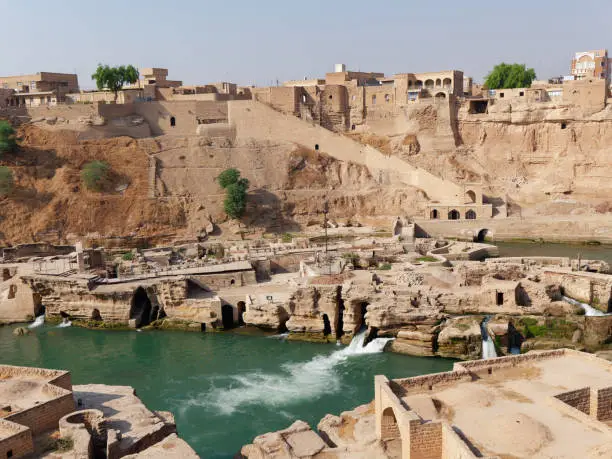
- Historic hydraulic system of Shushtar — UNESCO World Heritage site, approximately 90 km to the south.
Frequently asked questions
Access to certain interior rooms is possible during a site visit. The exact configuration of open spaces may vary; inquire on site.
Islamic dress is mandatory in Iran: women must wear a headscarf and cover their arms and legs; men should avoid shorts.
Khuzestan is very hot in summer (temperatures exceeding 45°C). The ideal period is between November and March, when temperatures are mild.
Yes, the two sites are often visited in the same day from Shush or Ahvaz. The ziggurat is located approximately 40 km to the southeast of Shush.
Photography is generally permitted on the archaeological site and around the castle. Check for any restrictions at the entrance, particularly for interiors.
Interested in this visit?
We can include it in your personalised itinerary.