Sa'dabad Complex (Sa'd Abad)
Sa'dabad Complex (Sa'd Abad)
A former royal estate of the Qajar and Pahlavi dynasties, the Sa'dabad Complex brings together several palace-museums and vast gardens in the northern Shemiran district of Tehran.
Nestled in the wooded foothills of Shemiran, north of Tehran, the Sa'dabad Complex is a sprawling palatial estate that served as the summer residence of the Qajar and then Pahlavi dynasties. Its tree-shaded gardens, ornately-façaded palaces, and thematic museums make it one of the capital's most comprehensive historical ensembles. A visit allows you to traverse two centuries of royal power in a single location.
Practical information at a glance
- Access: Metro line 1, Tajrish station, then taxi or walk north from Tajrish bazaar.
- Recommended duration: 2 to 4 hours depending on how many palaces you visit.
- Dress code: Islamic dress required for women (headscarf, covering clothes); rule enforced at entry.
- Tickets: General park admission separate from individual tickets for each palace-museum; bring local currency.
- Accessibility: Sloping terrain, some palaces with stairs; partial accessibility.
What to see
The estate comprises more than a dozen buildings, several of which are open to the public as museums. The White Palace (Palace of the Nation), the primary residence of Mohammad Reza Shah, preserves its reception halls, period furnishings, and diplomatic gifts. The Museum of Fine Arts features a collection of Iranian and European paintings. Other pavilions house a military museum, a ceramic and porcelain museum, and collections of decorative arts.
History and context
The site was originally a Qajar hunting pavilion in the nineteenth century. The Pahlavi dynasty greatly expanded it: Reza Shah and his son Mohammad Reza Shah had several palaces built here in a style blending Iranian architecture with European influences. Following the Islamic Revolution of 1979, the complex was nationalized and converted into a museum open to the public, offering a rare glimpse into Pahlavi-era court life.
Highlights of your visit
The White Palace
This is the most imposing building on the estate. Its reception halls preserve crystal chandeliers, Persian carpets, and official portraits. The throne room and private apartments provide a precise sense of royal protocol of the era.
The gardens and forest
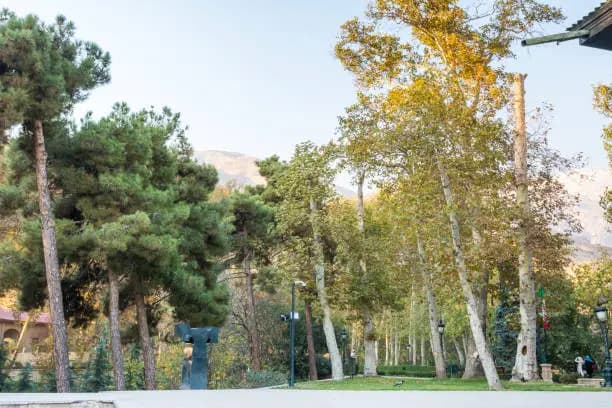
The park sprawls across several dozen hectares of dense vegetation. Shaded pathways, streams, and lawns create a pleasant walking space enjoyed by Tehranis, especially in summer when city heat is stifling.
The Museum of Fine Arts
Located in a separate pavilion, it gathers works by twentieth-century Iranian painters alongside European pieces acquired during the Pahlavi period. The collection provides an interesting cultural counterpoint to the decorative arts collections in the other palaces.
The statue of boots
At the entrance to the White Palace stand the bronze boots of a former statue of Reza Shah, decapitated after the revolution. This symbolic remnant alone encapsulates the historical rupture of 1979.
Etiquette and visiting rules
- Headscarf mandatory for women from the moment you enter the complex.
- Covering clothes required (long sleeves, long trousers or skirt).
- Photography is generally permitted in the gardens; check specific restrictions for each palace at the entrance.
- Respect protective cordons around furniture and displayed objects.
Photography tips
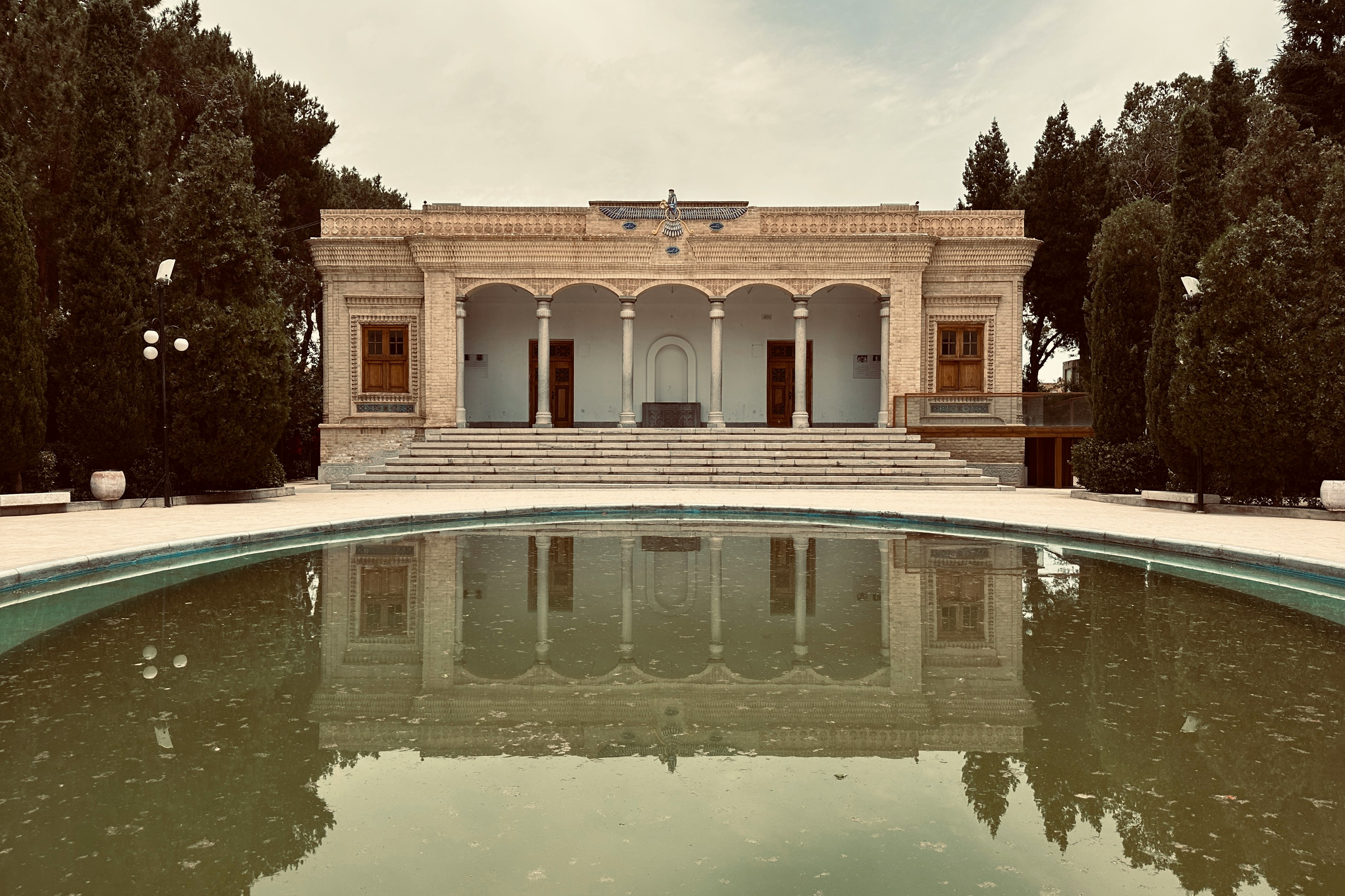
Morning light filters through the trees and gently illuminates the palace facades: arrive early to avoid crowds and take advantage of the golden light. Reflections in the pools facing the White Palace offer beautiful compositions. Indoors, lighting is dim; a camera with strong low-light performance is an advantage.
Location and access
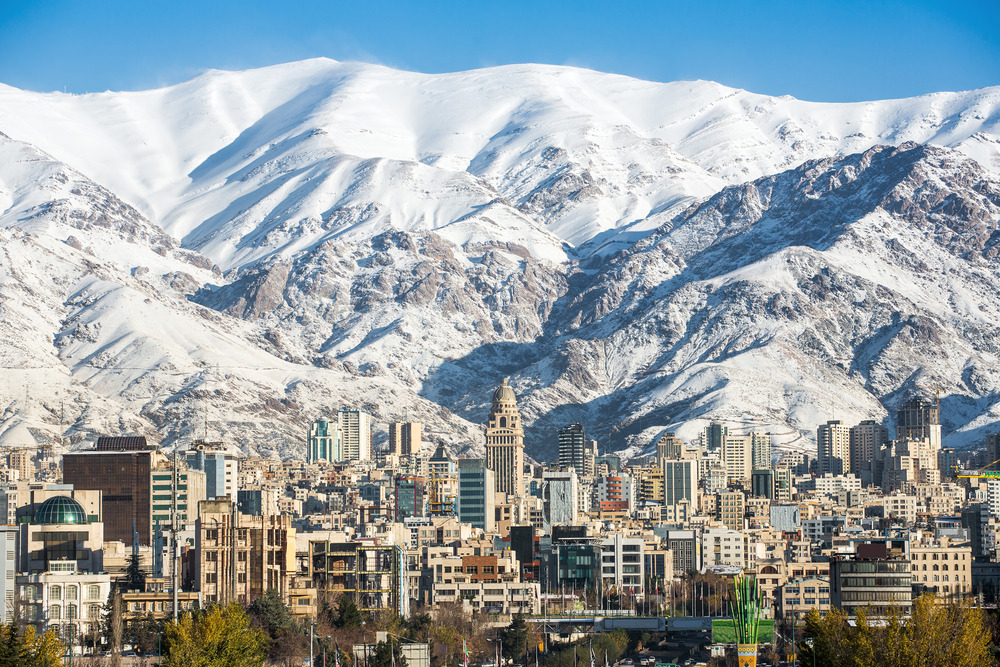
The Sa'dabad Complex is located in the Shemiran district, at the northern edge of Tehran, at the foot of the Alborz mountains. The Tajrish metro station (line 1) is the most convenient starting point; from there, a taxi or a few minutes' walk north of Tajrish bazaar leads to the main entrance. The Niavaran Palace, another Pahlavi palace complex, is nearby in the same district.
Nearby attractions
- Niavaran Palace — Another, more intimate Pahlavi palace ensemble, a few minutes by taxi away.
- Tajrish Bazaar — Lively market where you can buy spices, dried fruits, and local crafts before or after your visit.
- Darband — Mountain village serving as a trailhead for hiking in the Alborz, accessible from Tajrish.
- Milad Tower — Telecommunications tower with panoramic viewing platform over Tehran, in another part of the city.
Frequently asked questions
Park entry and access to each palace-museum are charged separately. Have enough local currency on hand to visit the buildings that interest you.
Women must wear a headscarf and covering clothes (long sleeves, covered lower body). This rule applies from entry to the complex, including in the gardens.
Yes, both complexes are in the Shemiran district and are connected by taxi in just a few minutes. Plan a full day to visit both without rushing.
Rules vary by palace. Photos are generally allowed in the gardens. Indoors, check signage or ask the attendant at the entrance to each building.
Spring (April–May) and autumn (September–October) offer pleasant temperatures. In summer, the site is cooler than downtown due to its altitude and tree cover, making it a popular escape for Tehranis.
Take metro line 1 to Tajrish station, the northern terminus. From there, a taxi or short walk north of Tajrish bazaar takes you to the complex entrance.
Interested in this visit?
We can include it in your personalised itinerary.