Grand Bazaar of Tehran
Grand Bazaar of Tehran
Several kilometers of specialized galleries, Qajar caravanserais and a Safavid mosque: the Grand Bazaar of Tehran is the commercial and historic center of Iran's capital, open Saturday through Thursday.
In the heart of old Tehran, the Grand Bazaar stretches across several kilometers of covered galleries, caravanserais and interwoven mosques. Founded centuries ago, it remains the commercial and social heartbeat of Iran's capital. Spices, carpets, jewelry, beaten copper, textiles: each specialized alley forms its own world. It is also a living space where merchants, porters and the faithful cross paths at all hours.
Quick Practical Guide
- Entrance: Free, no admission charge
- Closed days: Friday (near-total closure) and Iranian public holidays
- Recommended duration: 2 to 3 hours minimum to explore several galleries
- Access: Panzdah-e Khordad metro station (Line 1) or Imam Khomeini (Lines 1 and 2), a few minutes' walk
- Dress code: Modest dress mandatory — women: hijab and covering clothing; men: no shorts
- Accessibility: Difficult — uneven floors, frequent steps, heavy crowds
What to See
The bazaar is divided into thematic galleries (rasteh): the jewelers' gallery, carpet merchants, the spices and medicinal herbs sector, copper and brass shops. Several historic caravanserais dot the route, some converted into artisan workshops. The Imam Khomeini Mosque (former Shah Mosque) opens directly onto the bazaar to the south.
History and Context
Tehran's bazaar has existed in its organized form since the Safavid era, but it was under the Qajars (18th–19th century) that it reached its current scale. It played a major political role: the merchants (bazaaris) actively supported the Constitutional Revolution of 1906 and the Islamic Revolution of 1979. Closing the bazaar has always meant paralyzing the city's economy.
Highlights of Your Visit
The Carpet Gallery
Hundreds of hand-knotted carpets are stacked from floor to ceiling. Merchants unfurl pieces on request. Even without buying, observing the regional patterns — Tabriz, Isfahan, Qom — is instructive.
The Spices and Herbs Sector
Bulk saffron, rose water, sumac, dried herbs: colors and aromas saturate the air. This is the most photogenic part of the bazaar and the best place to buy Iranian saffron at reasonable prices.
The Interior Caravanserais
Several open courtyards, inherited from Qajar caravanserais, offer a respite from the bustle. Some still house wholesalers or weaving workshops. They are often overlooked by hurried visitors.
The Imam Khomeini Mosque
Accessible from the bazaar, this 17th-century mosque features a portal of blue faience mosaics and a vast iwan. Visits are possible outside prayer times for non-Muslims, with strict dress code required.
Etiquette and Visitor Rules
- The hijab is mandatory for women from the bazaar entrance onwards and especially in the mosque.
- Speak in a low voice near prayer areas.
- Ask permission before photographing merchants or customers.
- Do not touch merchandise without intent to purchase in small shops.
- Remove shoes before entering the mosque.
Photography Tips
Natural light filters through the domed skylights (roshan) mid-morning: this is the best time to photograph the galleries. The spices sector offers rich color palettes in diffuse light. Avoid flash in prayer spaces. A fast lens (f/1.8–2.8) compensates for the darkness of deep galleries.
Location and Access
The Grand Bazaar occupies the historic quarter in central-south Tehran, around Imam Khomeini Square. The Panzdah-e Khordad metro station (Line 1) leads directly to one of the main entrances. Imam Khomeini Square and the Imam Khomeini Mosque are adjacent. The National Museum of Iran is less than ten minutes' walk to the north.
Nearby Attractions
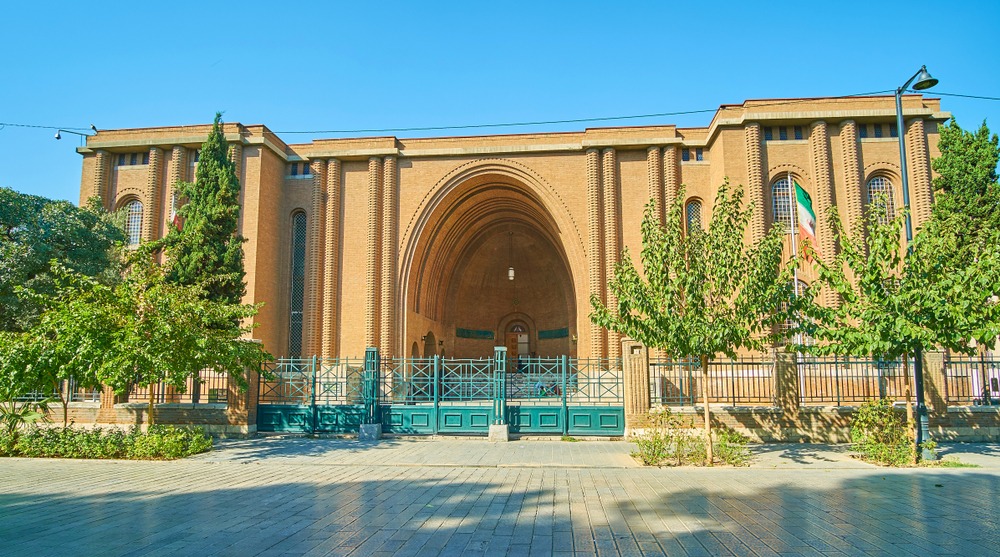
- National Museum of Iran — archaeological collections spanning five millennia, minutes' walk north of the bazaar.
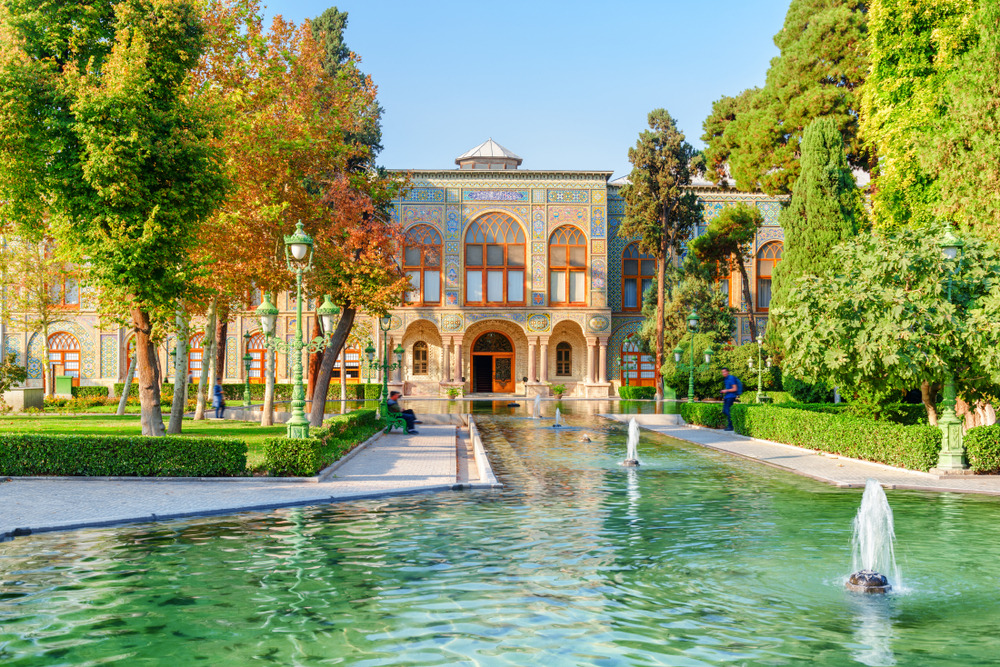
- Golestan Palace — UNESCO-listed Qajar palatial complex, less than a kilometer to the east.
- Imam Khomeini Square — former Toupkhâneh Square, historic heart of Tehran, bordering the bazaar to the south.
- Imam Khomeini Mosque — masterpiece of Safavid faience, directly accessible from the bazaar.
Frequently asked questions
No. Friday, the weekly day of rest in Iran, nearly all shops are closed. Plan your visit for weekdays, Saturday through Thursday.
Women must wear a hijab and clothing covering the arms and legs. Men avoid shorts. These rules apply from the bazaar entrance onwards, not just in the mosque.
Yes, the two sites are less than a kilometer apart. Half a day is sufficient for both if you don't linger in the shops.
Haggling is common for carpets, handicrafts and textiles. For spices and food products, prices are generally fixed. Remain courteous: aggressive negotiation is poorly received.
Photographing the galleries and merchandise is generally tolerated. Always ask permission before photographing people. In the mosque, avoid photographing during prayers.
Panzdah-e Khordad station on Line 1 is closest to a main entrance. Imam Khomeini station, at the intersection of Lines 1 and 2, is also a few minutes' walk away.
Nearby
Interested in this visit?
We can include it in your personalised itinerary.