Isfahan
Isfahan
In central Iran, Isfahan is a highly visited tourist destination. Discover its unmissable attractions.
In central Iran, Isfahan is a highly visited tourist destination. Discover its unmissable attractions.
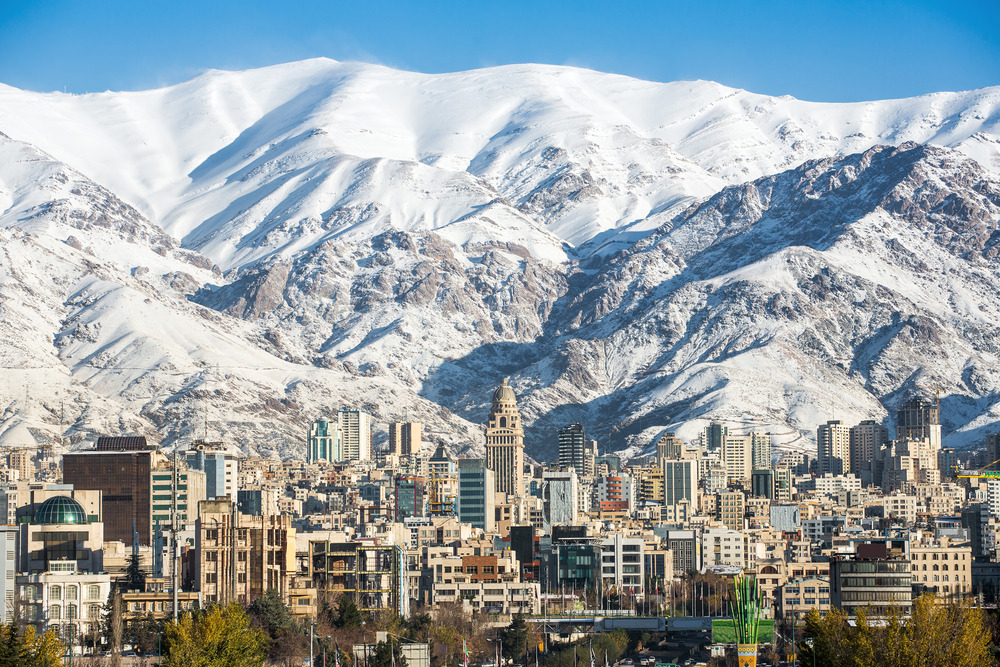
The generous and fertile land of Isfahan is like an oasis in the heart of the desert. It bears the traces of the era when Abbas I the Great established it as the royal capital of the Safavids… when viziers strolled through its enclosed gardens, when Shiite scholars preached in its schools, and Western travelers came to purchase gold, silk, and jewels. Isfahan contains some of the most beautiful jewels of Persian architecture, such as the Sheikh Lotfollah Mosque or the Ali Qapu Palace. But does the trip promise only that? Beyond its urban splendor, the old city reveals a hidden face: encounters with art students, discovering the secrets of tapestry weaving, amused wonder at women dressed in chadors, the flavor of sangak with sesame seeds… Thus, lovers of ancient stones will return satisfied with their trip to Isfahan, as will the most discerning travelers seeking authentic cultural and human encounters.
A Brief History
Historians are divided on the founding date of the city, which relies more on hypotheses than established archaeological evidence. Achaemenid clay tablets mention the existence of a locality called Aspadana: could it be situated on the site of present-day Isfahan? Jewish occupation of the site in the sixth century is attested by Arab sources: could these be the Jews deported by Nebuchadnezzar II around 600 BCE and resettled in Isfahan under the reign of Shapur I? The dual Jewish and Sassanid heritage remains a mystery.
What is certain is that Isfahan fell into Arab hands in 644. The Abbasids stationed troops there. Still visible today, the Friday Mosque probably dates back to the tenth century, when the Buyids took control of the region.
In the eleventh century, it was the Seljuks' turn to seize the city. The rise of this dynasty was accompanied by notable economic and social progress. The urban landscape was reorganized: educational institutions, mosques, and royal tombs flourished around Isfahan's Old Square. There was even an observatory to study the movement of the stars. The Minaret of the Forty Girls, towering at 130 feet and accessible by a spiral staircase, is one of the finest remnants of Seljuk heritage.
Abbas I the Great, the fifth king of the Safavid line, undertook to complete the urban development begun by his predecessors. Not only did he decide to establish his capital here, but he envisioned making Isfahan a world-renowned artistic center, designed to showcase to Westerners the heights of elegance and refinement of Persian civilization. Did Abbas I's development projects live up to his ambitions? It appears they did. Under Safavid rule, Isfahan was indeed described in travel journals as one of the most beautiful capitals of the Middle East.
Alas, the Afghan invasion in 1722 left the city desolate. Isfahan lost, along with its status as capital, all its prestige and splendor. When the Comte de Gobineau traveled through the Persian Empire around the mid-nineteenth century, he discovered a city in ruins, flooded with dilapidated buildings and bazaars. The former Safavid capital barely counted 60,000 inhabitants, he noted.
Of the glory of empires and civilizations, only memories remain today. Carefully preserved monuments that secure the city's comfortable place in Iran's tourism market.
Today
Capital of its eponymous province, Isfahan positions itself as Iran's third major metropolitan center. The most recent 2015 census revealed a population of 5.7 million inhabitants spread across 11 districts.
The local economy is built on heavy industries: steel, cement, petrochemicals, oil… Tourism has also generated significant revenue since the early twenty-first century. Isfahan's appeal to travelers is primarily due to its UNESCO-listed sites. UNESCO recognizes the historical value of the Imam Square, which brings together the city's most famous monuments.
Yet let us not forget that before its opening to tourism, this verdant oasis established in the middle of a desert plateau had already enchanted numerous travel writers, such as Jean Chardin or Pierre Loti. In the minds of Westerners, Isfahan evokes the exotic otherness of the Middle East, the call to a journey filled with mysteries, far removed from the everyday and timeless.
What to See and Visit in Isfahan
Whether you plan to stay more than a week or just for a day, Isfahan will deliver on its promises. Persian gardens, palaces adorned with delicate mosaics, bazaars brimming with authentic artisanal goods… Visiting the ancient capital of the Safavids is nothing short of magical!
Religious Heritage
- The Sheikh Lotfollah Mosque: Dominating the famous Naqsh-e Jahan Square, the Sheikh Lotfollah Mosque, also known as the Royal Oratory, is one of the most striking masterpieces of Safavid architecture. Lotfollah was a former imam who presided over religious services, but the building itself was commissioned by Abbas I. When you are the Shah of Persia, you can afford the luxury of building a place of worship for the exclusive use of your concubines. Entry was forbidden to any ordinary worshipper under penalty of death. Despite the absence of minarets and a central courtyard, the building's façade strikes visitors with the exquisite execution of its mosaics, on one hand, and on the other, the magnificent dome covered with glazed tiles.
The Shah Mosque (or Imam Mosque): While one might concede that the quality of the mosaics is not as masterfully executed as in the Sheikh Lotfollah Mosque, this eighteenth-century sanctuary is a fine example of architectural engineering. The pursuit of perfection is evident in the crescent-shaped façade of the main portal, in the glimmers of glass and tilework that cover the ceiling, and in the calligraphic inscriptions that praise the Prophet Muhammad. Visit it at noon, when under the bright daylight, the entrance portal gleams with a deep blue!
The Friday Mosque: The foundation of this mosque dates to a remote era, as archaeologists confirm that a hypostyle sanctuary already occupied the site around the tenth century. Although, unlike the two previous mosques, it is not a UNESCO-listed monument, Isfahan's great mosque, as it is otherwise known, possesses a distinctive feature: it illustrates the evolution of architectural currents that succeeded one another in Iran.
Royal Palaces
The Ali Qapu Palace: Completed in the seventeenth century, this charming structure stands facing the Sheikh Lotfollah Mosque. An underground passage, now sealed, once connected the palace's center to the sanctuary. The two-level building consists of a majestic portico and a loggia with 18 wooden columns adorned with a magnificent fountain. The upper part of the structure features a covered balcony that served as a royal tribune during official events.
The Chehel Sotun Palace: Built by Abbas II around 1647 and restored in 1870, the Chehel Sotun Palace – or Palace of the Forty Columns in Persian – is a highly prized destination for strolls. Beyond its historical interest, linked to royal coronations and courtesy visits from foreign ambassadors, the building's design itself is visually satisfying. A basin with clear waters, reflecting the old trees of the garden, adds a dreamlike setting to this place. Perfect for a relaxing walk at the end of the day!
The Palace of Eight Paradises (Hasht Behesht): The Hasht Behesht Palace is a must-see monument on the broad Chaharbagh Avenue for its murals, woodwork, and muqarnas. Its exterior garden is a haven of peace to recharge and cool off, away from the city's bustle.
Monuments and Famous Squares
Imam Square: Described by UNESCO as an "exceptional urban achievement, the Meidan Imam is Isfahan's most beautiful square and one of the world's most important historic plazas. It is the result of an ambitious urban plan conceived by Abbas I, who wanted to build an impressive international-minded district that would impress Westerners. The square brings together the city's remarkable monuments: the Imam Mosque, the Sheikh Lotfollah Mosque, the Ali Qapu Prince's Palace, and the great covered market. Many strollers gather there in the evening to relax, enjoy the air, or spend time with family.
The Grand Bazaar: Brimming with shops selling tapestries, pottery, jewelry, and other artisanal goods, Isfahan's grand bazaar is the place to be for purchasing gifts. It is accessible from the north side of Naqsh-e Jahan Square. Because the place is always crowded, do not hesitate to pop in, to connect with locals and discover the city's authenticity in small increments.
The Shaking Minarets of Isfahan: Used as instruments for the call to prayer, the pair of minarets overlooking the sanctuary erected in memory of Amou Abdollah Soqla is a source of curiosity for tourists. Due to their mechanical design, the oscillation affects both minarets as soon as one is moved.
The Khaju Bridge: Do not miss this popular spot, where a slice of Isfahan's social and cultural life unfolds. Graced with 23 majestic arches, the bridge is crossed by the Zayandeh River, one of the country's permanent waterways. It is hard not to admire the gentle music of the flowing water, when you consider the river runs dry during drought years. The lower section of the Khaju Bridge is reserved for pedestrians. Nothing prevents you from strolling along the riverbank and enjoying the views at leisure. Dining establishments abound all around, as do cafés and teahouses.
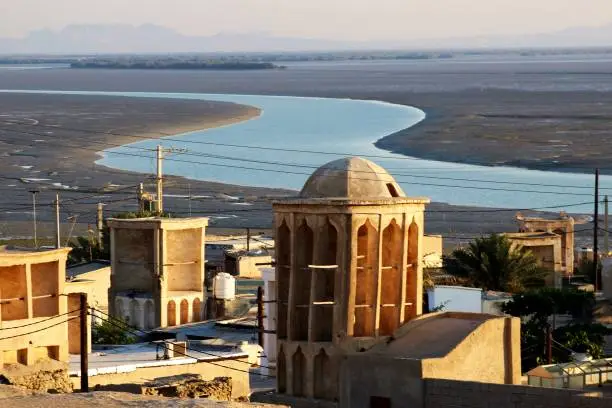
The Pigeon Towers: For your information, pigeons were a rare commodity in medieval Iran. Their droppings were collected on a large scale to fertilize soil and to obtain leather. Of the three thousand pigeon towers that Isfahan once possessed, about three hundred remain today. During your visit, you will have the pleasure of discovering a monumental tower in the shape of a cone or cylinder, housing more than 12,000 birds. Access to the towers was intelligently designed to protect the birds from predator attacks.
Thanks to its international airport, dubbed Isfahan Shahid Beheshti Airport, access to the city is extremely easy. A few airlines offer daily flights from Istanbul, Dubai, and Kuwait. Unfortunately, there are no direct flights to Isfahan from European cities. For a connecting flight departing Paris-Charles de Gaulle Airport and landing in Isfahan, expect between 9.5 and 10 hours of travel, depending on the carrier chosen.
At the airport terminal, you can hail a taxi to reach Isfahan's city center. The fare will cost you approximately €8 to €10, with a surcharge for night flights.
If you are leaving from Tehran, regional bus services operate between Tehran Beyaghi Station and Isfahan Kaveh Station for a fare of €10. From there, take a taxi to reach the city center in less than six minutes.
When to Visit Isfahan?
Like central Iran's region, Isfahan enjoys a semi-desert climate. If you fear the heat, avoid dates in summer, knowing that temperatures approach 98 or 100°F. Winter is no better, as while the average annual precipitation is low (5 inches), it falls mostly between December and February. To enjoy a pleasant vacation in Isfahan, the smart travelers will depart in spring. The weather is warm and pleasant during this season, far from the biting cold and intense summer temperatures.
You Will Love…
experiencing the nocturnal atmosphere on the Khaju Bridge;
wandering freely through the Ali Qapu Palace Garden;
observing the shaking minarets of Isfahan;
photographing the remarkable mosaics of the Sheikh Lotfollah Mosque;
enjoying a stunning view of the Shah Mosque as it illuminates in the evening;
visiting a textile or ceramic factory;
returning home with the famous Persian rugs;
spending a moment of cultural immersion at the St. Savior Cathedral Museum;
appreciating the delights of local cuisine.
Attractions in Isfahan
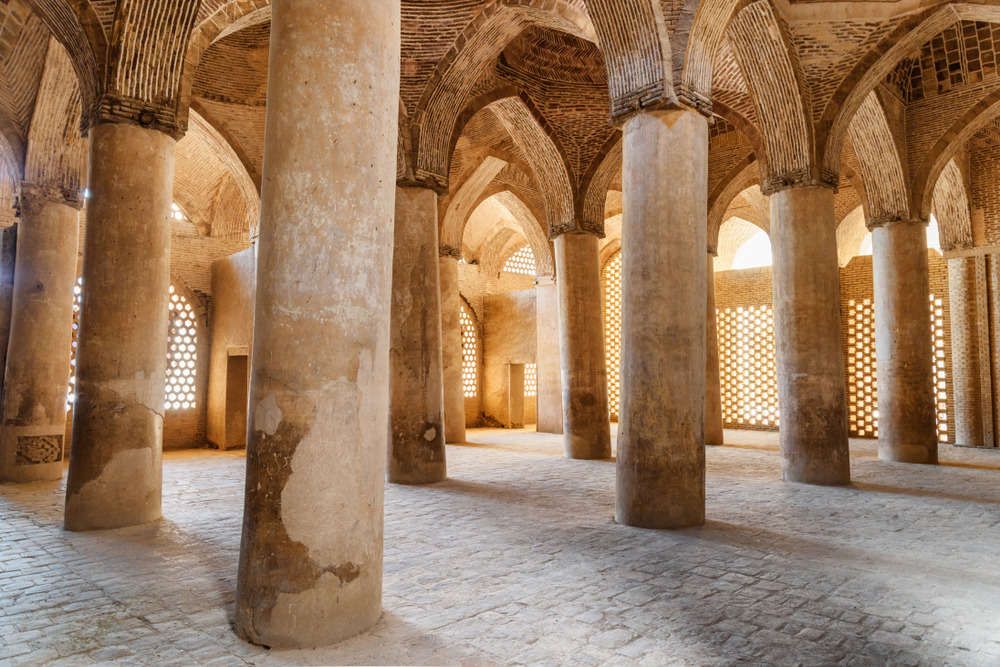
Mosquée Jameh à Ispahan
Inscrite à l'UNESCO en 2012, la mosquée Jameh d'Ispahan déploie un plan à quatre iwans et des coupoles qui retracent plus de mille ans d'architecture iranienne.
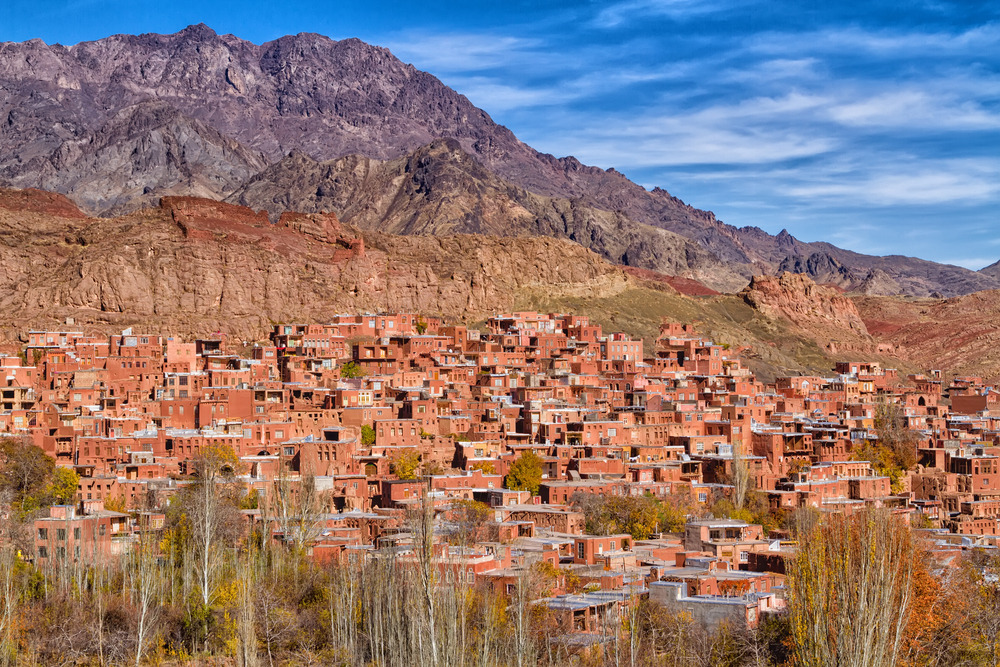
Abyaneh
Village d'argile rouge perché à 1 500 m entre Kashan et Ispahan, Abyaneh conserve un habitat traditionnel safavide et un patrimoine classé monument national.
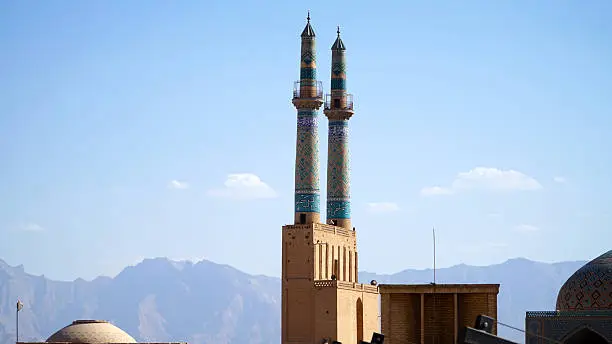
Minarets tremblants de Ghalamdan (Menar Jonban)
À l'ouest d'Ispahan, le mausolée Menar Jonban abrite deux minarets en brique dont l'un transmet ses vibrations à l'autre — un phénomène mécanique inexpliqué depuis le XIVe siècle.
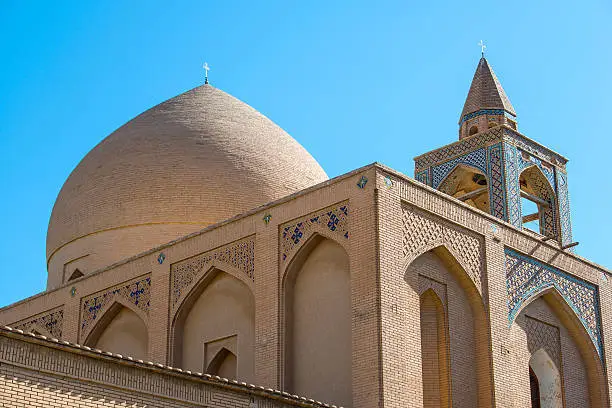
Cathédrale Vank (Sainte-Mère-de-Dieu)
Au cœur du quartier arménien de Jolfa, la cathédrale Vank réunit fresques bibliques foisonnantes, architecture safavide et un musée retraçant l'histoire de la communauté arménienne d'Iran depuis le XVIIe siècle.
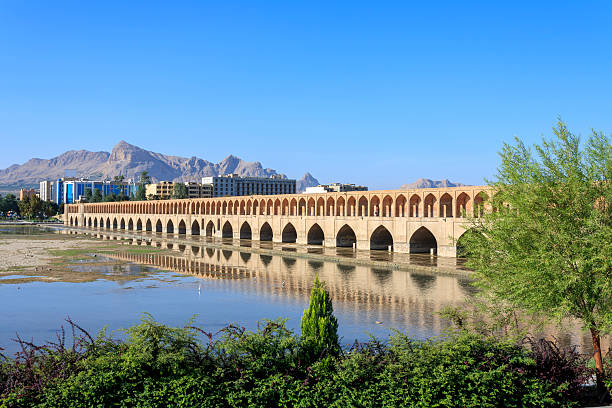
Pont Si-o-se-pol (pont Allahverdi Khan)
Le Si-o-se-pol, pont aux trente-trois arches construit au début du XVII<sup>e</sup> siècle, est le cœur de la vie sociale d'Ispahan. Galeries basses, reflets dans la rivière et animation locale en font bien plus qu'un simple monument.
Want to discover this destination?
Our local advisors design your tailor-made trip.