Dowlatabad Garden
Dowlatabad Garden
UNESCO-listed Persian garden in Yazd, famous for its 33.8-metre wind tower, octagonal pavilion and ingenious irrigation system using qanats.
The Dowlatabad Garden (Bagh-e Dolat Abad in Persian) is one of Yazd's most emblematic Persian gardens. Inscribed on the UNESCO World Heritage List in 2011, it combines an octagonal manor, a monumental wind tower and a plant composition that defies the desert climate of the Iranian plateau.
Why visit Dowlatabad Garden
This site condenses several distinctive features of Iranian architecture into one location: the hydraulic mastery of qanats, the ingenuity of wind towers (baguirs), the geometry of Persian gardens inherited from the chahar bagh and the ornamental craftsmanship of coloured stained glass. The wind tower, which rises to 33.8 metres, is presented as one of the tallest in Iran.
For Yazd residents, the garden remains a place for strolling and respite in the heart of an arid city. For travellers, it is an essential stop for understanding how Persian societies organised water, vegetation and habitation in an arid environment.
History and context
The garden was created in the mid-18th century, during the reign of Karim Khan Zand over the south and then the centre of Iran. The Zand dynasty, which extended its influence as far as Bahrain and Azerbaijan, relied on large-scale architectural projects to assert its political prestige. Dowlatabad exemplifies this logic: the site served both as a residence and as an affirmation of power.
The entire complex — garden, manor and wind tower — covers approximately 40 hectares. It has been inscribed on the UNESCO World Heritage List since 26 June 2011, as part of the collective inscription of Persian Gardens, which groups nine sites representative of this landscape tradition.
What to see on site
The octagonal pavilion
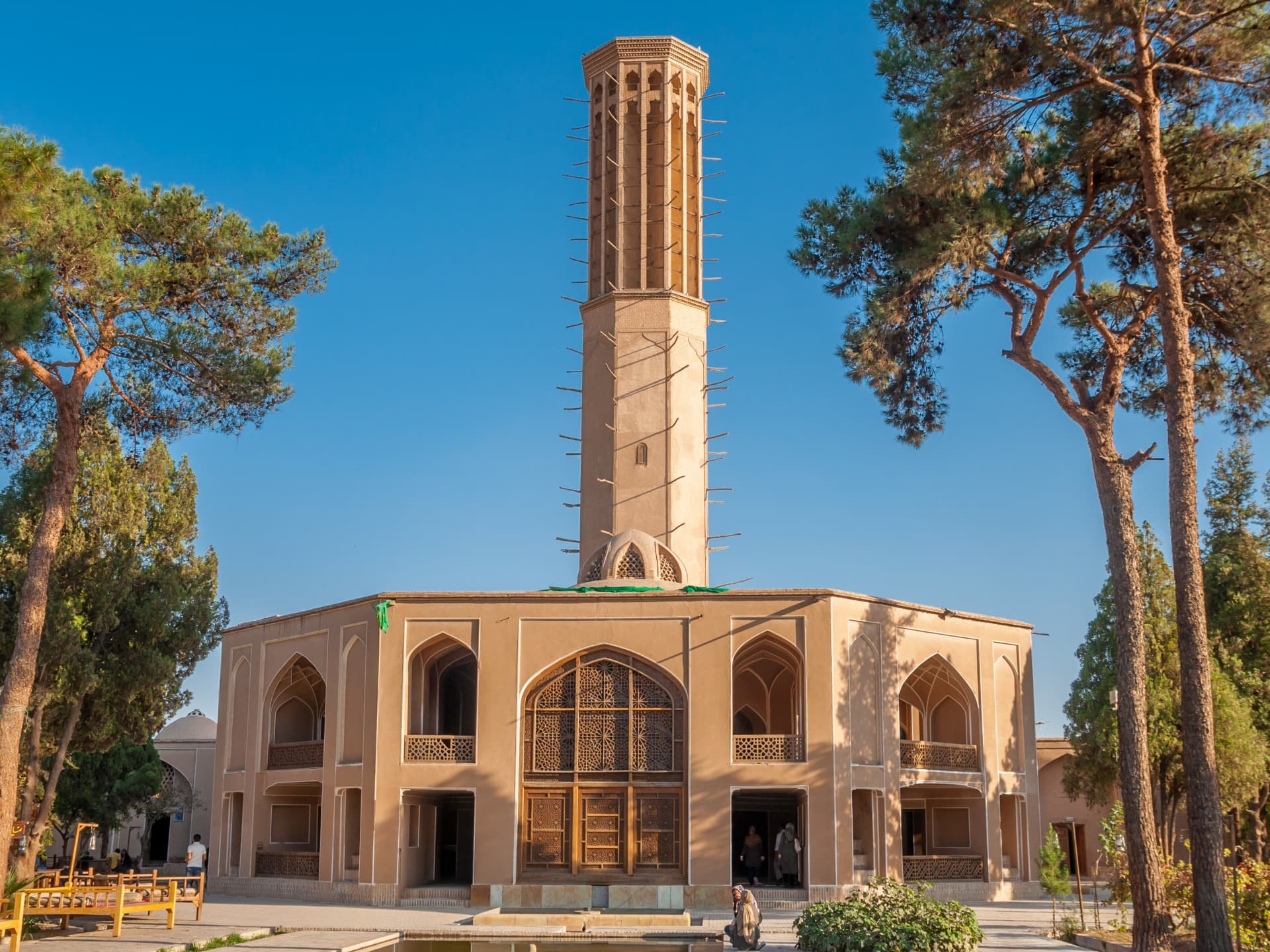
At the heart of the estate, the residential pavilion adopts an octagonal layout that allows it to be approached from several angles. Inside, two elements command attention:
- the coloured stained glass, which filters light and contributes to natural ventilation of the building;
- the mirror room, a characteristic ornament of Persian aristocratic interiors.
The residential complex also includes a harem, a mirror chamber and a suite reserved for servants, testifying to the hierarchical organisation of the dwelling.
The wind tower (baguir)
The most visible element of the site, the baguir measures 33.8 metres high. Its role is climatic: it captures air currents at height and redirects them to the lower rooms, where the air is cooled by contact with water before being diffused throughout the pavilion. This passive device allowed inhabitants to endure Yazd's suffocating summers long before the advent of modern air conditioning.
The garden and hydraulic system
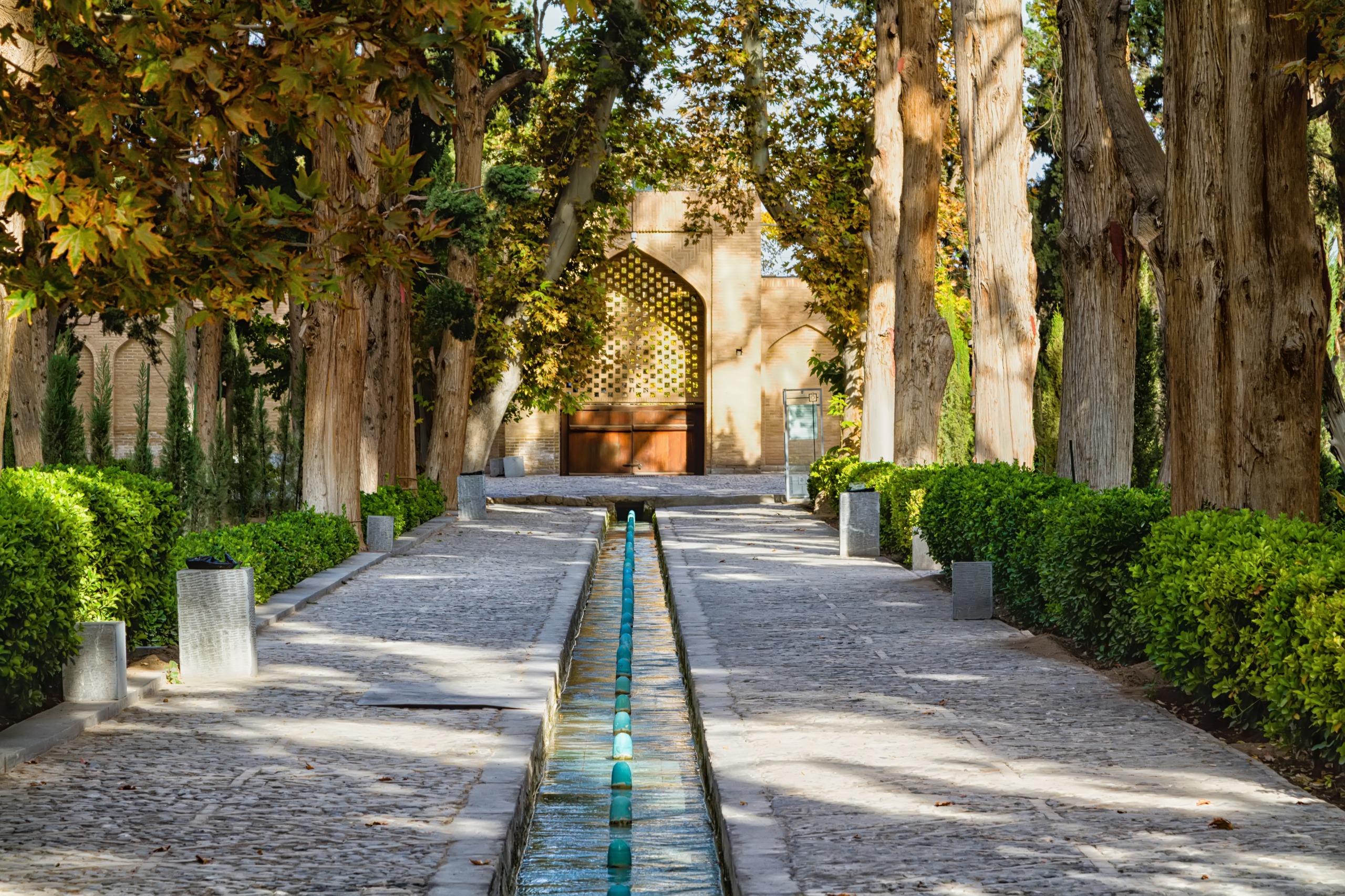
The garden is fed by qanats, underground galleries that convey water from the Mehriz region. The water then flows in the open air through marble and clay basins, and into a central rectangular pool that structures the composition. This water display serves a dual purpose: irrigating the vegetation and cooling the air captured by the wind tower.
As for plantings, you will observe:
- century-old cypress trees, emblematic trees of Persian gardens;
- pines and pomegranate trees;
- roses and vines running between the flower beds.
The whole illustrates the ideal of the Persian garden, conceived as an earthly representation of paradise.
Practical information
- Location: north of Yazd, accessible from Dowlatabad Boulevard. A taxi journey from the historic centre takes about ten minutes.
- Duration of visit: allow 1 to 1.5 hours to tour the garden, pavilion and wind tower.
- Admission: paid entry at a modest rate, like most Iranian heritage sites.
- Opening hours: open daily during daytime. Hours vary by season; it's best to check locally.
- Dress code: modest clothing in line with Iranian regulations, particularly for visiting the pavilion.
When to visit
Yazd is located in a hot desert area, with very gruelling summers (temperatures regularly exceeding 40°C in July-August) and cool winters. The best times to visit Dowlatabad Garden are:
- March to May: mild temperatures, vegetation at its peak, roses in bloom;
- October to November: temperate autumn, soft light, moderate visitor numbers.
If possible, avoid the height of summer, when outdoor visits become difficult in the middle of the day.
Nearby attractions
Yazd and its surroundings contain several complementary sites to extend your discovery of Iranian architecture and gardens:
- the Fin Garden in Kashan, another UNESCO-listed Persian garden;
- the troglodytic village of Abyaneh, halfway between Tehran and Yazd;
- the Boroudjerdi House in Kashan, a fine example of a traditional dwelling with a wind tower;
- the Mausoleum of Ali Ebn-e Hamzeh in Shiraz, to extend your itinerary to the south;
- the Gondab-e Aali site, another heritage stop on the Iranian plateau.
FAQ
Frequently asked questions
Yes. It is part of the collective inscription of Persian Gardens, listed as UNESCO World Heritage on 26 June 2011.
The wind tower (baguir) of the garden measures 33.8 metres. It is regularly presented as one of the tallest in Iran.
Allow an average of 1 to 1.5 hours to tour the garden, visit the octagonal pavilion and observe the wind tower from the inside.
Spring (March to May) and autumn (October to November) offer the most pleasant conditions. Summer is very hot and winter evenings can be cool.
The garden is fed by qanats, underground galleries that convey water from Mehriz. The water then flows through a rectangular pool and into marble and clay basins, which also cool the air captured by the wind tower.
Incorporating Dowlatabad into your itinerary
Dowlatabad Garden fits naturally into a tour focused on Yazd and the central Iranian plateau, alongside historic mud-brick quarters, Zoroastrian temples and other Persian gardens. To build a bespoke itinerary, consult our trips to Iran.
Nearby
Interested in this visit?
We can include it in your personalised itinerary.