Mausoleum of Ali
Mausoleum of Ali
A 19th-century Shia shrine-garden in the heart of Shiraz, the Mausoleum of Ali Ebne Hamzeh stands out for its ochre façade, glass dome, and interiors adorned with mirror mosaics.
The Mausoleum of Ali Ebne Hamzeh is a shrine-garden located on Hafez Street, in the heart of Shiraz, in Fars Province. This 19th-century Shia sanctuary houses the burial of an imamzadeh, a descendant of Shia imams, and represents a striking example of Qajar funerary architecture crowned by a glass dome.
Why visit the Mausoleum of Ali Ebne Hamzeh
The site offers three compelling reasons for visitors passing through Shiraz. First, it remains an active place of Shia worship, allowing you to observe local religious life in a setting less touristy than the great mausoleums of Isfahan or Mashhad. Second, it bears witness to Qajar architecture, with its ochre-yellow façade, glass dome, and interiors entirely covered in mirror mosaics. Third, it serves as a convenient stopping point: located less than fifteen minutes on foot from the Tomb of Hafez and immediately adjacent to Arge Karim Khan, it integrates easily into a downtown itinerary.
History and religious significance
Ali ibn Hamza is an imamzadeh, meaning a revered descendant of an imam. Shirazi tradition connects him to the lineage of Imam Musa al-Kazim, the seventh imam of Twelver Shiism. He should not be confused with other historical figures bearing the same name: he is neither the fourth imam (a title held by Ali Zayn al-Abidin), nor linked to the Druze movement founded in Cairo in the 11th century by a different theologian.
The present mausoleum dates to the 19th century and belongs to the Qajar period. It was built to house and honor the burial of the imamzadeh on a site already recognized as a pilgrimage destination. The building follows the long tradition of Shia family shrines, where popular devotion to descendants of the imams shapes a significant part of Iranian religious life.
What to see on site
The courtyard and façade
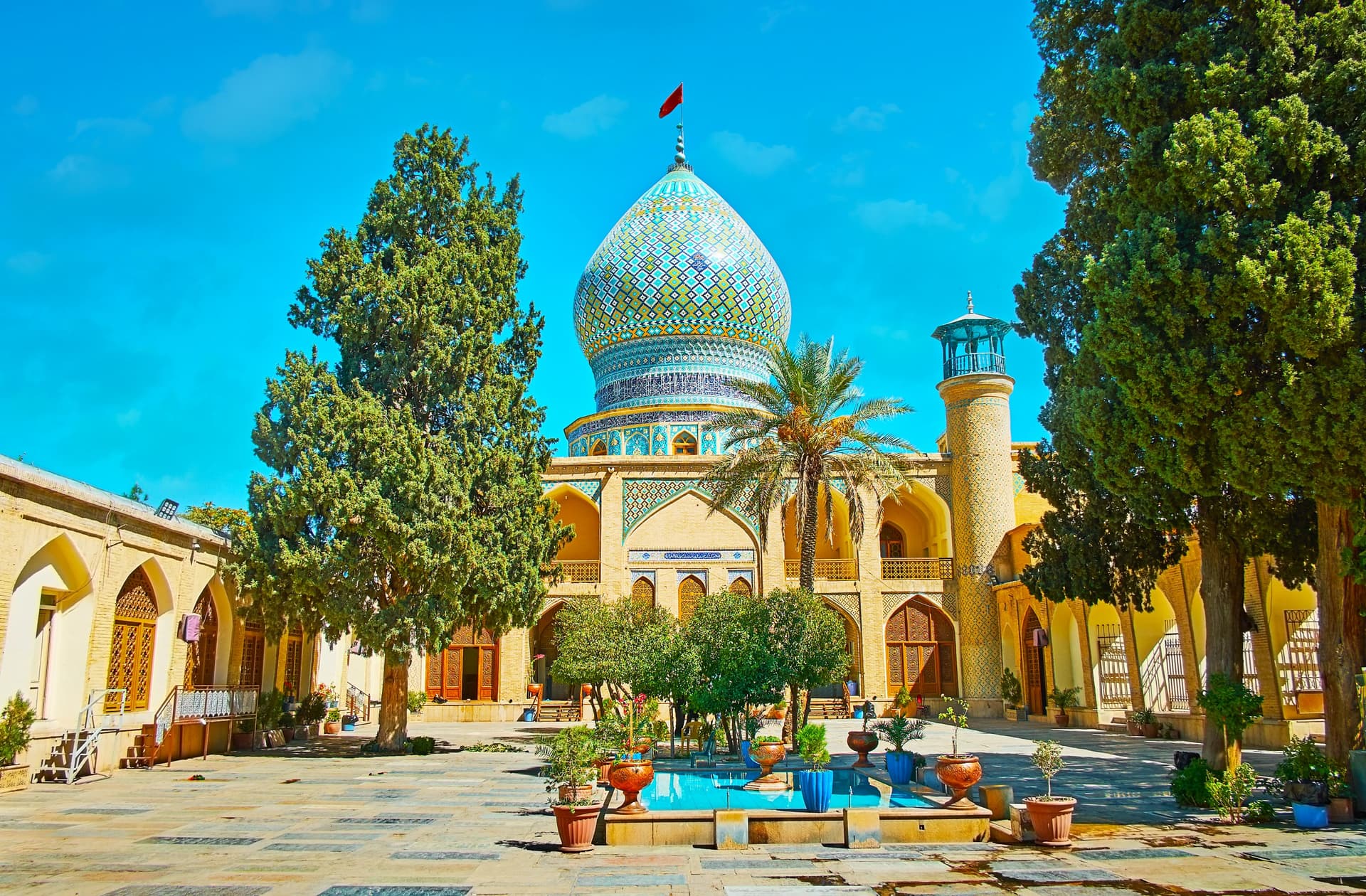
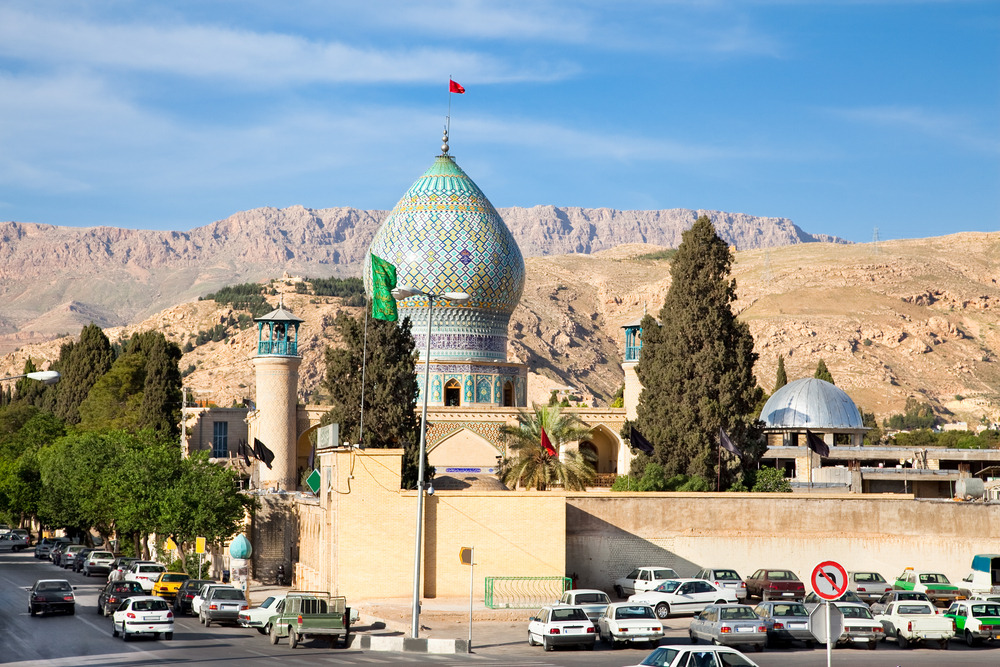
The ensemble is organized around a tree-planted courtyard, at the center of which a pool serves for ablutions. The ochre-yellow façade is crowned by a glass dome framed by two minarets. The exterior surfaces bear geometric patterns composed of mirror fragments, characteristic of late Qajar art.
The sanctuary interior
The interior is entirely decorated with muqarnas (architectural stalactites), stucco fragments, and stained glass. Walls and ceilings covered in mirror mosaics create a multiplied light effect typical of great Iranian Shia mausoleums. The décor combines elements of ancient inspiration with the craftsmanship of 19th-century Qajar artisans.
The garden and bridge
The mausoleum is bordered by a wooded garden and stands below an 18th-century bridge, adding a picturesque dimension to the visit. The interior courtyard offers a shaded respite away from the bustle of Hafez Street.
Practical information
- Dress code: modest, covered clothing required for men and women; headscarves mandatory for women. Chadors are provided at the entrance if needed.
- Entry: gender separation at the main entrance, but this rule is generally not enforced for foreign visitors, who may typically enter together.
- Photography: permitted in the courtyard, more discreetly inside the sanctuary out of respect for those in prayer.
- Duration: allow 30 to 45 minutes for a leisurely visit.
When to visit
Shiraz has a semi-arid continental climate with less than 305 mm of annual rainfall. Temperatures range from around 6°C in January to nearly 38°C in July. The peak tourist season runs from November to February, the most pleasant period for exploring the downtown on foot. Spring (March–April) remains favorable, with blossoms that showcase the gardens. Summer is tolerable early or late in the day, but uncomfortable at midday.
How to get there
The mausoleum is located on Hafez Street in Shiraz's historic center. From Arge Karim Khan, two options are available: a short taxi ride, or a walk via Saheli Street, turning right at the intersection. Traditional taxis and Iranian ride-sharing apps (Snapp, Tapsi) serve the area easily.
Nearby attractions
The mausoleum sits within a sector rich in major Shiraz landmarks:
- Tomb of Hafez, about 15 minutes on foot, dedicated to the great Persian poet of the 14th century.
- Jahan-Nama Garden, a classical Persian garden located immediately near the Tomb of Hafez.
- Arge Karim Khan, an 18th-century citadel with four watchtowers and 14-meter-high walls.
To further explore Iran's heritage, you can visit sites such as the Bibidokhtaran Sanctuary, the Fin Garden in Kashan, the historic village of Abyaneh, or the Citadel of Ghoortan.
Frequently asked questions
Frequently asked questions
He is an imamzadeh, a venerated descendant of a Shia imam, linked by tradition to the lineage of Imam Musa al-Kazim. He is revered locally in Shiraz and should not be confused with other historical figures of the same name.
Yes, foreign visitors, Muslim or otherwise, are welcomed. The gender separation enforced for Iranian worshippers at the entrance is generally not imposed on foreign visitors.
A complete visit takes between 30 minutes and one hour, including the courtyard, the sanctuary interior, and time to observe the mirror décor.
Modest, covered clothing (arms and legs) is required. Women must wear a headscarf; a chador may be offered at the entrance. Respect for the quiet and prayers of worshippers is expected.
Access to Shia mausoleums is typically free or subject to a modest fee for foreign visitors. Rates vary: check on site or with your guide.
Plan your journey
The Mausoleum of Ali Ebne Hamzeh fits naturally into an itinerary centered on Shiraz, Persepolis, and southern Iran. To build a comprehensive circuit including Tehran, Isfahan, Yazd, and Fars, consult our bespoke Iran travel experiences.
Interested in this visit?
We can include it in your personalised itinerary.