Golestan Palace
Golestan Palace
In the heart of Tehran, Golestan Palace brings together gardens, the Marble Throne and Hall of Mirrors, a major testament to Qajar architecture listed by UNESCO.
In the heart of Tehran's historic district, Golestan Palace assembles several Qajar buildings around an enclosed garden. Inscribed on the UNESCO World Heritage list in 2013, it offers a complete panorama of 19th-century Iranian architecture, marked by dialogue between Persian traditions and European influences.
Why visit Golestan Palace
The complex represents the most comprehensive testimony to Qajar architecture preserved in Tehran. Its name, meaning "palace of roses" or "palace of the flower garden" in Persian, evokes the organization around a central garden bordered by pools. Its pavilions house the Marble Throne, the Hall of Mirrors where the coronation of the last Shah took place, and the Chams-ol-Emareh, one of the capital's tallest buildings when completed in 1867.
The visit appeals equally to lovers of decorative arts—ceramics, mirror work, frescoes—and those curious about political history: three dynasties—Zand, Qajar, and Pahlavi—left their mark before the Islamic Republic.
History of the complex
The site's origins trace back to the arrival on the throne of Tahmasp I (Safavids) in 1524, who ordered the construction of the Arg-e Soltanati citadel to protect the city. The palace as seen today, however, belongs largely to the Qajar era: its current form dates from 1865.
Karim Khan, founder of the Zand dynasty, had installed his private apartments there in the mid-18th century. It was under the reign of Nassereddin Shah (1848-1896) that the complex underwent decisive transformation. Returning from a trip to Europe, the sovereign modernized the buildings by integrating Western construction techniques and aesthetic references, without abandoning Persian motifs.
The Pahlavi family, the last dynasty before the Republic, continued the ceremonial use of the site: the coronations of Reza Shah and then Mohammad Reza Pahlavi were held there, the latter being enthroned in the Hall of Mirrors in 1967. The palace was inscribed on Iran's list of national monuments in 1956, then classified as a UNESCO World Heritage site in 2013.
What to see on site
The central garden
The visit begins with the garden, organized around a long avenue and blue ceramic pools leading toward the Throne Hall. Flower beds and marble paving rhythm the stroll.
The Marble Throne (Takht-e Marmar)
Conceived between 1747 and 1751, it takes the form of a white marble platform supported by human figures and mythological creatures in sculpture. An ornate balustrade and two steps delimit access. Sovereigns sat here for official audiences.
The Khalvat-e Karimkhani
This retreat, built around 1760, ranks among the oldest structures on the site. It houses a small pool and the tomb of Nassereddin Shah, transferred here from the sanctuary where he was first buried.
The reception hall (Talar-e Salam)
Completed between 1874 and 1882, it was originally intended to house a museum of European inspiration before being converted into a state reception hall for distinguished guests. Frescoes and stained glass compose its décor.
The Hall of Mirrors
On the first floor, this room is inspired by the Hall of Mirrors at Versailles. It was here that Mohammad Reza Pahlavi was crowned in 1967, during Iran's last imperial coronation ceremony.
The Chams-ol-Emareh
Completed in 1867, this five-story building in the eastern wing was among the tallest structures in Tehran at the time. It best illustrates the Qajar blending of Persian forms with Western techniques brought back by Nassereddin Shah.
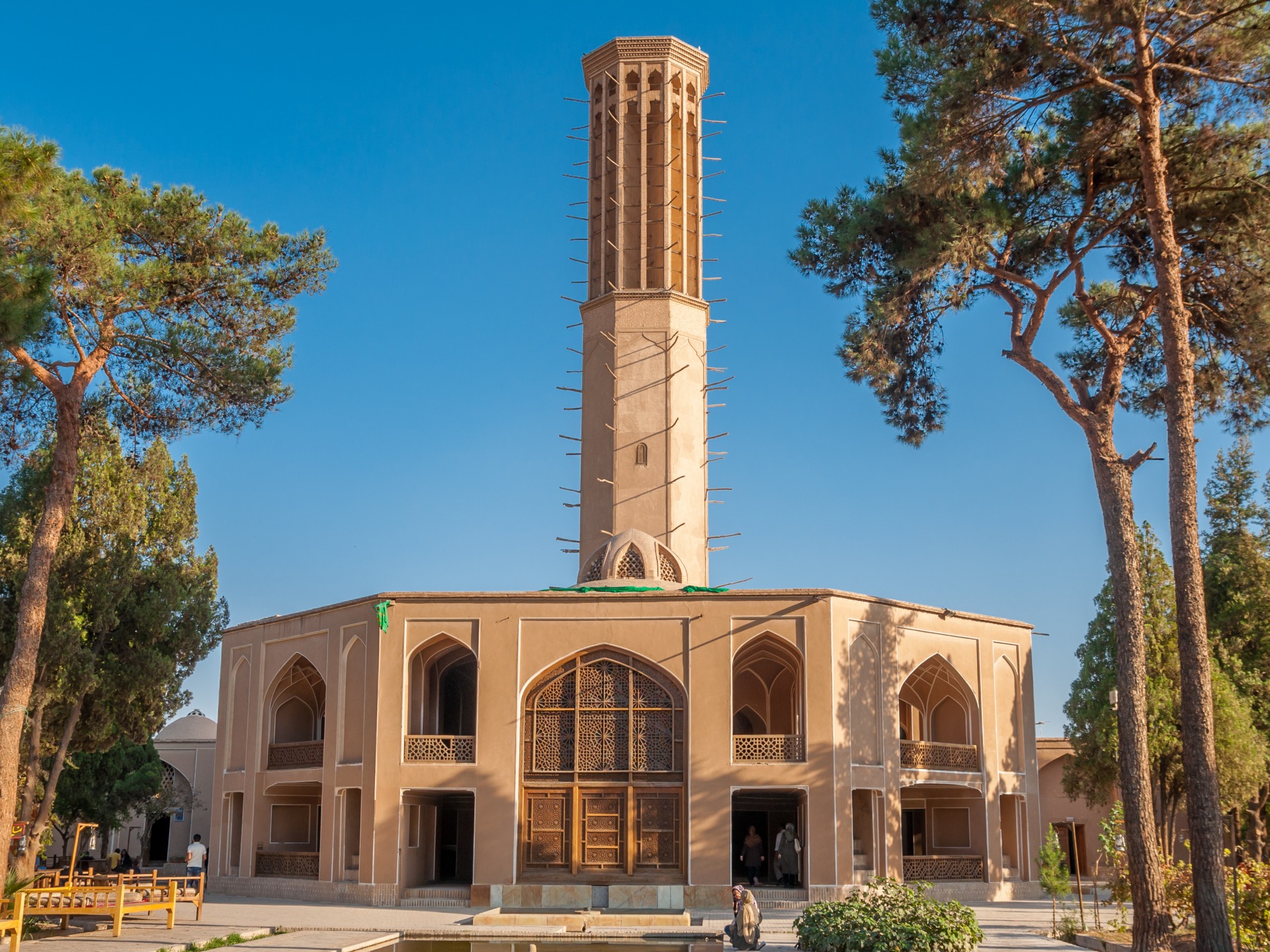
The wind tower pavilion
The wind tower is a typical feature of Persian residences. The device is associated with an underground pool that cools the water and surrounding air. Twisted columns, mirror work, and marble plinths mark this thermal pavilion.
The gift chamber
Located to the right of Talar-e Salam, it preserves gifts received by the Shahs from courtiers, ambassadors, and foreign sovereigns.
Practical information
- Duration of visit: allow 2 to 3 hours to tour all open pavilions.
- Ticketing: an entrance ticket provides access to the garden, and each pavilion requires a separate ticket. It's best to select in advance the buildings you wish to visit.
- Closing days: certain religious holidays; check on-site or with your guide.
- Dress code: Iranian dress code applies (headscarf for women, no shorts).
- Photography: permitted in the garden, sometimes restricted inside certain pavilions.
When to visit
Spring (March to May) and autumn (September-October) offer the most pleasant conditions for visiting Tehran: moderate temperatures and gardens in bloom in spring. Summer is marked by dry heat that makes outdoor walks difficult during midday hours. Winter remains feasible but cool.
How to get there
The palace is located on Ark Square in Tehran's historic district, a short walk from the Grand Bazaar. The metro is the simplest option from downtown: the Panzdah-e Khordad station (Line 1) is a few minutes' walk away. Taxis and ride-sharing services are also common and affordable. It's best to avoid a personal vehicle, as the district is very congested.
Nearby attractions
Golestan's central location lends itself to a historic circuit over one day:
- Tehran's Grand Bazaar, adjacent, for caravanserais and workshops.
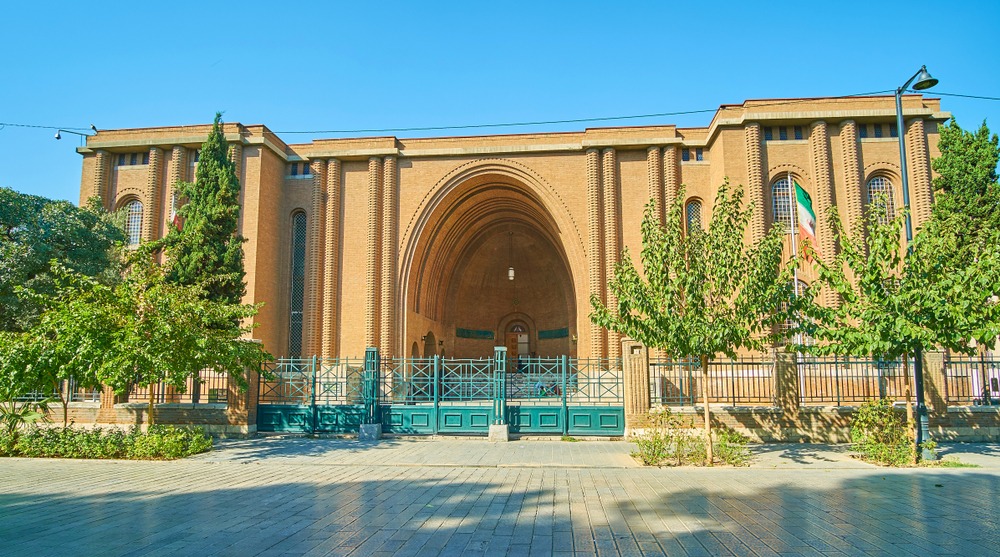
- The National Museum of Iran, about fifteen minutes' walk away, which completes the chronological reading of the country.
- The Marble Palace and Imam Khomeini Mosque, in the same area.
To extend your discovery of Persian gardens beyond the capital, the Fin Garden in Kashan offers another, older UNESCO-listed example. The village of Abyaneh provides a rural contrast to Tehran's urban architecture.
Frequently asked questions
Frequently asked questions
Allow 2 to 3 hours to tour the garden and main pavilions. If you take time to observe interior décor and visit all accessible buildings, a half-day is more comfortable.
Yes. Garden entry provides access to the grounds, but each pavilion (Marble Throne, Hall of Mirrors, Chams-ol-Emareh, etc.) requires a separate ticket. Select in advance the spaces that interest you most.
Iranian dress code applies: headscarf and covering clothing for women, no shorts or sleeveless shirts for men. As the palace is an official, heavily visited site, it's best to avoid obviously casual attire.
Incorporating Golestan into an itinerary
The palace is a natural starting point for approaching Iran's imperial history before heading to Isfahan, Kashan, or Shiraz. To build a custom itinerary incorporating Tehran and the great Qajar and Safavid stages, consult our Iran tours.
Nearby
Interested in this visit?
We can include it in your personalised itinerary.