Shahzadeh Garden (Bagh-e Shahzadeh)
Shahzadeh Garden (Bagh-e Shahzadeh)
At the foot of Kerman's arid mountains, Shahzadeh Garden unfolds its cascading terraces and aligned pools within a verdant UNESCO-listed sanctuary. A striking contrast with the surrounding desert.
A few kilometers from Mahan, in Kerman's desert, Shahzadeh Garden emerges as a lush anomaly at the foot of barren mountains. Inscribed on UNESCO's World Heritage List for its Persian gardens, this nineteenth-century park spreads its cascading terraces, aligned pools and water jets across a natural slope. The contrast with the surrounding landscape is striking and explains the site's reputation far beyond the region.
Essential Information at a Glance
- Admission: Paid entry (separate rates for foreign visitors and Iranian nationals)
- Recommended duration: 1 to 1.5 hours
- Dress code: Iranian dress code applies (headscarf mandatory for women)
- Access: By car or taxi from Mahan or Kerman; no direct public transport
- Best time to visit: Spring (March–May) and autumn (September–November) to avoid extreme heat
What You'll See
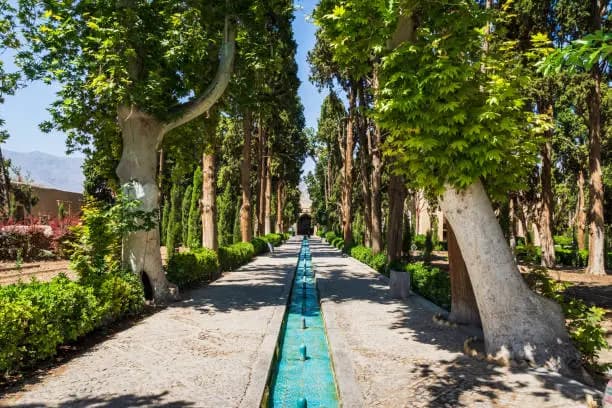
The garden follows the classical chahar bagh (four-part garden) scheme, adapted here to sloping terrain. A central water axis runs from the upper pavilion to the entrance, feeding a succession of rectangular pools and fountains. Tree-lined avenues of cypress, plane trees and roses structure the space. Two pavilions—one at the top, one at the bottom—frame the composition.
History and Context
The garden was created in the late nineteenth century under the Qajar dynasty, commissioned by a prince-governor of Kerman province. Its name, Shahzadeh, means "prince" in Persian. Restored in the twentieth century, it was inscribed in 2011 among nine Persian gardens recognized by UNESCO for their influence on garden design throughout the Islamic and Western worlds.
Highlights of Your Visit
The Central Water Cascade
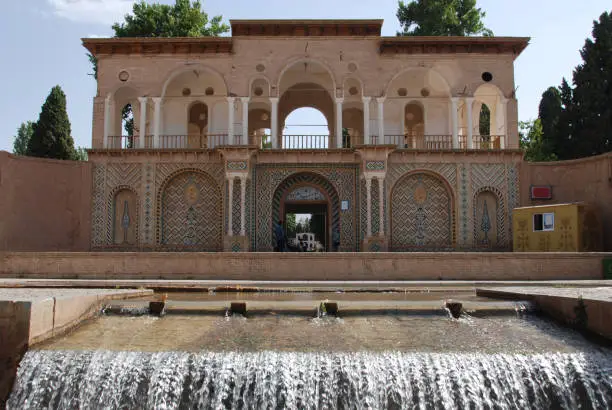
The hydraulic axis is the garden's heart. Water cascades down the terraces in successive steps, creating a continuous sound that contrasts with the surrounding desert silence. The view from the upper pavilion, stretching along the pools to the entrance, is the site's most photographed perspective.
The Main Pavilion
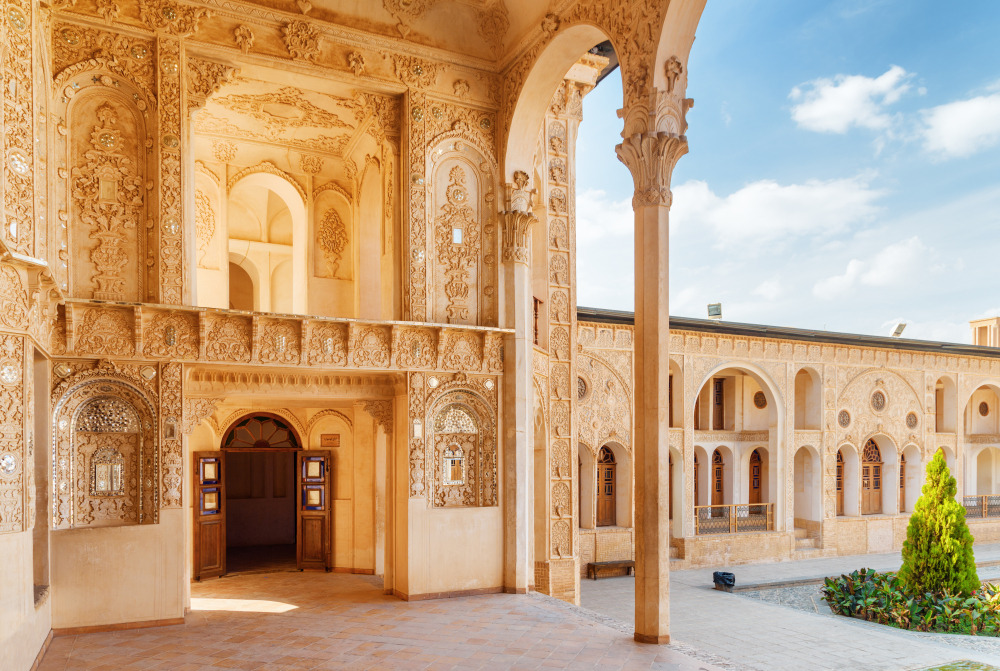
The lower building at the entrance features a façade adorned with colorful glazed tiles typical of the Qajar period. The interior houses rooms decorated with mirrors and stucco work. It is generally open to visitors.
The Desert-Verdure Contrast
Looking beyond the walls, you'll glimpse the rocky, ochre-toned ridges of Kerman's mountains. This arid setting renders the garden's dense vegetation even more striking and gives the place a distinctive, almost surreal atmosphere.
Etiquette and Visiting Rules
- Headscarf mandatory for women; covered clothing for all visitors.
- Do not walk in pools or touch fountains.
- Respect lawns and flower beds.
Photography Tips
Morning light is ideal: it illuminates the central axis head-on and avoids harsh shadows. From the upper pavilion, a bird's-eye composition captures the entire perspective in one frame. In late afternoon, golden raking light on the cypress trees and tiled façades is equally rewarding. Reflections in the pools are sharpest on calm mornings before crowds arrive.
Location and Access
The garden is located in Mahan, approximately 35 km southeast of Kerman. The road is paved and accessible by standard car. From Kerman, a taxi or rental car is the most convenient option. Mahan is also known for the Mausoleum of Shah Nematollah Vali, situated in the town center, just minutes from the garden. Disabled access is limited due to terraces and stairs.
Nearby Attractions
- Mausoleum of Shah Nematollah Vali — a fifteenth-century Sufi shrine in central Mahan, featuring turquoise domes and interior courtyards.
- Historic City of Kerman — covered bazaar, Jameh Mosque and citadel to explore in the provincial capital.
- Kaluts of Shahdad — among Iran's most spectacular clay desert formations, accessible from Kerman.
Frequently asked questions
Spring (March to May) and autumn (September to November) offer pleasant temperatures. Summer in the Kerman region can be very hot; morning visits remain possible but demanding.
The most practical option is a taxi or rental car from Kerman. The journey takes approximately 40 minutes. There is no direct bus service linking Kerman to the garden.
Yes, both sites are in Mahan and just minutes apart by car. Half a day is sufficient to visit both sites comfortably.
Photography is permitted throughout the garden and pavilions. No specific restrictions apply to cameras or smartphones.
Access is difficult for people with reduced mobility due to the terraced stairs that structure the garden. The lower section around the entrance pavilion remains accessible on level ground.
Allow between one and one and a half hours to explore the entire garden, climb to the upper pavilion and enjoy the viewpoints. Photography enthusiasts may wish to spend more time here.
Interested in this visit?
We can include it in your personalised itinerary.