Old City of Yazd
Old City of Yazd
A labyrinth of rammed-earth lanes, a forest of wind towers and an ancient Zoroastrian flame: Yazd's old city, inscribed by UNESCO, is one of Iran's best-preserved historic settlements.
Yazd is one of the world's oldest continuously inhabited cities, perched between two deserts: the Dasht-e Kavir and the Dasht-e Lut. Its historic center, inscribed as a UNESCO World Heritage site in 2017, forms a labyrinth of adobe lanes, wind towers (badgir) and inward-facing courtyard houses. It is also the living heart of Zoroastrian culture in Iran, home to fire temples and millennia-old rituals still practiced today.
Essential Information at a Glance
- Access: The old city is walkable from the modern center; natural starting point: Amir Chakhmaq Square.
- Recommended duration: Half a day minimum for the main lanes; a full day to explore thoroughly.
- Dress code: Modest clothing required (shoulders and legs covered, headscarf for women) throughout Iranian public spaces.
- Best time: Spring (March–May) and autumn (September–November) to avoid extreme desert heat.
What to See
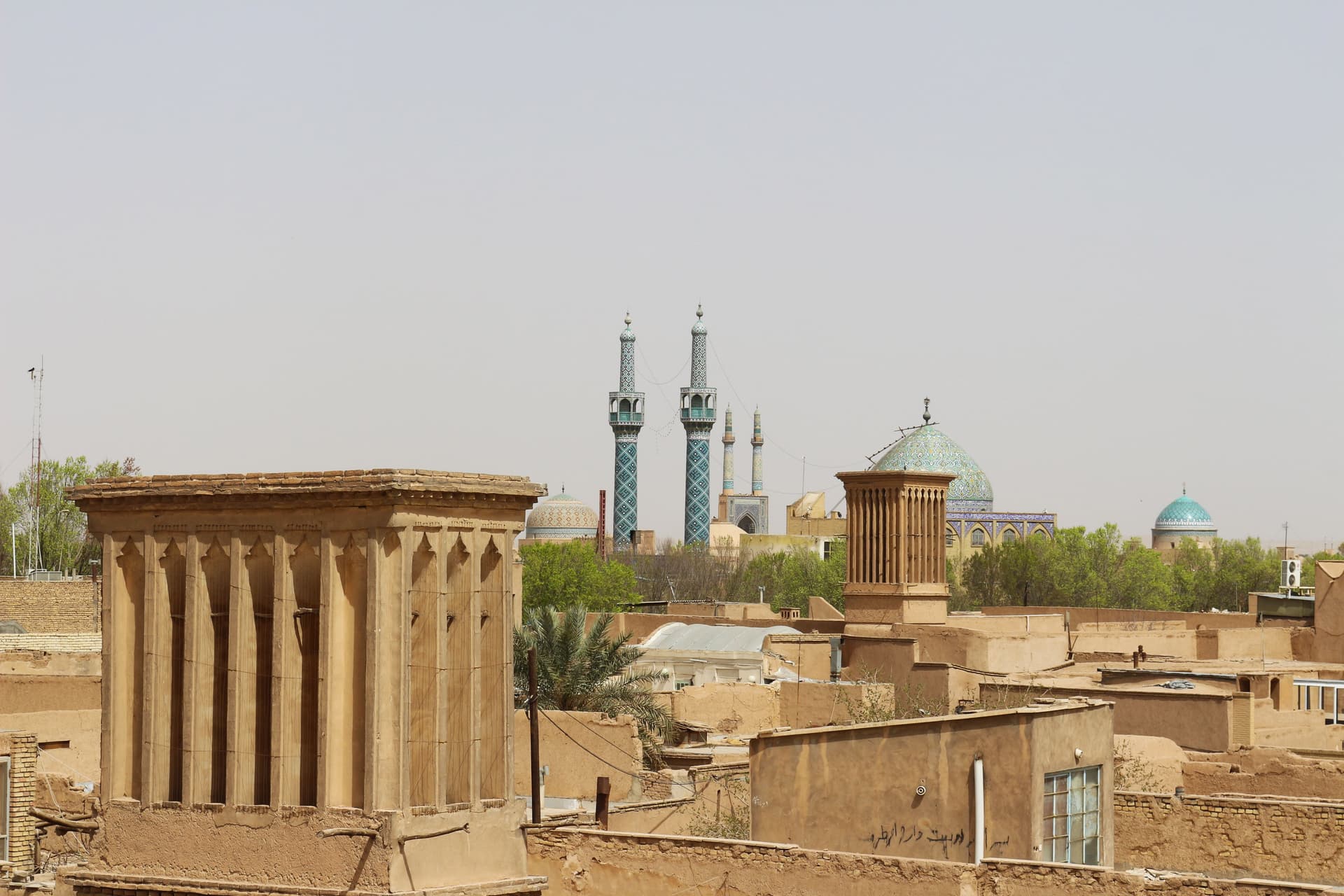
Yazd's urban fabric is constructed almost entirely in rammed earth brick and adobe. The badgir (wind towers) dominate the roofline: these structures capture high-altitude breezes and naturally cool interiors. Qanats—underground irrigation galleries—run beneath the streets and have supplied the city for millennia. Traditional houses are organized around interior courtyards with pools and shaded gardens.
History and Context
Yazd has been inhabited for at least 3,000 years. As a way-station on the Silk Road, it flourished through silk and textile trade. Spared by Mongol invasions due to its desert isolation, it has maintained rare urban continuity. The Zoroastrian community has been present since antiquity; Yazd remains the primary center of this religion in Iran today.
Highlights of Your Visit
The Friday Mosque (Masjed-e Jame)
Its double-minaret portal, clad in blue and turquoise tilework, is among Iran's tallest. The building dates primarily to the 14th century. The interior reveals finely carved stucco and a dome adorned with Quranic calligraphy.
Amir Chakhmaq Square
This vast rectangular plaza is bordered by a three-tiered façade of broken-arch niches, illuminated in the evening. It forms the social and commercial heart of the old city, with its adjoining bazaar.
The Atashkadeh Fire Temple
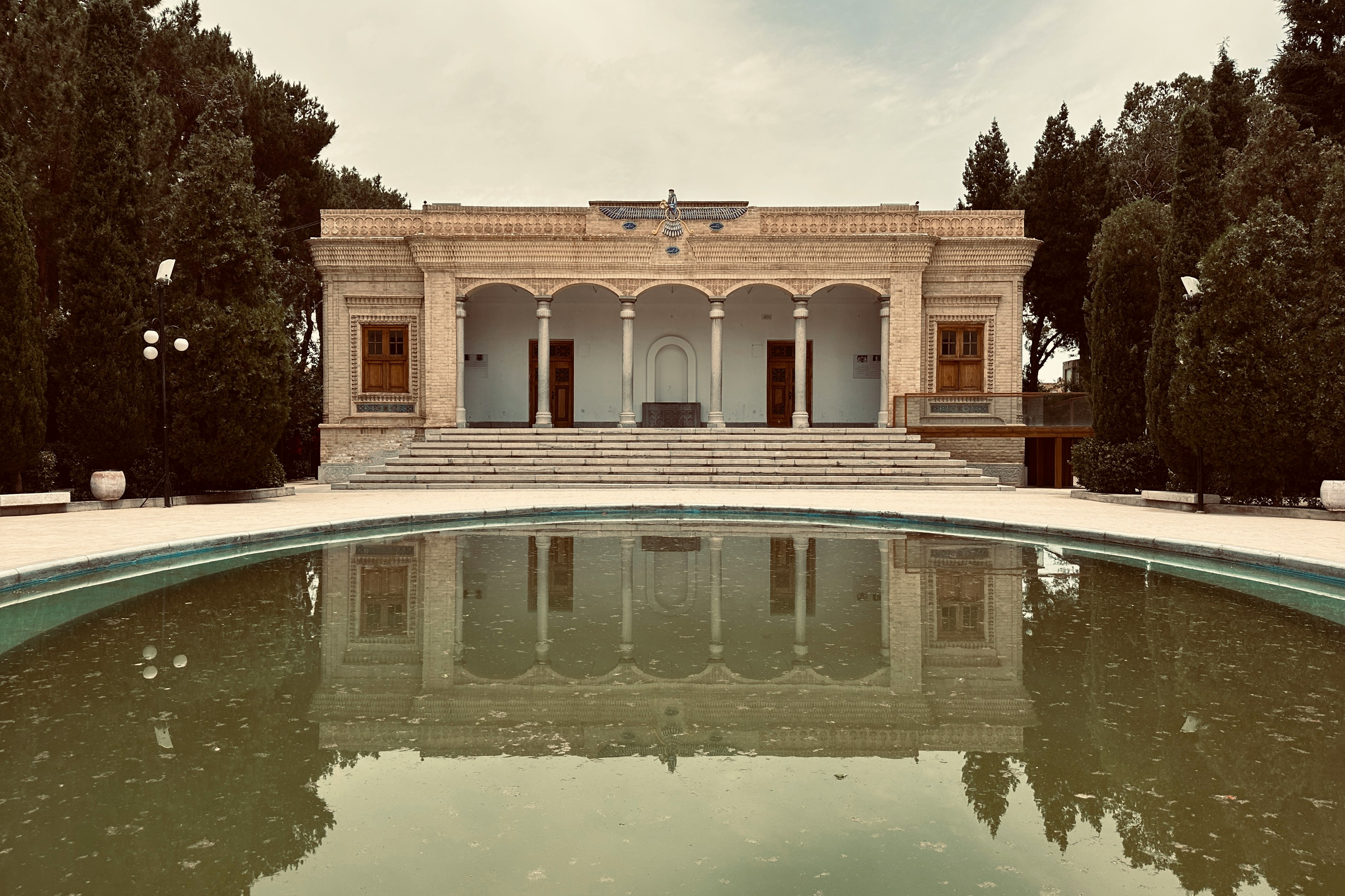
This Zoroastrian temple houses a sacred flame tended continuously since the 5th century. An adjacent museum presents the history and rituals of the Zoroastrian faith. Admission is open to visitors of all backgrounds.
The Towers of Silence (Dakhma)
These circular stone towers, located at the city's edge, once served Zoroastrian funeral rites. Abandoned since the 1960s, they command views over the desert plain and remain a singular architectural testament.
The Wind Tower Quarter and Traditional Houses
Several historic residences have been converted into guesthouses or museums, allowing visitors to explore preserved interiors. The Water Museum (Qanat Museum) explains the underground hydraulic system that made the city viable in the desert.
Etiquette and Visiting Rules
- Modest dress required in all public spaces and mandatory in mosques and the fire temple.
- Remove shoes before entering prayer areas in mosques.
- In the Zoroastrian fire temple, respect the silence and do not cross areas reserved for worshippers.
- Always ask permission before photographing residents, especially in residential lanes.
Photography Tips
Golden morning and late-afternoon light enhances the adobe facades. Narrow lanes create intense shadow-and-light interplay at midday. Amir Chakhmaq Square is particularly photogenic after sunset, when the niches are lit. The old city's rooftops, accessible from certain guesthouses, offer an overview of the forest of wind towers.
Location and Access
Yazd is located in central Iran, roughly 270 km southeast of Isfahan and about 680 km south of Tehran. The city is served by a domestic airport with regular flights from Tehran and Isfahan. Bus and train services connect Yazd to major Iranian cities. The old city is compact and walkable; a local guide helps navigate the maze of lanes.
Nearby Attractions
- Friday Mosque of Yazd — a masterpiece of Timurid architecture, steps from the historic center.
- Atashkadeh Fire Temple — a sacred Zoroastrian flame burning uninterrupted for centuries.
- Towers of Silence — ancient Zoroastrian funerary sites at the city's edge.
- Amir Chakhmaq Square — a monumental façade and bustling bazaar at the heart of the city.
- Water Museum of Yazd — understand the engineering genius of qanats in a few well-documented galleries.
Frequently asked questions
Spring (March to May) and autumn (September to November) offer pleasant temperatures. Summer is very hot due to the city's desert location; if visiting in summer, plan outings for early morning or evening.
Allow a minimum of half a day for the main sites (Friday Mosque, Amir Chakhmaq Square, fire temple). A full day lets you wander the lanes, visit traditional houses and the Water Museum without rush.
Yes, the Atashkadeh temple is open to visitors of all faiths. Bulletproof glass separates the sacred flame from the public viewing area. An adjacent museum explores Zoroastrian religion and its history in Yazd.
Major sites are marked and accessible without a guide. For secondary lanes and lesser-known historic houses, a local guide adds real value: they open doors and provide context on architecture and daily life.
Yes, Yazd fits naturally into the classic Tehran – Isfahan – Yazd – Shiraz route. Buses and trains link these cities; local agencies offer combined circuits with drivers.
Photography is generally permitted in public spaces and tourist sites. In mosques and the fire temple, check posted guidelines. Always seek permission from residents before photographing them.
Interested in this visit?
We can include it in your personalised itinerary.