Fire Temple of Yazd (Atashkadeh)
Fire Temple of Yazd (Atashkadeh)
The Atashkadeh of Yazd shelters a Zoroastrian flame that has burned uninterrupted for over 1,500 years. An active place of worship at the heart of the world's Zoroastrian capital.
The Atashkadeh of Yazd shelters a Zoroastrian flame that has burned uninterrupted for over 1,500 years. This active and revered temple is one of the most sacred Zoroastrian sites in the world. Yazd, a UNESCO World Heritage city, is the living heart of this ancient religion in Iran. A visit offers insight into a spiritual tradition that predates Islam by several centuries.
Quick practical information
- Entry : paid admission (modest fee)
- Dress code : respectful attire required; women must cover their hair
- Recommended duration : 30 to 45 minutes
- Location : downtown Yazd, walking distance from the bazaar and Friday Mosque
- Important rule : non-Zoroastrians cannot enter the sacred flame chamber; the flame is visible through glass
What you'll see
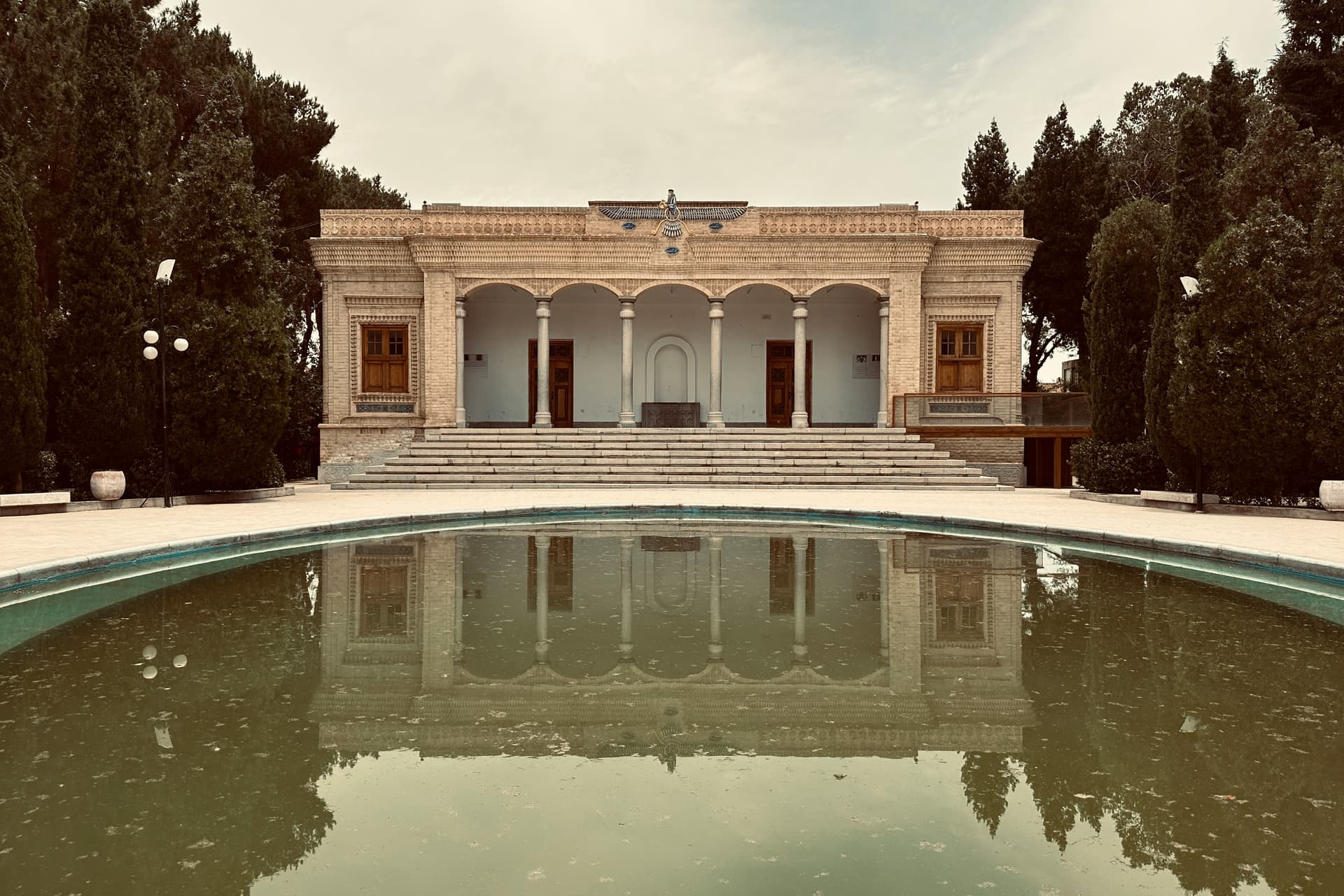
The centerpiece is the sacred flame, visible behind a large glass panel in a metal vessel. It has burned continuously since 470 AD according to Zoroastrian tradition. The main building, constructed in 1934, features a modest façade adorned with the Faravahar symbol, the winged figure emblematic of Zoroastrianism. An adjoining small museum displays ritual objects and texts on the religion's history.
History and context
Zoroastrianism is one of the world's oldest monotheistic religions, founded by the prophet Zarathustra. The flame preserved in Yazd is said to have been lit in Pars (Fars province) before being moved several times for protection against invasion. It arrived in Yazd in the early twentieth century. Fire itself is not worshipped; it symbolizes divine light and purity.
Highlights of your visit
The eternal flame
Observing the flame through the glass is a striking moment. It burns in near-complete silence, maintained by Zoroastrian priests (mobeds) who feed the fire with fruit-tree wood. No artificial flame ever replaces it.
The Faravahar façade
The Faravahar bas-relief on the main façade is among Iran's most photographed symbols. This figure—a winged man holding a ring—represents the human soul and the principles of good thought, good speech, and good action.
The adjoining museum
A few rooms display manuscripts in Avestan, ritual garments, and photographs of Yazd's Zoroastrian community. Small but informative, it provides essential context for your visit.
Etiquette and visiting rules
- Women must wear a headscarf inside the temple.
- Show respect and speak quietly in the flame chamber area.
- Access to the sacred flame chamber is reserved for practicing Zoroastrians; visitors observe from outside the glass partition.
- Do not touch objects on display in the museum.
Photography tips
The flame is photographable through the glass; avoid using flash, which creates reflections. The façade with the Faravahar is best lit mid-morning. The garden in front of the temple provides enough distance to frame the entire building.
Location and access
The temple is located in downtown Yazd, a few minutes' walk from the Friday Mosque of Yazd and Yazd Bazaar. The city is connected to Tehran and Isfahan by train and long-distance bus. Yazd has an airport with domestic flights. The temple is within walking distance of most downtown historical hotels.
Nearby attractions
- Towers of Silence (Dakhma) — ancient Zoroastrian funeral towers at Yazd's gates, remnants of an exposure ritual now abandoned.
- Friday Mosque of Yazd — its minarets tiled in blue faience dominate the old city.
- Amir Chakhmaq Complex — a bustling square with a tiered niche façade, a symbol of Yazd.
- Dolat Abad Garden — a UNESCO-listed Persian garden featuring Iran's tallest badgir (wind tower).
Frequently asked questions
No. The sacred flame chamber is reserved for practicing Zoroastrians. Other visitors observe the flame through a large glass panel from the adjacent corridor.
Respectful attire is mandatory. Women must cover their hair with a scarf. Unlike in mosques, there are no special rules about footwear.
Spring (March–May) and autumn (September–November) offer pleasant temperatures. Summers in Yazd are very hot; however, visiting the temple remains feasible as it is brief and indoors.
Plan for 30 to 45 minutes for the temple and small museum. You can easily combine a visit here with the Friday Mosque and Amir Chakhmaq Complex in the same half-day.
According to Zoroastrian tradition, the flame dates to 470 AD. It has been moved several times over the centuries before arriving in Yazd. Its exact antiquity cannot be verified scientifically, but the continuity of the practice is documented.
Yes, photography is permitted from the glazed corridor. Turn off your flash to avoid reflections on the glass and obtain a sharper image.
Interested in this visit?
We can include it in your personalised itinerary.