Yazd Water Museum (Muzeh-ye Ab)
Yazd Water Museum (Muzeh-ye Ab)
At the heart of Yazd, the Water Museum traces two millennia of hydraulic ingenuity through scale models, tools, and a descent into an underground qanat still in use.
In the heart of Yazd, a city inscribed on the UNESCO World Heritage list, the Water Museum occupies an old traditional house connected to a network of qanats — those underground galleries that have supplied the city with water for millennia. The museum documents the hydraulic ingenuity of inhabitants of the Iranian desert and provides access to a deep well, a living remnant of a system still partially functional.
Practical information at a glance
- Admission: paid (modest fee, in Iranian rials)
- Recommended duration: 45 minutes to 1 hour
- Dress code: dress code required; women must wear a headscarf inside
- Access: historic centre of Yazd, accessible on foot from the bazaar and Friday Mosque
What to see
The museum unfolds over several levels, from ground floor down to the bottom of the well. The rooms display scale models, tools and explanatory panels on how qanats work: excavation, maintenance, water distribution between districts. A spiral staircase descends towards the water table, where water still circulates through the original gallery.
History and context
Yazd receives less than 60 mm of rain per year. To survive in this desert, its inhabitants developed from antiquity onwards a network of qanats — tunnels dug by hand to capture water from distant mountains and conduct it to the city by gravity. This system, listed as UNESCO intangible heritage, enabled Yazd to exist and prosper for more than two thousand years. The museum building itself is a restored Qajar-era house, with an interior courtyard and traditional architectural elements.
Highlights of the visit
The descent into the well
The spiral staircase plunging into the underground gallery is the most striking moment. The temperature drops, humidity rises, and you can hear the murmur of water in the darkness. It is a physical as much as a historical experience.
Scale models and digging tools
The display cases exhibit the instruments used by the muqannis (qanat diggers): pickaxes, oil lamps, crude levels. The cross-section scale models clearly illustrate the system's logic over dozens of kilometres.
The Qajar house
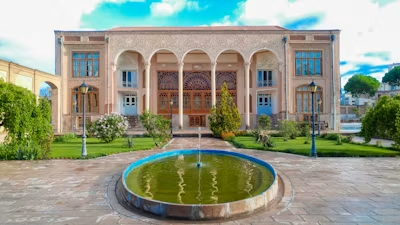
The interior courtyard, stucco work and latticed windows recall that the building was a bourgeois residence. Yazd's domestic architecture — with its wind towers (badgirs) visible from the terrace — is inseparable from the desert's thermal and water management.
Photography tips
Natural light in the interior courtyard is best in late morning. In the well, artificial lighting is dim: a recent smartphone is sufficient, but a compact tripod improves results. Photographing the scale models from a low angle enhances the sense of depth of the galleries.
Location and access
The museum is located in Yazd's historic district, a few minutes' walk from the Yazd Friday Mosque and Yazd Bazaar. The old centre is entirely pedestrian; taxis and rickshaws stop at the entrances to the district. Access for people with reduced mobility is limited due to the staircase leading to the well.
Nearby
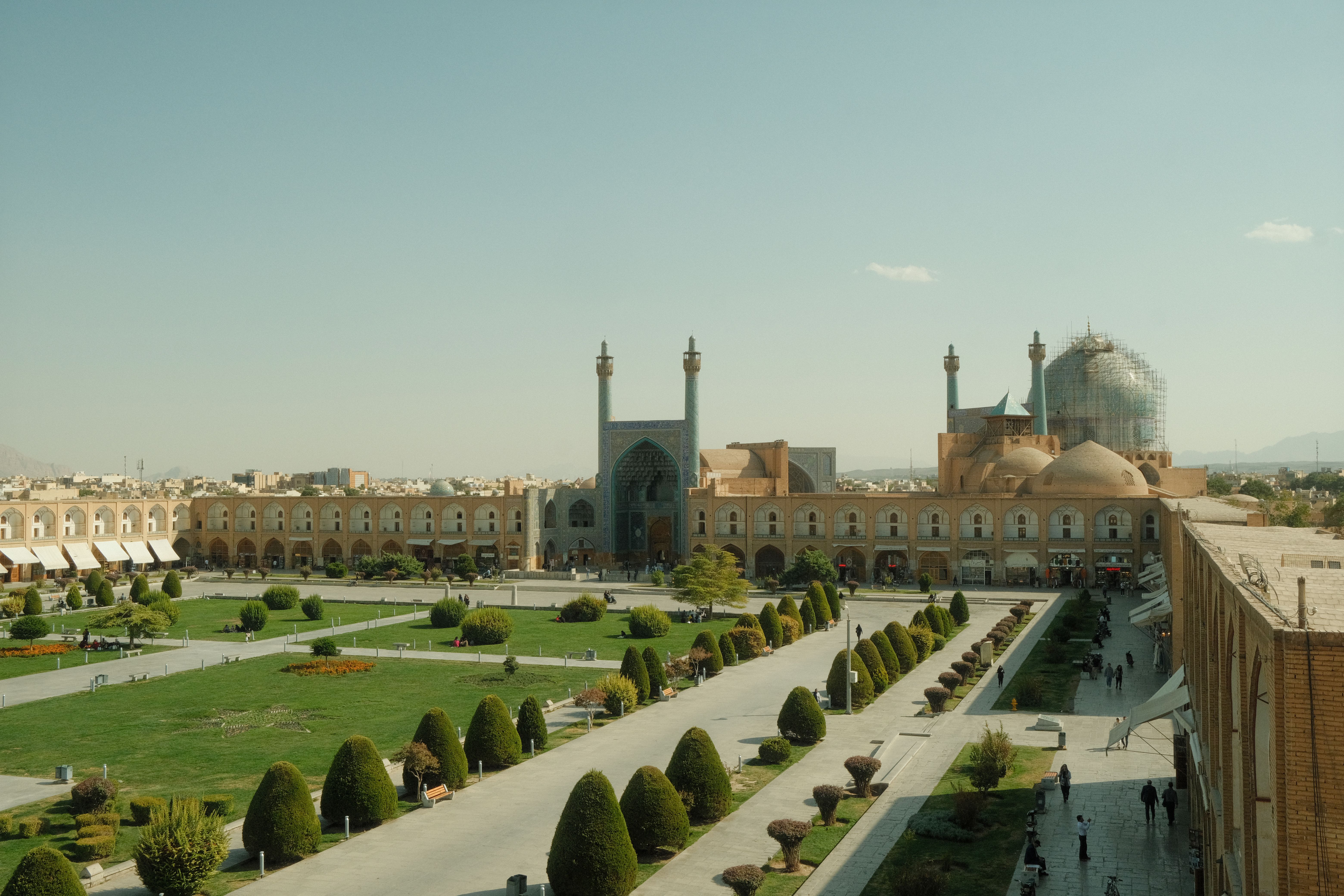
- Yazd Friday Mosque — its minarets decorated with blue faience tiles dominate the old city, a few minutes' walk away.
- Towers of Silence (Dakhma) — ancient Zoroastrian burial sites on the hills at the periphery of Yazd.
- Yazd Fire Temple (Atashkadeh) — Zoroastrian flame maintained without interruption for over 1,500 years.
- Amir Chakhmaq Complex — facade with tiered niches, one of Yazd's emblematic images, with its bazaar and fountain.
Frequently asked questions
The museum can be visited year-round. Spring (March-May) and autumn (September-November) offer pleasant temperatures for exploring the historic district on foot. In summer, the descent into the well is particularly appreciated for its coolness.
Yes. As in any public place in Iran, women must wear a headscarf and clothing covering the arms and legs. Men should avoid shorts. Scarves are sometimes available at the entrance.
Yes, it's even recommended. The water museum, the Friday Mosque, the Amir Chakhmaq complex and the Fire Temple are all accessible on foot within a reasonable radius. One day is enough to cover the highlights of the centre.
The spiral staircase is narrow and steep. Young children and people with reduced mobility may have difficulties. The museum section on the surface remains accessible to all.
Panels in English are present in most rooms. Explanations in French are rare; an English-speaking local guide can greatly enrich the visit.
Interested in this visit?
We can include it in your personalised itinerary.