Nain
Nain
Poised at the edge of the Kavir desert, Nain preserves one of Iran's oldest mosques and carpet workshops celebrated for the fineness of their knots. An authentic stop between Isfahan and Yazd.
Nain is an ancient city in central Iran, in the Isfahan province, situated at the gateway to the Kavir desert. Its worldwide reputation rests on hand-knotted carpets among the finest in Iranian production, and one of the country's oldest surviving mosques. Between preserved Islamic architecture and living textile craftsmanship, Nain offers an authentic halt on the road between Isfahan and Yazd.
Practical information at a glance
- Access: Nain lies on the main Isfahan–Yazd road; buses and shared taxis regularly connect the two cities.
- Recommended duration: half a day suffices for the mosque and bazaar; an overnight stay allows you to visit carpet workshops.
- Dress code: Islamic dress is mandatory in public spaces and places of worship (headscarf for women, covering clothing).
What to see
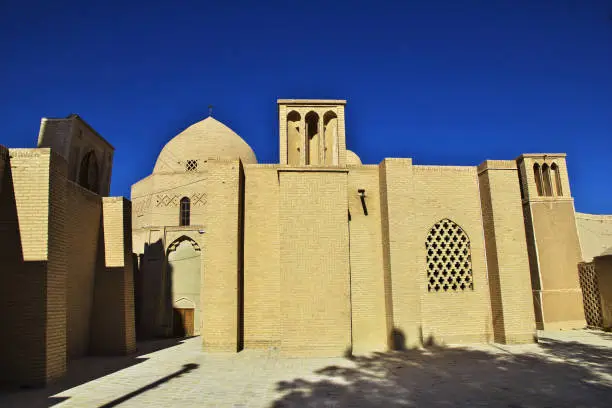
Nain's historic core centers on three focal points: the Friday Mosque (Masjed-e Jame), one of Iran's oldest Islamic structures; Narenj Castle, a rammed-earth fortress overlooking the city; and the bazaar, where family workshops produce and sell silk-chain carpets celebrated for their exceptional knot density.
History and context
Nain has been inhabited since antiquity and flourished as a caravan stop between the central plateau and the great cities of Persia. Its Friday Mosque dates to the 4th century of the Hijra (10th century CE), making it one of the rare examples of early Islamic architecture in Iran still in use for prayer. The Nain carpet tradition developed later, in the 20th century, when local weavers adapted their technique to growing international demand.
Highlights of your visit
The Friday Mosque
Built upon the ruins of a Sassanid temple, the mosque features Buyid-era carved stucco of rare fineness: vegetative interlace and calligraphy cover the mihrab walls. The space is austere and little-frequented by tourists, allowing for quiet contemplation.
The carpet workshops
Several families open their workshops to visitors. You can observe hand-knotting on vertical looms, scissor-shearing, and density control — sometimes exceeding 500 knots per 10 cm². Buying directly from the workshop guarantees traceability and fair pricing.
Narenj Castle
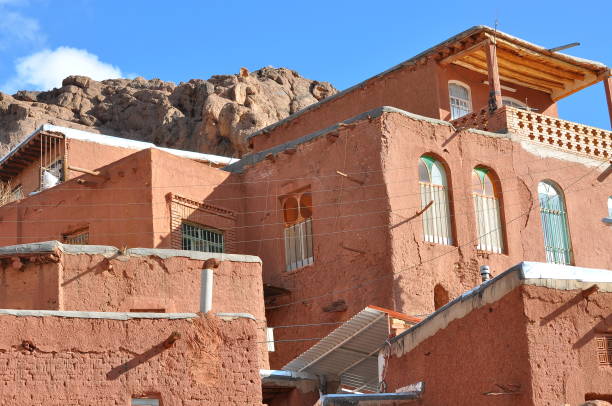
This adobe fortress, whose origins trace to the Sassanid era, commands from its heights a clear view of the ocher city and surrounding desert. The state of preservation is partial; the climb remains accessible on foot.
Etiquette and visit guidelines
- Remove your shoes before entering the prayer hall of the mosque.
- Women must wear a headscarf and clothing that covers the arms and legs.
- Avoid prayer times when visiting the interior; respect silence during services.
- In private workshops, always ask permission before photographing artisans.
Photography tips
Morning light is ideal for photographing the mosque's stucco: it reveals the relief of the sculptures without glare. For Narenj Castle, sunset tints the rammed-earth walls in the characteristic golden hue of Iran's central desert. Carpets in progress photograph well in natural light, from the side of the loom.
Location and access
Nain lies approximately 150 km east of Isfahan and about 160 km northwest of Yazd, on the national road traversing the central plateau. Intercity buses and shared taxis (savari) run regularly between these three cities. The town is small and the historic center is walkable. Accessibility for persons with reduced mobility is limited in the old streets and at the mosque.
In the surrounding area
- Isfahan — Major historic metropolis with Naqsh-e Jahan Square, approximately 150 km to the west.
- Yazd — Zoroastrian city with wind towers, approximately 160 km to the southeast.
- Kavir Desert — The great salt desert begins at Nain's gateway; excursions possible toward dunes and caravanserais.
Frequently asked questions
Spring (March–May) and autumn (September–November) offer pleasant temperatures. Summer is very hot due to the desert's proximity; winter can be cold at night.
Yes. Several family workshops sell directly to visitors. Prices vary according to size, knot density, and quality of wool or silk. Negotiating is customary.
A half day covers the mosque, castle, and one carpet workshop. Staying overnight allows you to visit more workshops and enjoy the city's evening tranquility.
Yes. Its position on the Isfahan–Yazd road makes it a natural stop. You can pause for a few hours in transit or make it a day excursion from either city.
Generally yes, outside prayer times, but it is advisable to ask the caretaker on site for permission. Avoid photographing worshippers without their consent.
Want to discover this destination?
Our local advisors design your tailor-made trip.