Shushtar
Shushtar
Shushtar, in Iran's Khuzestan province, is home to an ancient UNESCO-listed hydraulic system: Sassanid canals, artificial waterfalls, and a Roman dam-bridge form a unique engineering ensemble.
Shushtar is an ancient city in Khuzestan, in southwestern Iran, traversed by the Karun River. Its worldwide renown stems from its historic hydraulic system, inscribed on the UNESCO World Heritage list in 2009. Canals, tunnels, water mills, and dams shape a landscape of unique Sassanid engineering, still partially functional today. The city also serves as a gateway to Iran's Mesopotamian plains and their archaeological sites.
Practical Information at a Glance
- Access: Shushtar is located approximately 90 km north of Ahvaz, accessible by bus or shared taxi from Ahvaz's bus terminal.
- Recommended duration: half a day for the hydraulic system; a full day to include the old town sites.
- Dress code: Islamic dress is mandatory (headscarf for women, long sleeves).
- Climate: summers are extremely hot (exceeding 45 °C); visits are recommended from October to April.
What to See
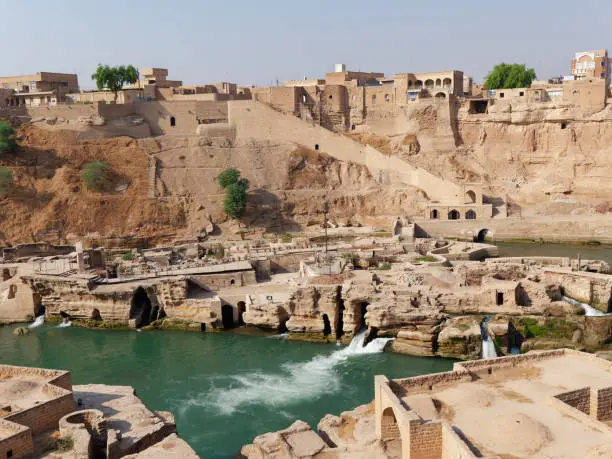
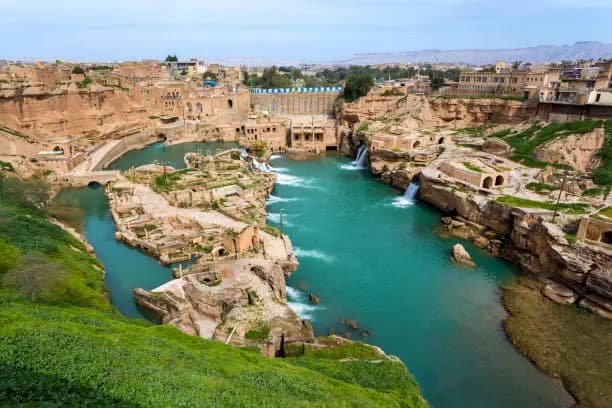
The heart of the site is the Shushtar historic hydraulic system, a network of canals, dams, and mills carved during the Achaemenid era and refined under the Sassanids. The artificial waterfalls of Shushtar — cascades plunging into a natural basin — constitute the most photographed spectacle. Also found here are the Band-e Kaisar dam-bridge (Roman-Sassanid structure), underground irrigation tunnels, and ruins of water mills.
History and Context
The hydraulic system dates back at least to the 4th century BCE. Under Shapur I (3rd century CE), Roman prisoners — including the emperor Valerian — are said to have participated in its construction and expansion. This network allowed for the irrigation of more than 40,000 hectares of agricultural land. UNESCO describes it as a "masterpiece of human creative genius."
Highlights of Your Visit
The Shushtar Waterfalls
The artificial cascades, fed by canals diverted from the Karun, fall in several streams into a rocky basin. The sight is particularly striking in spring, when water flow is strong. Walkways allow you to approach the falls closely.
Band-e Kaisar
This dam-bridge is one of the oldest structures of its kind still visible in Iran. Its construction blends Roman and Sassanid techniques, testifying to exchanges between the two empires. It spans the Karun and remains partially intact.
Mills and Underground Tunnels
A network of underground galleries distributed water toward the mills and surrounding fields. Some tunnels are accessible on foot and provide concrete insight into the system's complexity.
The Old City
The historic center preserves sun-dried brick houses, bazaars, and the Jame Mosque of Shushtar, whose origins trace back to the early Islamic era.
Photography Tips
Morning light (before 10 a.m.) is ideal for photographing the falls without backlighting. The viewpoint from the walkways overlooking the basin offers the best angle on the cascades and ruined mills. Avoid midday hours in summer: the heat creates haze that obscures details.
Location and Access
Shushtar is located in Khuzestan province, approximately 90 km north of Ahvaz. Buses and shared taxis regularly connect the two cities. From Ahvaz, you can also reach Susa (Shush) and Tchoga Zanbil for an archaeological circuit in the region. Accessibility for people with reduced mobility is limited on the hydraulic site due to rocky terrain and stairs.
Nearby Attractions
- Tchoga Zanbil — Elamite ziggurat from the 13th century BCE, one of the best preserved in the world, approximately 80 km southeast.
- Susa (Shush) — ancient Elamite and Achaemenid capital with archaeological museum and the Tomb of the Prophet Daniel, approximately 70 km south.
- Ahvaz — provincial capital on the Karun, transit and service hub, approximately 90 km south.
- Dezful — historic city with a Sassanid bridge over the Dez, approximately 45 km north.
Frequently asked questions
October to April, when temperatures are manageable. Summers regularly exceed 45 °C and make outdoor visits exhausting.
Yes. Islamic dress is mandatory in Iran: headscarf for women, long sleeves and trousers for everyone. Wear closed-toe shoes for walking on the rocky terrain of the hydraulic site.
It's possible but packed. Two days from Ahvaz are better: one for Shushtar, one for Tchoga Zanbil and Susa.
Yes, photography is generally permitted on the site. No specific restrictions are noted for visitors.
The quickest option is a flight to Ahvaz, then a bus or shared taxi to Shushtar. Direct long-distance buses from Tehran also exist, but the journey takes many hours.
Want to discover this destination?
Our local advisors design your tailor-made trip.