Tehran and Alborz
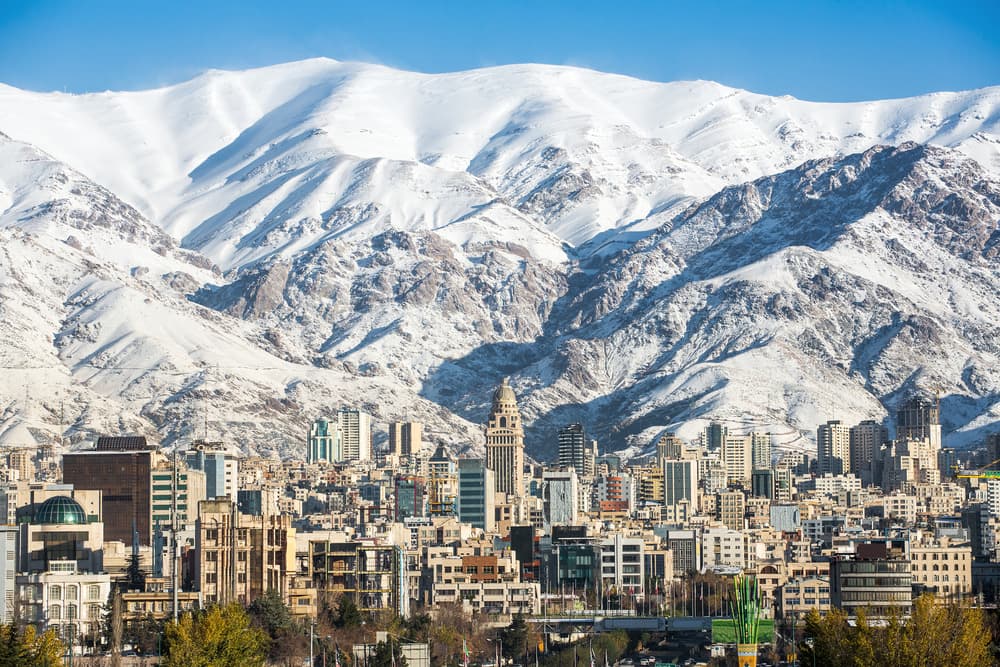
Capital of 9 million inhabitants nestled against the Alborz mountain range, the natural entry point for a journey through Iran and direct access to Damavand (5610 m).
Tehran sprawls across nearly 40 kilometers from south to north, from the working-class neighborhoods of Shahr-e Rey to the wooded foothills of Darband. This continuous slope, rising from 1100 meters altitude to over 1700 meters, shapes everything: temperature, air quality, urban fabric. On the southern side, the city remains low-lying, bazaars dominate, Safavid mosques stand alongside converted caravanserais. In the north, avenues widen, cafés and art galleries multiply in the neighborhoods of Tajrish, Niavaran and Darrous. Our English-speaking team systematically schedules southern tours in the morning, before heat and pollution settle in.
The capital concentrates most of Iran's national museums. The Golestan Palace, a former Qadjar residence, warrants three hours for its mirror halls and photographic museum. The National Museum of Iran houses the major pieces from Persepolis and Susa, and provides useful context before heading toward Shiraz. The Jewels Museum of the Central Bank, open only a few afternoons per week, showcases the Daria-i-Noor and the Peacock Throne. To understand contemporary Iranian painting, Tehran's Contemporary Art Museum, designed by Kamran Diba in 1977, holds a Western collection (Bacon, Pollock, Warhol) that few visitors suspect exists.
Tehran's bazaar, around Panzdah-e Khordad Street, bears no resemblance to a reconstructed attraction. It remains an active financial hub, ten kilometers of covered alleys where carpet, saffron and copper prices are still traded. We recommend half a day here with a guide who opens courtyard passages and the timcheh (19th-century merchant courts). For lunch, the Moslem restaurant above the northern entrance serves a tahchin with chicken that justifies the typical twenty-minute wait.
North of the city begins the Alborz range, which separates Iran's central plateau from the Caspian Sea. The Tochal cable car, accessible from the Tajrish metro terminus, climbs in three sections to 3740 meters. The intermediate station at 2400 meters allows a one-hour walk to the summit of Kolakchal. In winter, December through March, the Dizin and Shemshak resorts operate with dry-quality snow at a minimum elevation of 2650 meters. Iran remains one of the rare countries where you can ski in the morning and dine in the city by evening.
Damavand, 70 kilometers northeast of Tehran, reaches 5610 meters and remains Asia's highest volcano. Its conical silhouette appears clearly from the northern terraces of the capital on clear days. The classic ascent departs from Polour camp at 2200 meters, follows the southern route to Bargah Sevom refuge (4250 meters) and requires three to four days with proper acclimatization. The practical window extends from mid-June to mid-September. Outside this period, snow and summit winds make the climb technical. For non-mountaineering travelers, a two-day trek to the refuge alone offers sweeping views of the Lar plateau and its spring herds.
Further west, the Karaj reservoir (Amir Kabir) and the Taleghan valley present another face of the Alborz: stone villages, walnut groves, waterside restaurants serving grilled Karaj trout. This is where Tehranis escape on Fridays, when the capital exceeds 38°C in July and August. Our agency often includes a day in Taleghan for travelers with five or more days in the region.
Must-see
Golestan Palace and Tehran Bazaar. Tour of the UNESCO-listed Qadjar palace followed by a walk through ten kilometers of bazaar alleys, where carpet and saffron prices still circulate. Lunch at Moslem, tahchin served on chipped porcelain.
Tochal Cable Car to 3740 m. Climb in three sections from Tajrish, preferably late afternoon to escape Friday crowds. Dry air, views of the smog-covered city below, one-hour trail to Kolakchal's summit.
Damavand Ascent via Polour. Three to four days between mid-June and mid-September from Polour village, Bargah Sevom refuge at 4250 meters, summit at 5610 meters. Prior acclimatization of two nights at altitude required.
Tehran Contemporary Art Museum. Building designed by Kamran Diba (1977) housing a Western collection (Bacon, Pollock, Rothko) assembled before 1979. Works rotate on display; verify current exhibitions before your visit.
Taleghan Valley and Karaj Lake. Two hours northwest by road, stone villages, walnut groves and grilled trout by the lakeside. A cool escape when Tehran approaches 40°C in July and August.
When to visit
Tehran experiences a dry continental climate marked by two comfortable periods: April-May (15 to 25°C, often clear skies after March showers) and September-October (18 to 28°C, sharp light, minimal pollution). Summer, June through August, regularly exceeds 38°C during the day, and air pollution worsens in the absence of wind. Winter, December through February, ranges between -2°C and 8°C in the city, with possible snowfall in the mountains as early as November. The Dizin and Shemshak resorts typically open from mid-December through late March.
For the Alborz and Damavand, the calendar reverses from the city: the trekking window extends from mid-June to mid-September. Before June, higher slopes remain snow-covered and refuges closed. After September, summit winds on Damavand frequently exceed 50 mph. Intermediate valleys (Lar, Taleghan) remain accessible from May through October.
Practical advice
We recommend two to three full days in Tehran for a first visit: one day for the historic south (Golestan, bazaar, national museum), one day for the north (Saadabad or Niavaran, Tajrish, dinner at altitude) and a half-day buffer for specialized museums. Imam Khomeini International Airport, 50 kilometers south, handles most long-haul flights. We systematically greet our travelers upon arrival, often around 3 or 4 in the morning due to flight schedules.
Tehran naturally functions as an entry point before the classic circuit of Kashan, Isfahan, Yazd, Shiraz by road or domestic flight. For mountain enthusiasts, plan five to seven additional days dedicated to Damavand or a trek in the Lar. The region suits urban travelers curious about modern history (constitutional revolution, Pahlavi era, contemporary art) and hikers seeking gradual acclimatization before the Damavand ascent. Hotel comfort is adequate, without reaching the standards of the heritage caravanserai hotels in Isfahan or Yazd.