Yazd and the Central Desert
Adobe city listed by UNESCO in the heart of Dasht-e Kavir, a millennial Zoroastrian center and gateway to the dunes of Mesr and the oasis of Garmeh.
Yazd rises at 1,215 meters altitude, wedged between two deserts covering a third of the country: the Dasht-e Kavir to the north and the Dasht-e Lut to the southeast. The city emerged where a city should not have grown, on salty soil where rainfall rarely exceeds 60 mm annually. Yazd has existed for 3,000 years thanks to qanats—underground galleries that capture water from the Shir Kuh mountains and channel it to gardens and bathhouses. The system remains partly functional and has been UNESCO-listed since 2016, alongside the old city itself, inscribed in 2017.
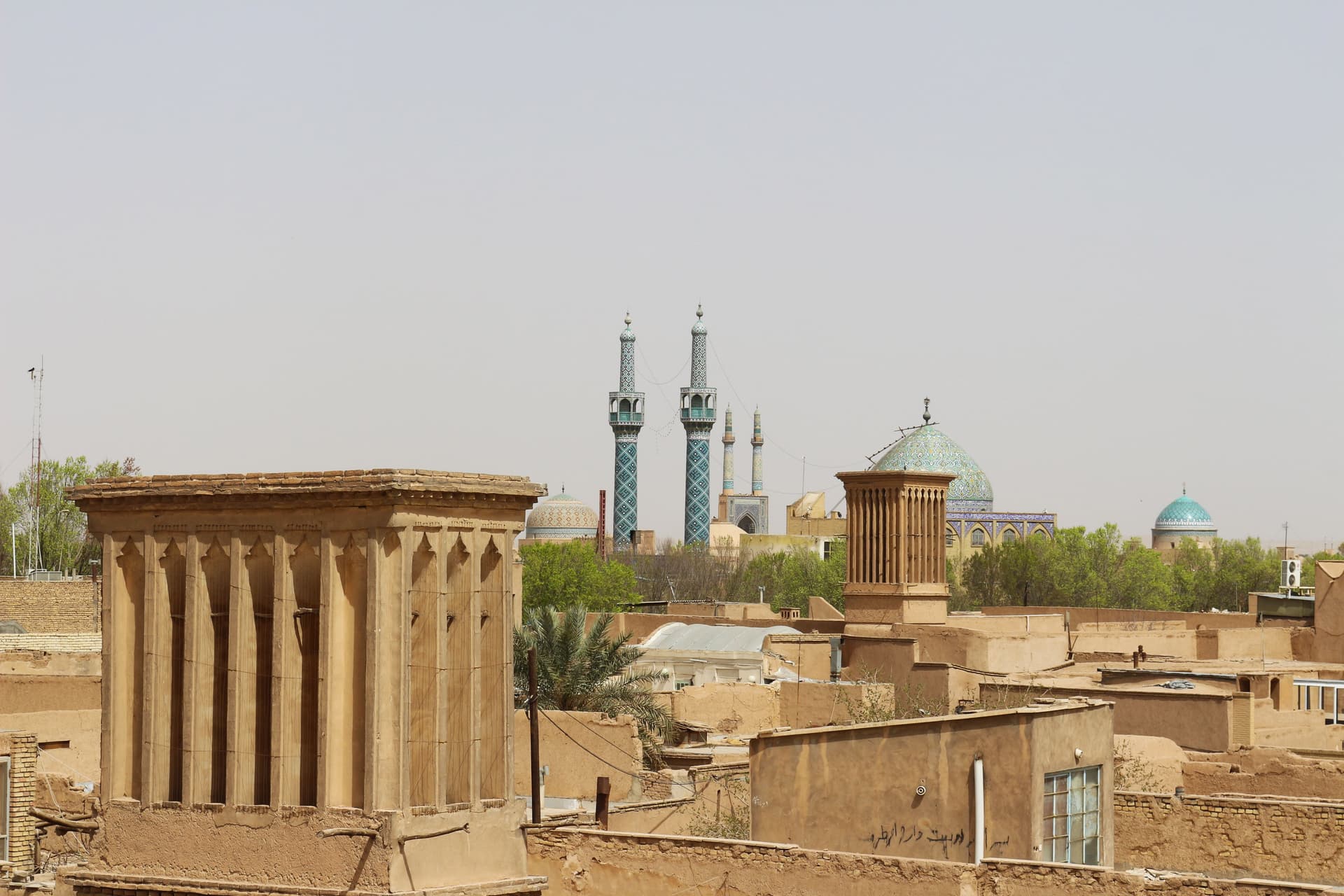
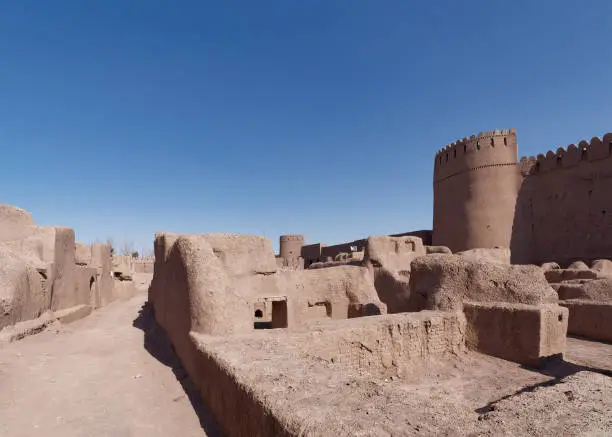
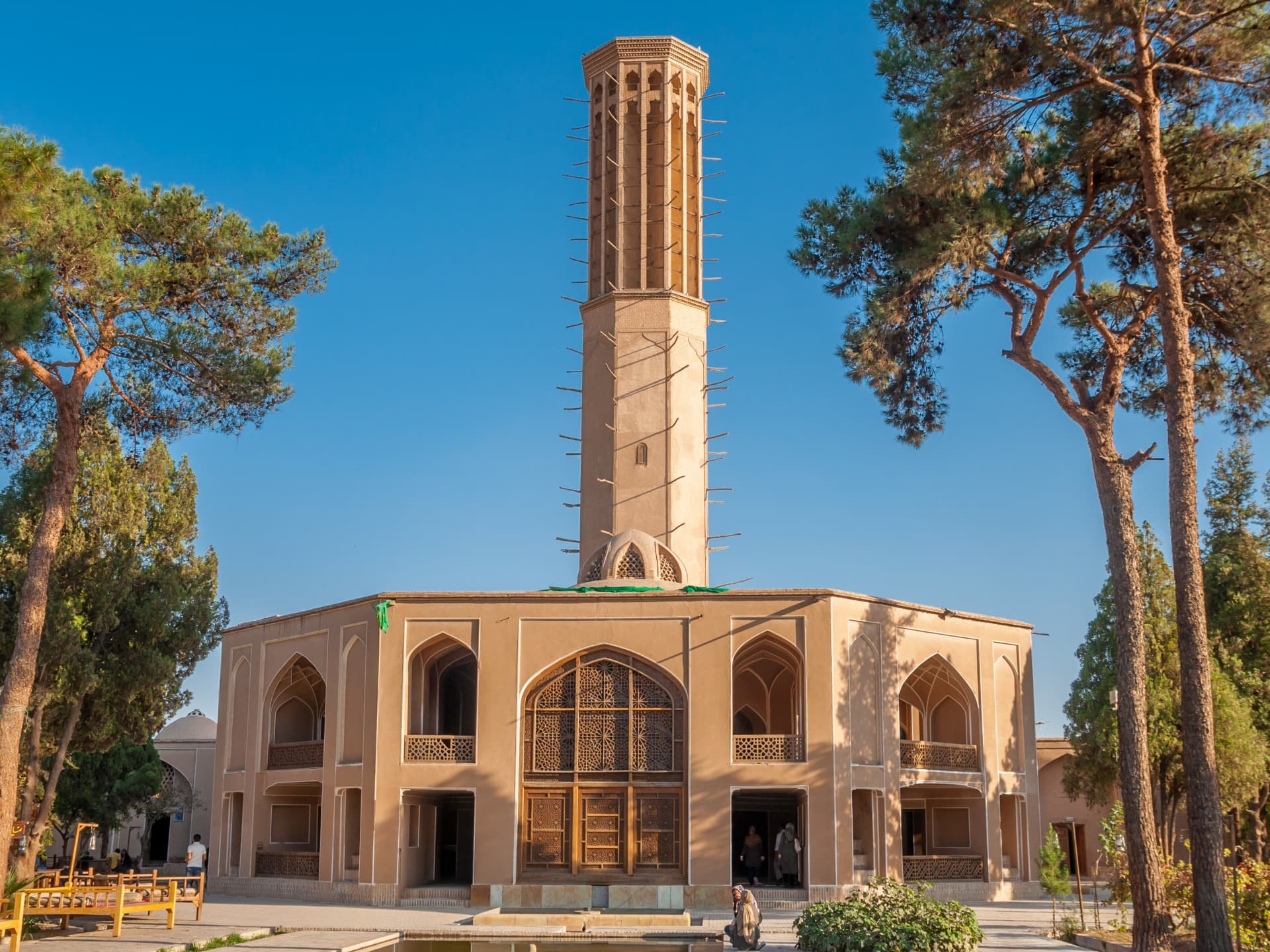
The old city is best explored on foot, without a specific map. Covered alleyways (sabbat) shelter you from the sun between adobe houses, that mixture of raw earth, straw, and water that insulates equally well at 42°C in July and 5°C in January. Above the flat roofs rise badgirs, rectangular wind towers with multiple ducts that capture even the slightest breeze to cool the rooms below. The one in the Dolat Abad garden, at 33 meters, remains the tallest still in operation. The Friday Mosque, with its 48-meter portal and blue dome, has dominated the old quarter since the 14th century.
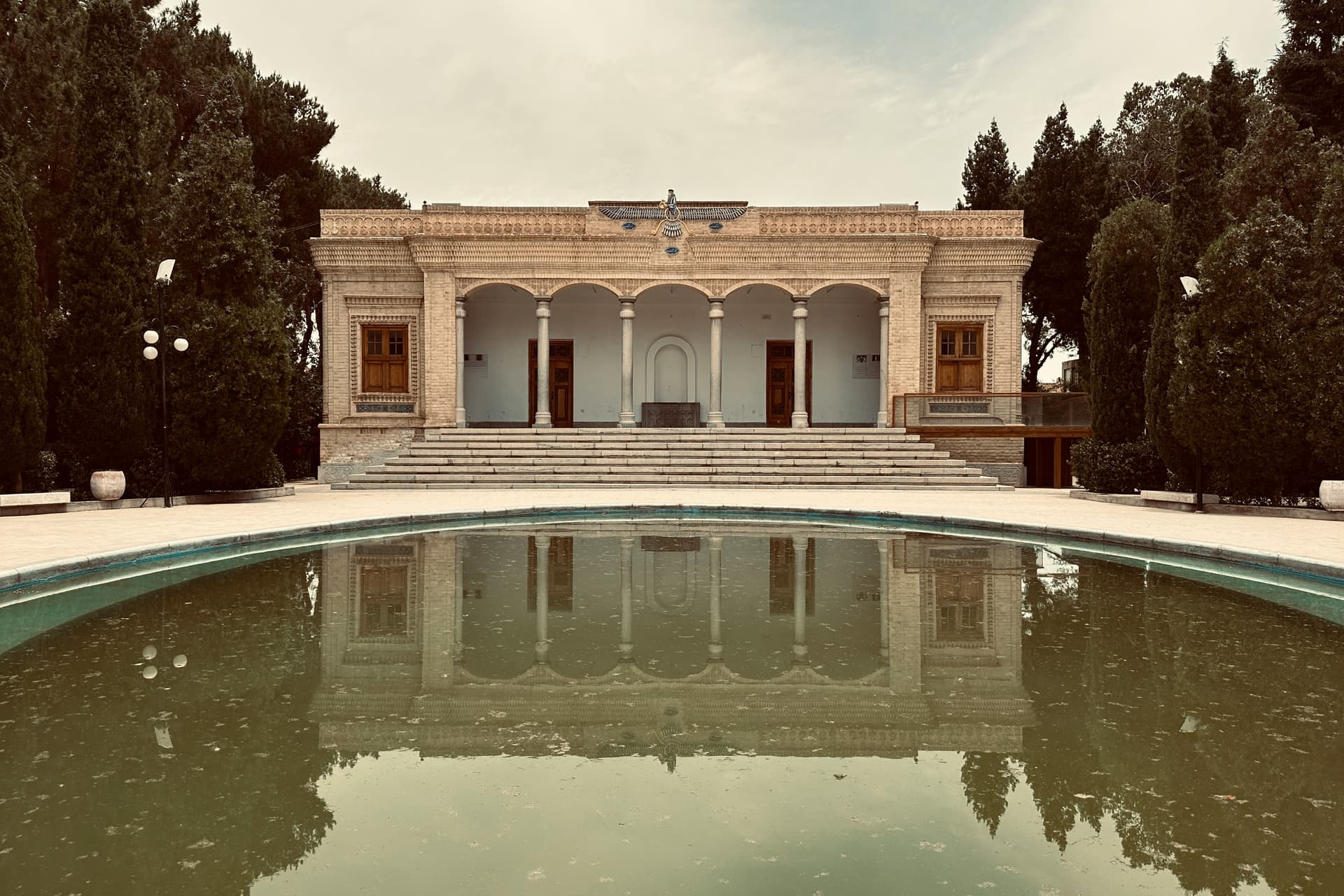
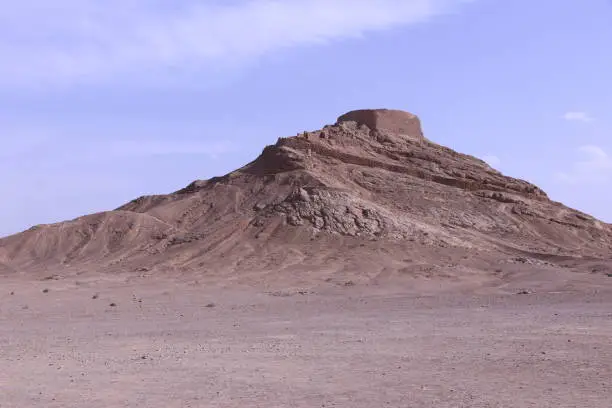
Yazd is one of the last living centers of Zoroastrianism, the state religion of Persia before Islam. The Atashkadeh temple houses a flame that priests claim has burned without interruption since 470 CE. At the city's southern edge, the two Towers of Silence stand their stone cylinders on hillsides: until the 1970s, Zoroastrians exposed their dead to vultures here to avoid defiling the earth. Today, some 5,000 Zoroastrians still live in and around Yazd, and the Sadeh festival, in mid-January, gathers the community around a great fire.
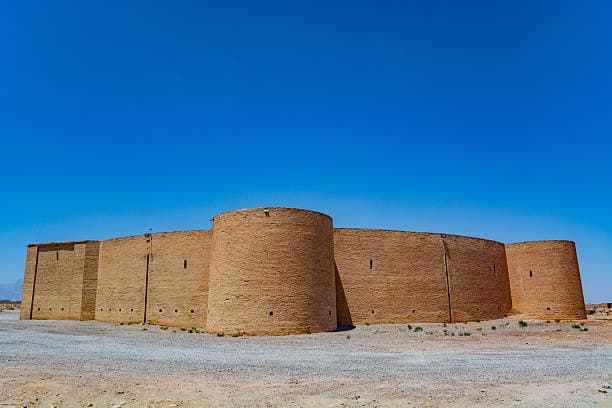
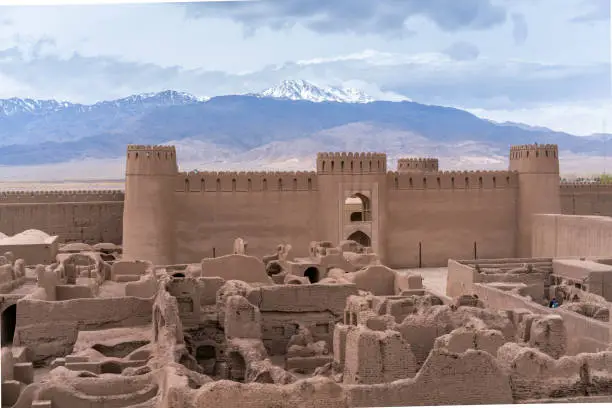
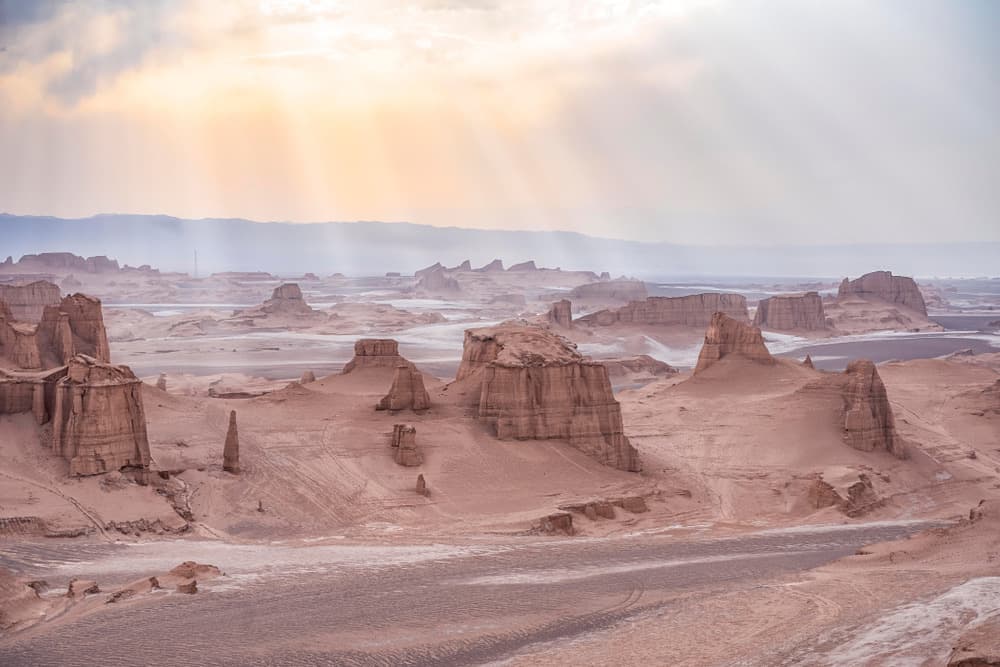
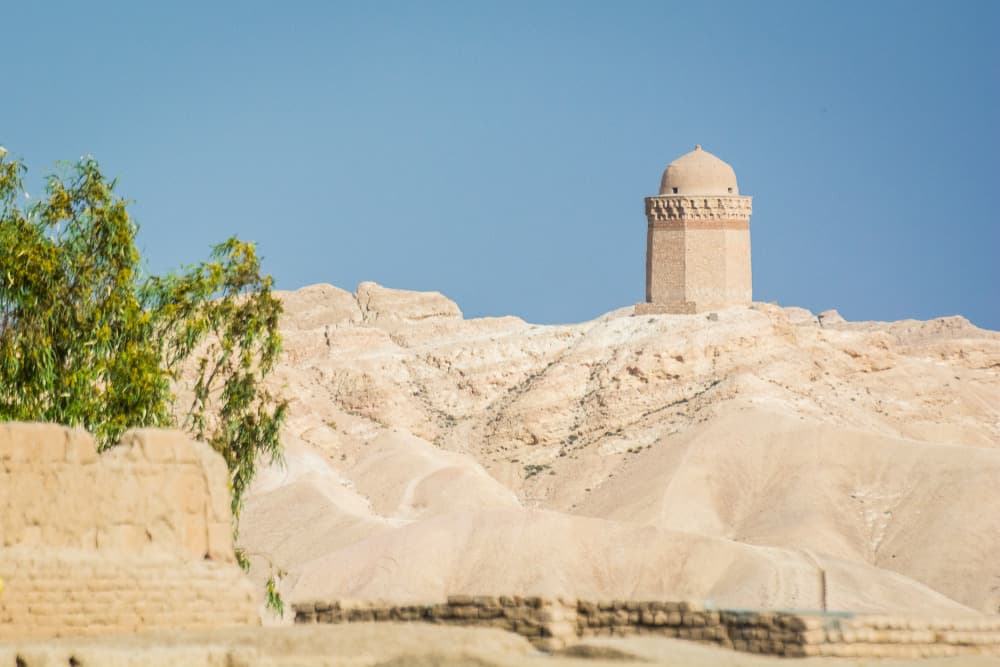
Around Yazd, the desert does not resemble Saharan imagery. There are first rocky plateaus, dried riverbeds, bare mountains. Dunes appear in pockets, notably around the village of Mesr, four hours' drive north, and Farahzad. The Zein-o-din caravanserai, on the Yazd-Kerman road, functioned in the 16th century as a stop on the Silk Road; it has been restored as a hotel and retains its circular layout, rare in Iran. Further north, the fortified village of Kharanaq, partially abandoned since the 1970s, keeps its crumbling adobe houses and its 700-year-old leaning tower. Meybod, 50 km from Yazd, preserves an 18th-century conical ice house (yakhchal) that produced ice in the desert thanks to nocturnal evaporation.
The oasis of Garmeh, at the edge of Dasht-e Kavir, still lives from its date palms and a few springs. A dozen families offer homestay accommodation. Nights there are silent, without light, with a sky untouched by light pollution. For cuisine, the region has its specialties: ghotab, a pastry with almonds and cardamom; Yazd baghlava, drier than its Turkish cousin; and shouli, a soup made from beets and lentils served in winter. Yazd's merchants still sell silks and termeh, brocades woven since Safavid times.
To Discover
Old Adobe City of Yazd. Wander through the maze of covered alleyways in the Fahadan quarter, among historic houses with badgirs and weavers' workshops. A climb onto the caravanserai Khan's roof terrace offers a panoramic view of the Friday Mosque at sunset.
Zein-o-din Caravanserai. Spend the night in one of the few Safavid circular caravanserais still standing, 60 km south of Yazd. Vaulted rooms open onto the central courtyard, and the desert's silence begins the moment you pass through the gate.
Mesr Desert and Garmeh Oasis. Four hours of track from Yazd to the dunes of Dasht-e Kavir. A 2–3 hour camel trek in the late afternoon, a night in a homestay at Garmeh under an adobe dome, and a swim in the hot spring of Tchah Esfid.
Living Zoroastrianism. Visit the Atashkadeh temple and its flame tended since the 5th century, then climb to the Towers of Silence at the city's southern edge. If you travel in mid-January, the Sadeh festival opens a rare window onto the community.
Kharanaq and Meybod's Ice House. One day combines the abandoned fortified village of Kharanaq, its Sassanid bridge and leaning tower, then Meybod with its conical ice house and Safavid caravanserai converted into a carpet museum.
When to Go
The comfortable window stretches from October through mid-April. In October-November, daytime temperatures hover around 22–25°C and nights drop to 10°C, ideal for combining city and desert. From December to February, days remain pleasant (12–16°C) but nights in the desert fall to 0°C or even –5°C at Mesr or Garmeh: bring fleece and a hat for desert camps. March and April see temperatures climb (20–28°C) and offer the best period for multi-day camel trekking.
From June to September, daytime temperatures regularly exceed 40°C in Yazd, with peaks at 45°C in desert zones. Trekking and tent nights become grueling, and several small desert accommodations close or operate at reduced capacity. Rainfall is nearly nonexistent year-round (under 60 mm), so weather is never a decision factor, unlike in the country's north.
Practical Advice
Allow a minimum of 3 days for Yazd and its immediate surroundings (Meybod, Kharanaq, Zoroastrian temple, Towers of Silence), and 5–6 days if you add a desert loop to Mesr and Garmeh, which requires two nights on-site to allow time for camel trekking. Yazd has an airport with daily connections to Tehran (1 hour flight) and is also reachable by overnight train from the capital (about 7 hours). The Isfahan-Yazd road takes 4.5 hours; the route to Shiraz takes 6 hours via Pasargades.
Yazd fits naturally between Isfahan and Shiraz on the classic Safavid cities axis: this is the most coherent combination for a first trip of 12–15 days. For travelers with 3 weeks, you can extend south to Kerman and the Lut, or head north via Tabriz. For comfort, Yazd offers several restored traditional houses as charming hotels in the old city, with courtyards and badgirs. In the desert, expect refined rusticity: simple rooms in homestays, shared facilities, family meals. The region suits contemplatives, architecture and history lovers, and moderate hikers well. For families, nights under the stars at Garmeh and camel rides work from age 7–8 onward.