Zein-o-Din Caravanserai
Zein-o-Din Caravanserai
A rare circular Safavid caravanserai deep in the Dasht-e Kavir desert, Zein-o-Din welcomes travellers into its original vaulted cells, facing a starlit sky unmarred by light pollution.
In the heart of the Dasht-e Kavir desert, midway between Yazd and Kerman, Zein-o-Din caravanserai is among the rarest circular Safavid caravanserais still standing in Iran. Built in the 16th century along the royal route connecting Isfahan to India, it welcomes travellers today as it once did: in chambers within the original cells, without electricity at night, beneath a starlit sky free from light pollution.
Practical Information at a Glance
- Access: Yazd–Kerman highway; a private transfer from Yazd is the most practical option (no regular public transport serves the site).
- On-site accommodation: overnight stays possible in restored cells — advance booking is essential.
- Recommended duration: a minimum of one night to enjoy the desert sunset and the night sky.
- Dress code: cover shoulders and legs, as throughout Iran.
What to See
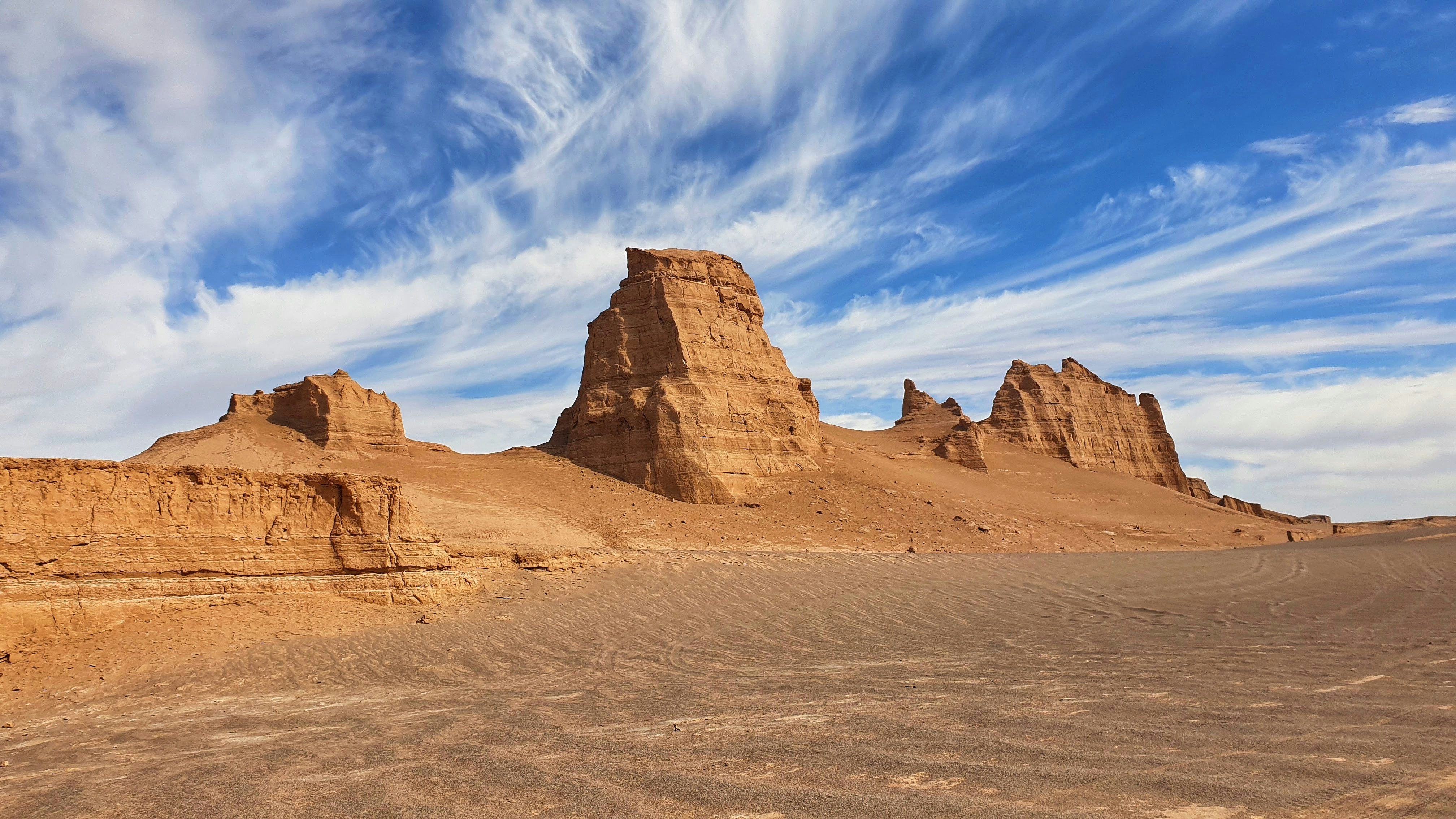
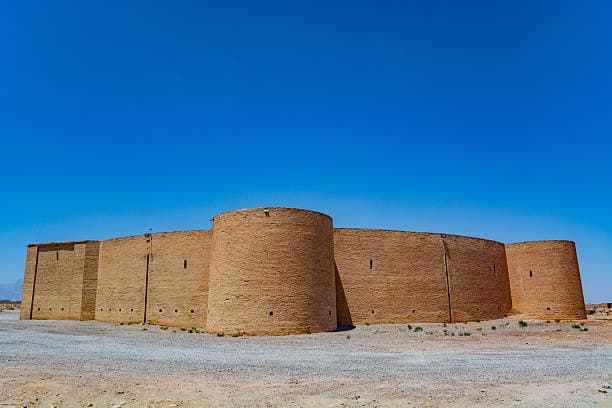
The building is distinguished by its circular plan: a central tower surrounded by a round courtyard, itself ringed by vaulted cells. The thick adobe walls naturally regulate heat. A small mosque, an underground cistern (ab anbar) and a watchtower complete the ensemble. The surrounding landscape — ochre desert plain, absolute silence — is an integral part of the experience.
History and Context
The caravanserai dates to the reign of Shah Abbas I (early 17th century), when the Safavids developed a dense network of caravanserais to secure and tax the caravan trade. Zein-o-Din was a day's journey away from the previous caravanserai. Left in disuse after the decline of caravan routes, it was restored and converted to tourist accommodation in the early 2000s, without departing from its original architecture.
Highlights of the Visit
The Circular Architecture
The round shape is exceptionally rare among the roughly 800 documented Iranian caravanserais. It allowed for more effective defence and better air circulation. From the central courtyard, the pointed arches of the cells form a repetitive, hypnotic panorama.
A Night in the Desert
Without intense artificial lighting, the night sky above the Dasht-e Kavir is exceptional. On summer nights, travellers sometimes sleep on the rooftop terrace. This is the primary reason to stay at least one night on site.
Sunset and Sunrise
The low light colours the adobe walls in deep orange. In the morning, before the heat sets in, a walk around the building reveals the details of the brickwork and the silhouette of the central tower.
Etiquette and Visiting Rules
- Respect the prayer spaces of the small integrated mosque.
- Modest dress required for women (headscarf, long sleeves, covered legs).
- The site is a living space for staff and guests: avoid noise after nightfall.
Photography Tips
The golden light of sunset on the adobe walls is the most photogenic moment. For the interior courtyard, mid-morning offers balanced lighting without harsh shadows. At night, a tripod is essential to capture the starlit sky with the building as a silhouette. Drones are subject to Iranian regulations — check before departure.
Location and Access
The caravanserai lies in the Dasht-e Kavir desert, on the national highway connecting Yazd to Kerman, about 60 km south-east of Yazd. No regular bus service stops nearby. The vast majority of visitors arrive by private vehicle or as part of an organised tour from Yazd. Accessibility for mobility-impaired visitors is limited due to the compacted earth floor and cell thresholds.
Nearby Attractions
- Yazd — UNESCO city of adobe alleyways, wind towers and Zoroastrian temples, the natural starting point for visiting Zein-o-Din.
- Towers of Silence (Dakhma) — ancient Zoroastrian burial grounds at the gates of Yazd, worth combining with your departure into the desert.
- Jameh Mosque of Yazd — minarets among Iran's tallest, characteristic with turquoise faience tilework.
Frequently asked questions
Yes. The original vaulted cells have been converted into simple rooms. Advance booking is essential, as capacity is limited.
The easiest option is a private vehicle transfer from Yazd, often included in desert tours offered by local agencies. There is no direct public transport.
Spring (March–April) and autumn (October–November) offer manageable temperatures in the desert. In summer, daytime heat is extreme; the night experience remains the primary appeal.
As throughout Iran, women must wear a headscarf and clothing covering shoulders and legs. Closed shoes are advisable for walking on the compacted earth floor.
Yes, a day visit is possible, but it forfeits the nocturnal experience which is the site's principal draw. Allow at least two hours on site to explore the architecture and surroundings.
Photography is generally allowed inside and around the caravanserai. Ask permission before photographing people, as a courtesy.
Interested in this visit?
We can include it in your personalised itinerary.