Citadel of Rayen (Arg-e Rayen)
Citadel of Rayen (Arg-e Rayen)
Located 100 km from Kerman, the Citadel of Rayen is one of the world's best-preserved adobe fortresses. Upper citadel, watchtowers, and a medieval hydraulic system await exploration in just 2 hours.
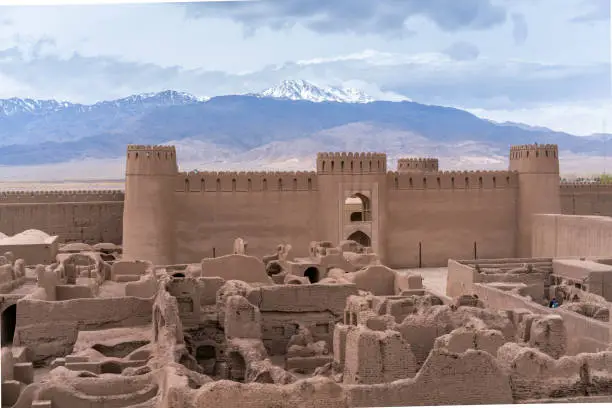
About one hundred kilometers southeast of Kerman, the Citadel of Rayen (Arg-e Rayen) stands as one of the world's best-preserved adobe fortresses. Built over a thousand years ago, it spans nearly twenty thousand square meters and rises at the foot of Mount Hezar. Unlike the famous Arg-e Bam, Rayen escaped the 2003 earthquake and retains most of its original structures intact.
Practical information at a glance
- Admission: paid entry (Iranian national museum rates, varies by nationality)
- Recommended duration: 1.5 to 2 hours to explore the entire complex
- Dress code: Islamic attire required (women: headscarf and covering clothes)
- Access: by car from Kerman via the Jiroft road; no direct public transport
- Best time to visit: spring (March–May) and autumn (September–November) to avoid extreme desert heat
What you'll see
The citadel divides into two main zones: the lower city, once inhabited by artisans and merchants, and the upper city reserved for the governor and his court. Watchtowers, covered alleyways, underground water reservoirs (ab anbar), and reception halls built from rammed earth reveal the daily life of a medieval desert city in Iran.
History and context
Rayen is believed to have been founded during the Sassanid era, but its main development dates to the Seljuk period (11th–12th centuries). The citadel served as a caravanserai relay on routes connecting Kerman to Sistan. Gradually abandoned in the 19th century, it remained nearly intact thanks to the arid climate and its distance from urban centers.
Highlights of your visit
The upper citadel and governor's palace
The upper residential quarter concentrates the most elaborate rooms: columned halls, interior courtyards, and decorative adobe niches. This is where the architecture reaches its greatest structural complexity.
The watchtowers
Several circular towers punctuate the outer walls. From their summits, the view spans the desert plain and the snow-capped foothills of Mount Hezar, offering a striking contrast between aridity and altitude.
The hydraulic system
Underground cisterns and internal channels demonstrate remarkable mastery of water management in arid environments — a skill central to all Iranian vernacular architecture.
Etiquette and visiting rules
- Strict Islamic dress code required at the entrance.
- Do not climb walls or fragile structures: unrestored adobe is sensitive to impact.
- Stay on marked paths in areas undergoing consolidation work.
Photography tips
Golden late-afternoon light accentuates the adobe textures and cast shadows of the towers. Early morning, before visitor crowds arrive, allows unobstructed shots of the covered alleyways. Avoid midday in summer: the light is harsh and the heat makes exploration uncomfortable.
Location and access
Rayen lies approximately 100 km southeast of Kerman, reachable by car in less than two hours. The route crosses a desert plain landscape before reaching the town of Rayen at the foot of Mount Hezar. No regular public transport serves the site; a shared taxi from Kerman or a rental car remain the most practical options. Accessibility for those with reduced mobility is limited due to earthen ground and narrow alleyways.
Nearby attractions
- Citadel of Bam (Arg-e Bam) — another major adobe fortress in the region, UNESCO-listed, approximately 200 km to the east.
- Shazdeh Garden (Mahan) — historic Persian garden inscribed on the UNESCO World Heritage List, about fifty kilometers to the northwest.
- Grand Bazaar of Kerman — one of Iran's oldest covered bazaars, an ideal starting point before heading to Rayen.
Frequently asked questions
Spring (March to May) and autumn (September to November) are the most pleasant seasons. In summer, temperatures regularly exceed 35°C in this semi-desert zone.
Yes. Islamic dress is mandatory in Iran: headscarf and covering clothes for women, long trousers for men. Closed-toe shoes are recommended for walking on earthen ground.
Yes, but the two sites are about 200 km apart. It is advisable to plan a night in Bam or Kerman to avoid overloading your itinerary.
Photography is generally allowed throughout the site. No specific restrictions are signaled, but it is always prudent to verify at the entrance.
The most direct route from Kerman takes approximately 1.5 to 2 hours by car. A shared taxi or rental car are the most practical solutions; there is no regular bus service to the site.
Plan between 1.5 and 2 hours to tour the lower city, upper city, and main halls. Enthusiasts of vernacular architecture can easily spend considerably more time here.
Interested in this visit?
We can include it in your personalised itinerary.