Shaking Minarets of Ghalamdan (Menar Jonban)
Shaking Minarets of Ghalamdan (Menar Jonban)
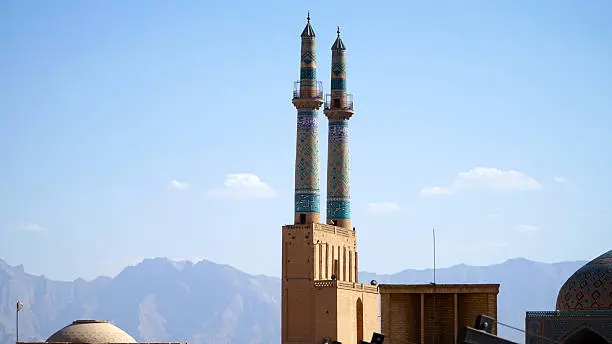
West of Isfahan stands a 14th-century mausoleum housing two brick minarets with a rare mechanical property: disturb one and the other sways in response—a phenomenon unexplained since medieval times.
West of Isfahan rises a 14th-century mausoleum whose two minarets have made it famous for a rare phenomenon: nudge one and the other sways at a distance. This site, known as Menar Jonban ("shaking minarets"), draws both the curious and devotees of Seljuk architecture. The structure is modest, yet the mechanical enigma it poses remains unsolved.
Practical essentials
- Admission : paid entry (managed by Iran's Cultural Heritage Organization)
- Suggested duration : 30 to 45 minutes
- Access : Karladân district, approximately 7 km west of Isfahan's center; reachable by taxi or bus from Imam Square
- Dress code : modest attire required; headscarf mandatory for women
What to see
The complex comprises an iwan (barrel-vaulted portico) topped by two cylindrical brick minarets. The tomb contains the remains of Amu Abdollah Soqla, a 14th-century hermit. The interior is austere: faience tiles, stucco, and Quranic inscriptions. The real spectacle unfolds outdoors during the minaret demonstration.
History and context
The mausoleum dates to the Ilkhanid period, around 1316. The minarets were added later. Their mechanical peculiarity—the transmission of vibrations from one minaret to the other via the iwan's structure—has been studied without reaching definitive scientific consensus. Several hypotheses point to resonance in the wooden framework embedded within the brickwork.
Highlights of the visit
The minaret demonstration
A caretaker periodically climbs into one minaret and sets it in motion. The other responds with a slight delay. The effect is visible from the courtyard. The demonstration lasts a few minutes and repeats several times daily.
The iwan's architecture
The ogival arch and exposed brick ornamentation exemplify late Ilkhanid style. Compare with the grand mosques downtown to appreciate the stylistic evolution between periods.
The garden and courtyard
A small verdant space surrounds the mausoleum. Quiet and lightly frequented on weekdays, it offers welcome respite from the bustle of Imam Square.
Etiquette and visiting rules
- Modest dress required; women must wear a headscarf from the moment of entry.
- Do not attempt to sway the minarets yourself: only authorized staff perform the demonstration.
- Speak quietly inside the mausoleum, which remains a place of devotion.
Photography tips
Late afternoon light gilds the brick and brings out the minarets' reliefs. Position yourself in the courtyard facing the iwan to frame both minarets symmetrically. During the demonstration, a telephoto lens captures the movement from ground level. Photography is permitted outdoors.
Location and access
Menar Jonban sits in the Karladân district, west of Isfahan. From Imam Square (Naqsh-e Jahan), allow 20 to 30 minutes by taxi. Bus lines connect the center to this area. The courtyard is wheelchair-accessible, though the minaret interiors are not.
Nearby attractions
- Imam Square (Naqsh-e Jahan) — Isfahan's historic heart, ringed by the Friday Mosque, Ali Qapu Palace, and the bazaar.
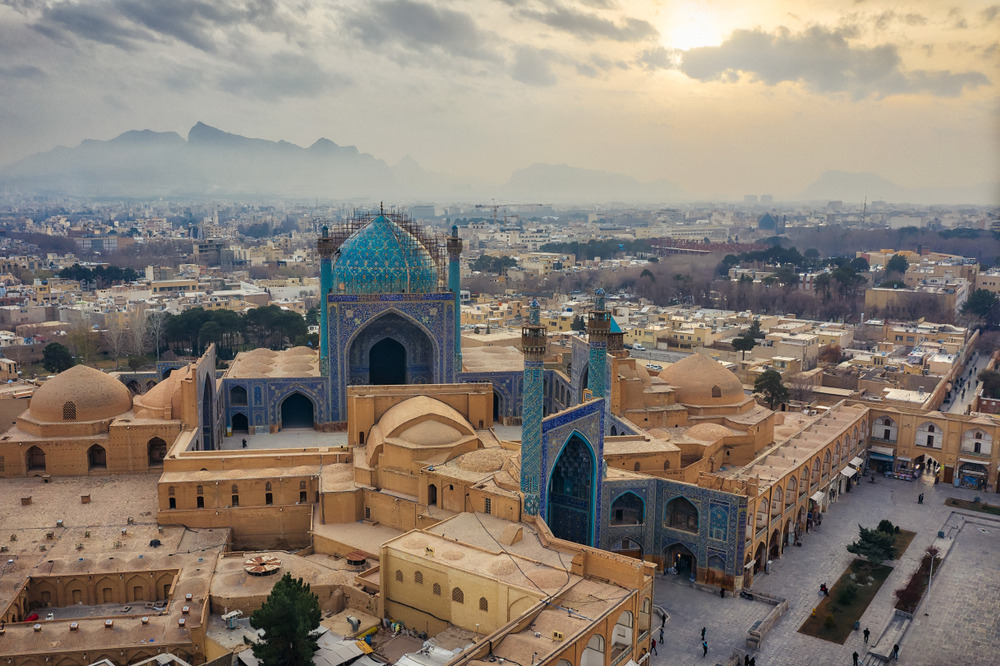
- Imam Mosque — a Safavid masterpiece with its brilliant blue faience domes.
- Si-o-Se Pol Bridge — a 33-arch bridge spanning the Zayandeh River, essential for sunset strolls.
- Chehel Sotoun Palace — a Safavid palace of forty columns, UNESCO World Heritage-listed.
Frequently asked questions
A caretaker performs the demonstration several times daily, typically at regular intervals. No fixed schedule is published; arrive with patience or inquire at the entrance.
No. Access to the minarets is reserved for site staff. The demonstration is viewed from the courtyard.
Modest dress is mandatory. Women must wear a headscarf covering their hair. Wraps are sometimes provided at the entrance, though bringing your own is advisable.
Yes. The visit is brief (30–45 min). Pair it in the morning with the historic center—Imam Square, Imam Mosque, the bazaar—then conclude at Si-o-Se Pol Bridge at sunset.
The outer courtyard is level. The mausoleum interior has a few steps. The minarets are not accessible.
Spring (March–May) and autumn (September–November) offer pleasant temperatures in Isfahan. Summers are scorching; if visiting in July–August, opt for early morning.
Interested in this visit?
We can include it in your personalised itinerary.