Towers of Silence (Dakhma) of Yazd
Towers of Silence (Dakhma) of Yazd
Perched on two hills at the edge of the desert, the Towers of Silence in Yazd are ancient Zoroastrian funeral towers where the dead were once exposed to vultures. A unique archaeological and spiritual site, with a breathtaking panorama over the desert plain.
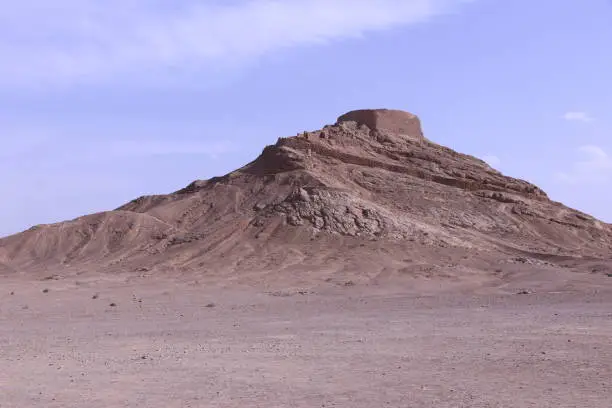
At the edge of the desert, two ochre-coloured hills rise above the plain of Yazd. Atop each stands a dakhma, a circular Zoroastrian tower where the deceased were once exposed to vultures. These structures, abandoned in the mid-20th century, remain the most striking symbol of Zoroastrian presence in Iran. The visit combines archaeology, ancient spirituality, and panoramic views over the city and desert.
Practical Information at a Glance
- Access: approximately 15 km northwest of central Yazd, by taxi or bicycle (flat road).
- Admission: paid entry (classified site); modest fee, payable on site.
- Recommended duration: 1.5 to 2 hours for both towers and adjacent structures.
- Dress code: covered clothing required for women (headscarf, long sleeves); general rule throughout Iran.
- Best time: early morning or late afternoon to avoid desert heat.
What You'll See
Two towers face each other on separate hills. Each is a cylinder of rough stone, open to the sky, divided internally into three concentric circles reserved for men, women, and children. At the foot of the hills stand adjacent structures: purification chambers, water reservoirs, ice pits (yakhchal) and mourning spaces. The ensemble forms a coherent funerary complex, still legible in the landscape.
History and Context
Zoroastrianism, the religion founded by Zarathustra, considers earth, fire, and water as sacred. Burying or cremating a body would defile them. Exposure to scavengers — a practice known as "sky burial" — allowed rapid decomposition without contaminating the elements. The Yazd dakhmas were used until the 1960s-1970s, when Iranian authorities prohibited the practice. The local Zoroastrian community, still active in Yazd, has since adopted hermetically sealed cemeteries with concrete tombs.
Highlights of the Visit
The Ascent to the First Tower
A rocky path climbs for about twenty minutes. The interior of the tower, accessible through a narrow opening, reveals the concentric structure and the central well where bones were eventually cast. The atmosphere is austere, without decoration.
The Panorama of Yazd and the Desert
From the summit of the hills, the view embraces the earthen roofs of Yazd, its minarets and, in the distance, the expanse of the Dasht-e Kavir desert. The raking light of evening transforms the plain into a palette of ochres and pinks.
The Adjacent Structures
At the foot of the towers, the service structures are often overlooked by hurried visitors. The yakhchal (traditional ice house in the shape of a conical dome) and the purification chambers illustrate the logistical organization of a complex funerary ritual.
Photography Tips
The golden light of an hour before sunset is ideal: it sculpts the relief of the towers and colours the desert. From the summit, a wide-angle lens captures both hills at once. Inside the towers, overhead light in mid-day creates strong contrast between sky and stone walls — effective in black and white. No known photography restrictions on the site.
Location and Access
The towers are located approximately 15 km northwest of central Yazd, on the road to Taft. A taxi from the central bazaar is the simplest solution; the round trip with waiting time is easily negotiated. Experienced cyclists enjoy the flat road across the desert plain. The site is not accessible by wheelchair due to sloped paths and irregular terrain.
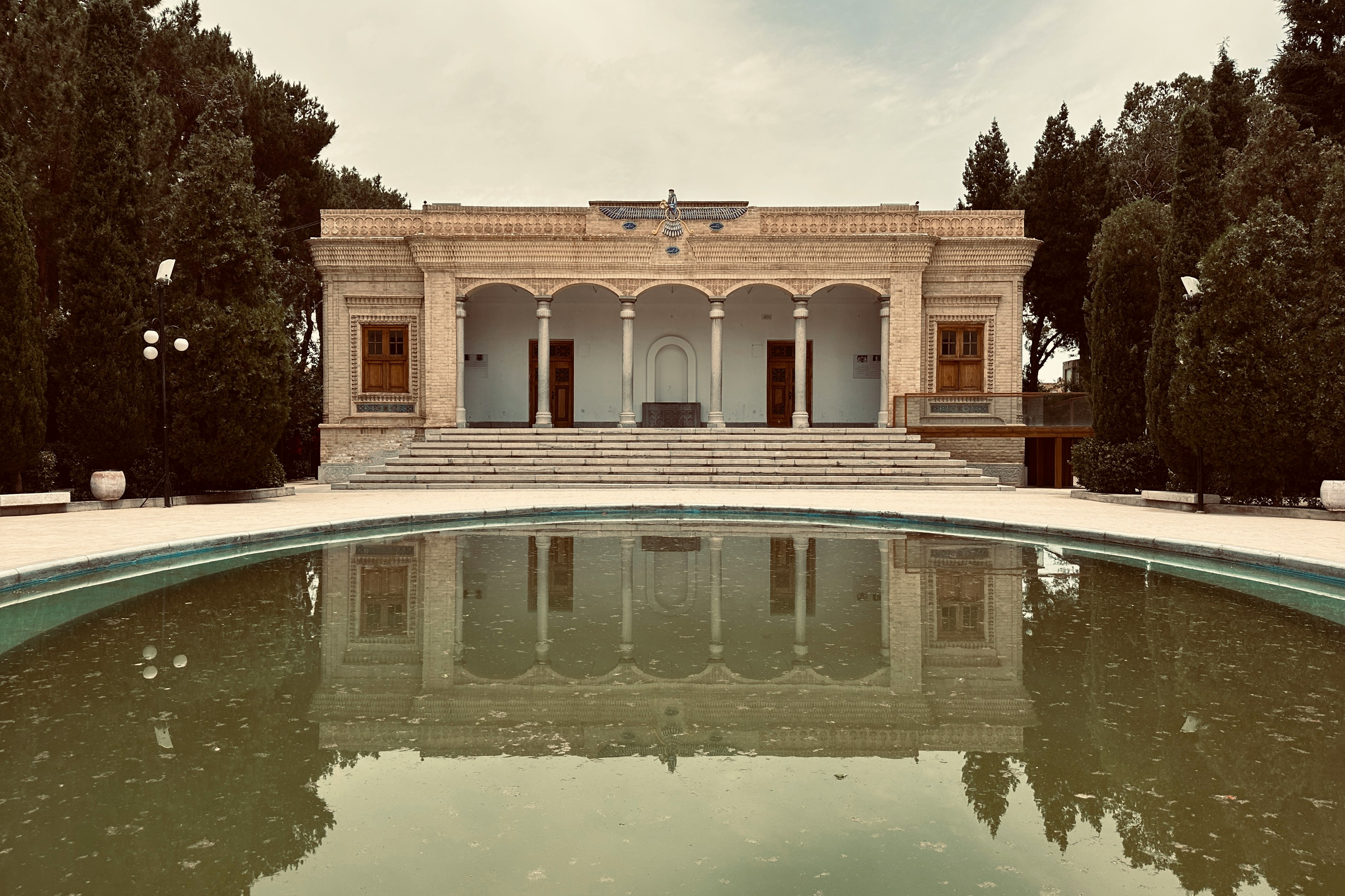
Immediately nearby is the Fire Temple of Yazd (Atashkadeh), another major Zoroastrian landmark located in the city itself.
In the Surrounding Area
- Fire Temple of Yazd — sacred Zoroastrian flame burning uninterrupted for over 1,500 years.
- Jameh Mosque of Yazd — minarets among the tallest in Iran, Seljuk and Timurid architecture.
- Historic Quarter of Yazd — labyrinth of adobe alleyways, badgirs (wind towers) and traditional houses.
- Amir Chakhmaq Complex — tiered niche façade, architectural symbol of Yazd.
Frequently asked questions
Yes, access to the interior of the towers is generally possible. The opening is narrow; you need to duck to enter. The interior is empty, without decoration, but the concentric structure remains legible.
Spring (March-May) and autumn (September-November) offer tolerable temperatures. In summer, desert heat is intense: start early morning without fail. In winter, nights are cold but days are pleasant.
Plan 1.5 to 2 hours to climb both hills, explore the adjacent structures and enjoy the panorama. The ascent to each tower takes approximately 20 minutes on foot.
No. The practice of exposing bodies was banned in Iran in the 1960s-1970s. The Zoroastrian community now uses cemeteries with hermetically sealed concrete tombs so as not to contaminate the earth.
Yes, this is the classic combination to understand Zoroastrianism in Yazd. The Fire Temple is located in the city; plan the Towers of Silence in the morning (before heat) and the temple in late morning or afternoon.
Iranian dress codes apply: headscarf and long sleeves mandatory for women. This is not an active place of worship, but respect for dress code remains required as everywhere in Iran.
Interested in this visit?
We can include it in your personalised itinerary.