Abarkouh
Abarkouh
A quiet town in Yazd Province, Abarkouh is home to a 4,500-year-old cypress, magnificent Qajar mansions, and traditional earthen ice houses. A rare stopover on the Silk Road.
A city in central Iran administratively part of Yazd Province, Abarkouh is both a pilgrimage destination and a gateway to cultural discovery. Here's an overview of what makes this place special.
Introduction
The town of Abarkouh, nestled in central Iran, remains largely undiscovered by mainstream tourism—a real shame, given its Persian culture, distinctive dialect, mosques, impressive fortresses, and charming traditional brick houses that rank it among the country's most captivating destinations. Its location in Yazd Province, neighbour to Isfahan and Shiraz, positions the city within Iran's historic triangle, inviting travellers to trace the legendary caravan routes of the Silk Road.
With impressive monuments like the Cypress of Zoroaster—a pilgrimage must-see in Iran—Abarkouh firmly establishes itself as a tourism destination worth your time. Ready to escape into pure air and explore Iran? Book your flight to Abarkouh today.
A Brief History
The poetic nickname of "cloudy mountain" suits Abarkouh well, perched as it is at 1,500 metres above sea level. Its history is as fascinating as it is turbulent, shaped by successive Middle Eastern dynasties that governed the region.
Abarkouh, Abarkooh, or Abarkū—spelling variations abound—was once an important economic centre in Kerman Province, before control passed to Fars Province. Ancient Persian manuscripts described it as a waystation, much like Esfandabad, where caravanserais rested and resupplied on the route between Shiraz and Yazd. Abbas I the Great built numerous inns on either side of Abarkuh, where merchants, animals, and high-ranking courtiers could stop and refresh themselves.
From the 10th to 11th centuries, when the chieftain Toghrul Beg ended Ghaznavid rule and founded the Seljuk Empire, Abarkuh experienced an artistic and cultural renaissance. Over the following centuries, the city fell under the control of the Mongols, the Timurids, and the Safavids.
The 18th and 19th centuries saw Abarkuh enter relative decline. Raids by Afghan invaders dealt a heavy blow to residents. But the most devastating damage came from the fierce battle between the armies of Agha Mohammad Khan and Loft Ali Khan, after which the Qajar dynasty rose to power.
From Abarkuh's thousand-year past, a series of mosques, fortresses, Ottoman palaces, carefully maintained Persian gardens, and historic squares bear witness to its glory. The local dialect has inherited numerous Persian words and expressions.
The Modern City
The city of Abarkuh struggles to overcome its economic challenges. Agriculture remains the primary source of income for villagers. An underground irrigation system ensures stable harvests, compensating for the region's unpredictable rainfall. It's striking to see how many gardens and green plots flourish in the town despite persistent drought. That said, poverty, poor road infrastructure, and lack of basic amenities pose obstacles to tourism development.
Beyond these challenges, the town is recognised as an outstanding testament to Iran's cultural and ancestral heritage. For those passionate about art and civilisation, Abarkouh makes a worthwhile stop during a trip to Yazd or Isfahan.
What to See and Do
Testimony to the prestige of the successive dynasties that dominated the city, Abarkouh's architecture is a pure delight to behold. Countless mosques, burial sites, and fortresses evoke the Timurid, Afsharid, and Qajar eras with nostalgic charm. Don't miss these essential sites:
Natural Heritage
The Cypress of Zoroaster: Abarkouh is home to Asia's oldest living tree—a 25-metre-tall cypress! According to Russian scholar Professor Aleksandrov, this cypress is as old as Egypt's Great Pyramids of Giza, having grown for 4,500 years. Only California's Methuselah pine, at 4,800 years, surpasses it. Notably, the cypress retains its foliage year-round, which is why it was the most prized species in Persian gardens. Local beliefs suggest the tree was planted by the prophet Zoroaster or Japhet, the youngest son of Noah, who escaped the Great Flood.
Historic Monuments
Wander through the Darvazeh Meydan quarter, where most visitors love to get pleasantly lost.
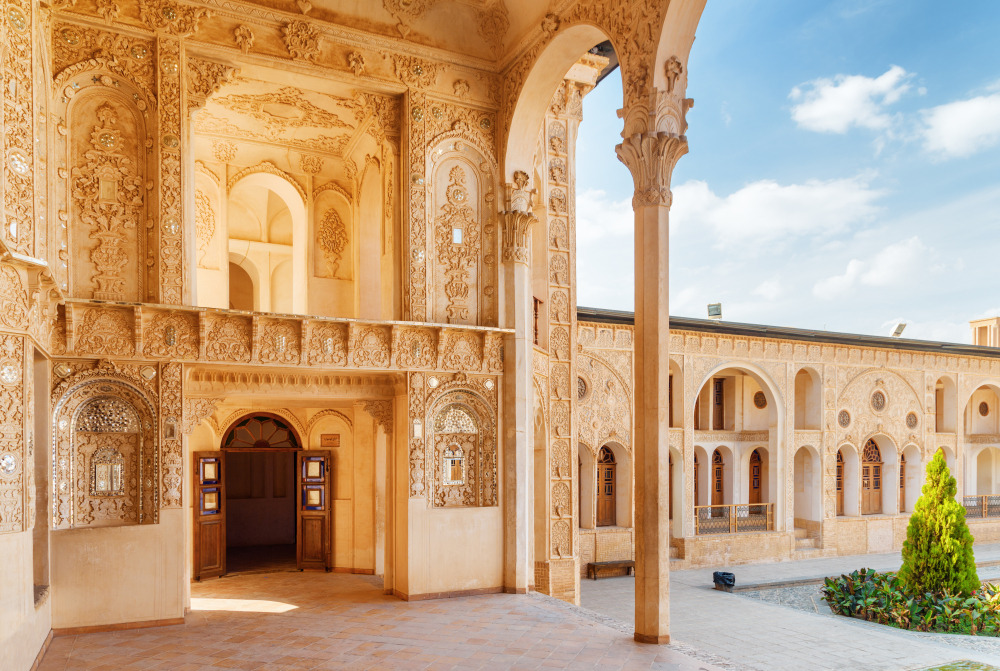
- The Aghazadeh Mansion: ranked among Iran's national treasures, the Aghazadeh Mansion is a brilliant example of architectural engineering. The room layout was carefully planned according to seasonal wind patterns. The ornate balconies, luminous stained-glass windows, and grand stone pool attest to the luxury of princely courts during the Qajar era. Most striking is the 18-metre wind tower on its roof, designed to capture wind energy and keep occupants cool regardless of weather.
- The Seyed Ali House: adjacent to the Aghazadeh Mansion, the Seyed Ali House is another significant monument worthy of a visit. The two palaces are connected by the sabat, a network of vaulted passages that shield pedestrians from the fierce sun, provide shade, and channel cooling breezes.
- The Musavi House: this sumptuous palace is part of the Aghazadeh historic complex. It features an entrance courtyard, a sunken courtyard, and a large central pool that gives the building visual unity and coherence. Like its neighbouring palaces, the Musavi residence has been converted into a charming hotel.
- The Anthropology Museum: recognisable by its beautifully carved pink façade, the Solat residence is unmissable. With its columns, arcades, ornately stuccoed portals and reliefs, and dazzling muqarnas, it represents one of Iranian art's finest achievements. Part of the property now houses the anthropology museum, where you can discover archived documents, coins, military artefacts, and much more.
Religious Heritage
- The Friday Mosque: inaugurated in the 14th century, this mosque blends Seljuk and Ilkhanate artistic influences in an architectural dream. It remains a place of worship and spiritual solace for the faithful today. The immense stalactite dome crowning the main building is truly worth seeing.
- The Biroon Mosque: founded in the 15th century, this place of worship reveals Timurid artistic elements to visitors—vaults, eyvāns, and shabestan, an underground gallery opening onto a rectangular courtyard. What makes it special is its location outside Abarkouh's walls.
- The Jame Mosque: a fascinating example of earthen or "adobe" construction, a technique Iranian builders adapted to survive in regions with scarce rainfall. The mosque's stucco altar deserves close inspection. Its current form largely dates to the Ilkhanate dynasty, though expansion projects were undertaken during the Timurid period.
Cultural Heritage
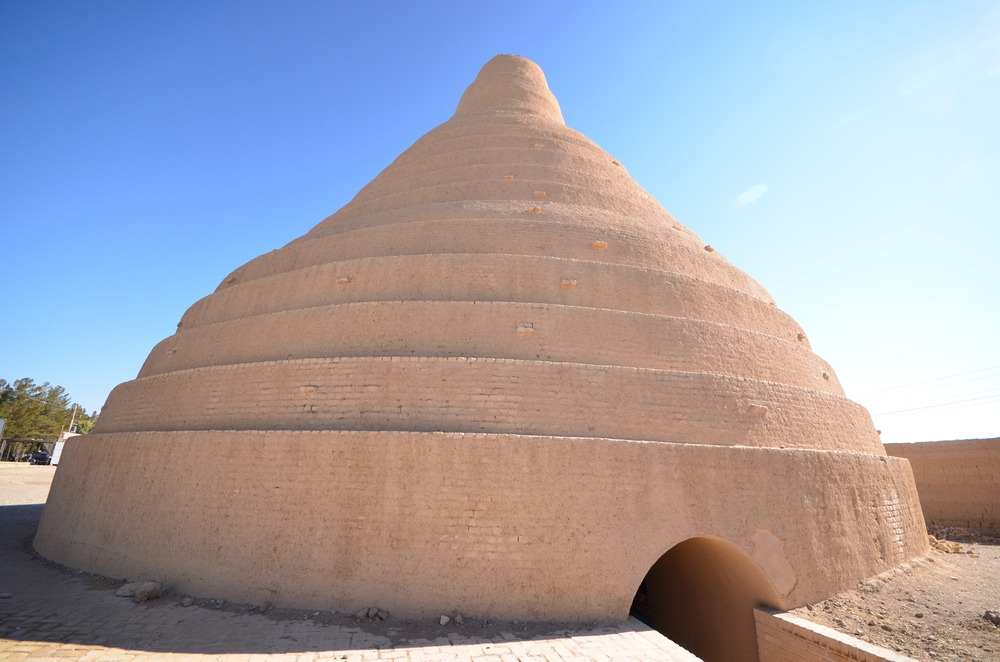
While the Cypress of Zoroaster is the city's number-one attraction, the ice houses capture visitors' curiosity in equal measure. Known as "yakhtchal", these structures served as ice reservoirs for producing refreshments for the imperial court, and sometimes stored grain and cereals. Picture a semi-submerged circular structure built from mud, egg white, sand, and animal hair. Persian engineers had already discovered a thermal insulation technique capable of neutralising heat exchange. While the concept of these ice factories—precursors to the refrigerator and cold storage—impresses, the cruel exploitation of slaves is equally striking. Historians recount how ice was transported from high mountains to yakhtchal structures built in the heart of the desert.
Don't miss: the Barzan Ice House in Maryam Abad village and the Aghazadeh Ice House.
Climate
Abarkouh shares the typical hot, desert climate of the region. Rain is virtually unknown except in February, March, and April (12-15 mm). Scorching summers run from June to September—the low season for tourism. August is the hottest month (39°C) and February the coldest (4.5°C).
Those planning a pleasant visit to Abarkouh should choose dates in the last three months of the year. Avoid summer if you can't tolerate extreme heat.
Transport is crucial to a successful stay. For discerning travellers, flying to Abarkouh is recommended. IranAir, among others, operates Paris-Yazd flights departing from Paris-Charles de Gaulle or Paris-Orly airports, landing at Yazd Airport, officially named Shahid Ayatollah Sadooghi Airport. Flight duration is approximately 14 hours.
Yazd Airport is about 154.3 km from Abarkouh's city centre. Simply take a train or taxi to reach your hotel. Remember to note the address—not all taxi drivers speak English.
You'll Love…
- tasting excellent local delicacies
- discovering Abarkouh's elegant, antiquated, and bygone architecture
- photographing the famous yakhtchal, traditional ice houses
- admiring the impressive façade of the Jame Mosque
- paying respects at one of the city's mausoleums
- observing the Cypress of Zoroaster, Asia's oldest tree and the world's second-oldest
Attractions in Abarkouh
Maisons de glace
Les yakhtchal d'Abarkuh, maisons de glace coniques héritées de la dynastie Kadjar, illustrent une ingénierie ancienne capable de conserver la glace en plein désert iranien.
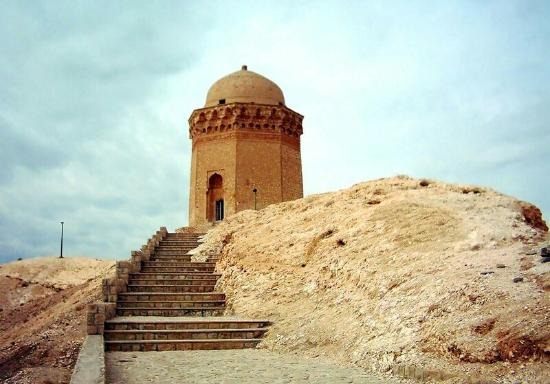
Gondab
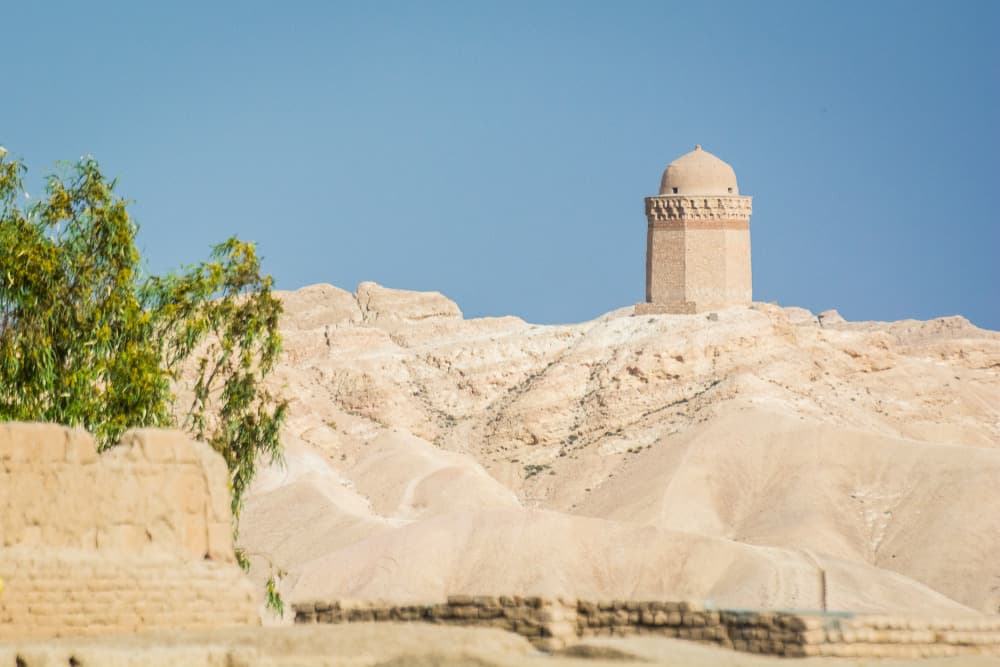
À Abarkuh, la tour funéraire Gonbad-e Aali, bâtie en 1056, illustre l'architecture seldjoukide en pierre sèche. Premier monument classé de la province de Yazd.
Want to discover this destination?
Our local advisors design your tailor-made trip.