Astan Quds Razavi Central Museum
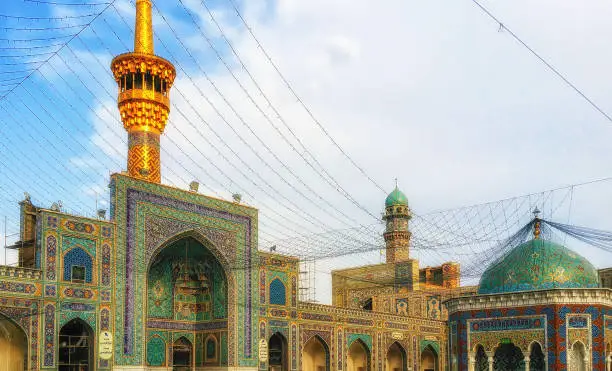
At the heart of Imam Reza Shrine in Mashhad, the Astan Quds Razavi Central Museum houses thousands of Islamic art objects: illuminated manuscripts, Safavid carpets, and court metalwork spanning fourteen centuries.
The Astan Quds Razavi Central Museum is located within the Imam Reza Shrine complex in Mashhad. It preserves thousands of objects donated to the shrine over the centuries: Quranic manuscripts, ancient carpets, ceramics, coins, and armor. It is one of Iran's richest Islamic collections, directly connected to the country's largest Shia religious institution.
Practical Information at a Glance
- Access: Located within the Imam Reza Shrine complex — non-Muslims may visit the museum, but access to the shrine itself is restricted to Muslims.
- Dress code: Modest attire is required; women must wear a headscarf and chador (available at the complex entrance).
- Recommended duration: Allow 1.5 to 2 hours to tour the main galleries.
What You'll See
The collections span fourteen centuries of Islamic art. Illuminated Quranic manuscripts, some dating to the early centuries of Islam, form the collection's highlight. Ancient carpets and kilims illustrate the evolution of Persian weaving techniques. One gallery is devoted to metal objects—chandeliers, ewers, and incense burners—donated by successive dynasties.
Ceramics and faience with cobalt-blue decoration, Islamic coins, and Safavid armor complete a coherent panorama of Iranian civilization.
History and Context
Astan Quds Razavi is the religious foundation that has administered the Imam Reza Shrine since the 9th century. Through royal and popular donations accumulated over centuries, it has built an extraordinary heritage. The Central Museum was created to preserve and exhibit these gifts, transforming a treasure of devotion into a structured museum collection.
Under the Safavids (16th–18th centuries), the shrine received exceptional donations that form the core of today's most precious collections.
Highlights of Your Visit
Illuminated Quranic Manuscripts
Some volumes are attributed to the earliest centuries of the Hijra. Kufic calligraphy and illuminations in gold and lapis lazuli testify to a lost craft. These pieces are displayed in climate-controlled vitrines.
Safavid Carpets
Grand court carpets, with their floral motifs and central medallions, exemplify the height of Persian weaving. Their state of preservation is remarkable given their age.
Precious Metal Objects
Silver chandeliers, bronze ewers inlaid with gold, and chased incense burners form a gallery of Islamic metalcraft. Several pieces bear dedicatory inscriptions from sovereigns.
Etiquette and Visiting Rules
- Modest dress required for all visitors; chador required for women (available for loan at the entrance).
- Keep voices low throughout the complex; the adjacent shrine is an active place of worship.
- Respect areas reserved for pilgrims and spaces off-limits to non-Muslims.
- Do not touch display cases or exhibited objects.
Photography Tips
Photography is generally permitted in the museum galleries, but check signage at the entrance of each room—certain sensitive collections may prohibit it. Lighting is soft and indirect; moderate ISO settings suffice. Avoid flash, which damages ancient textiles and manuscripts.
Location and Access
The museum is integrated into the Imam Reza Shrine complex in central Mashhad. The complex is accessible on foot from Mashhad's bazaar and by metro (Haram station). Parking surrounds the shrine perimeter. Accessibility for visitors with reduced mobility depends on specific complex entrances; inquire with staff at the entrance.
Guided tours in Persian are regularly organized; English-speaking guides can be arranged through your local agency.
Nearby
- Imam Reza Shrine — Iran's most visited religious complex, directly adjacent to the museum.
- Mashhad Bazaar — traditional covered market adjoining the shrine, ideal for local crafts and spices.
- Quds Museum — another museum within the Astan Quds complex, dedicated to carpet art and decorative arts.
Frequently asked questions
Yes, the Central Museum is accessible to non-Muslim visitors. However, access to the Imam Reza Shrine itself is reserved for Muslims.
Modest attire is mandatory. Women must wear a headscarf and chador; chadors are provided free of charge at the complex entrance if you don't have one.
Allow 1.5 to 2 hours to tour the main galleries at a leisurely pace. If combining with the bazaar and shrine courtyards, plan for a half-day.
Photography is generally permitted in the museum galleries unless otherwise indicated by signage at the entrance of certain rooms. Flash should be avoided to protect manuscripts and textiles.
Spring (April–May) and fall (September–October) offer pleasant temperatures. Avoid major Shia religious holidays if you wish to avoid pilgrim crowds.
Yes, the Astan Quds Razavi complex houses several specialized museums (carpets, Quranic arts, coins). A full day allows you to tour them all without rushing.
Interested in this visit?
We can include it in your personalised itinerary.