Iran National Museum
Iran National Museum
Located in Tehran, the Iran National Museum houses the country's major archaeological collections, from prehistory through the Islamic period, housed in two buildings.
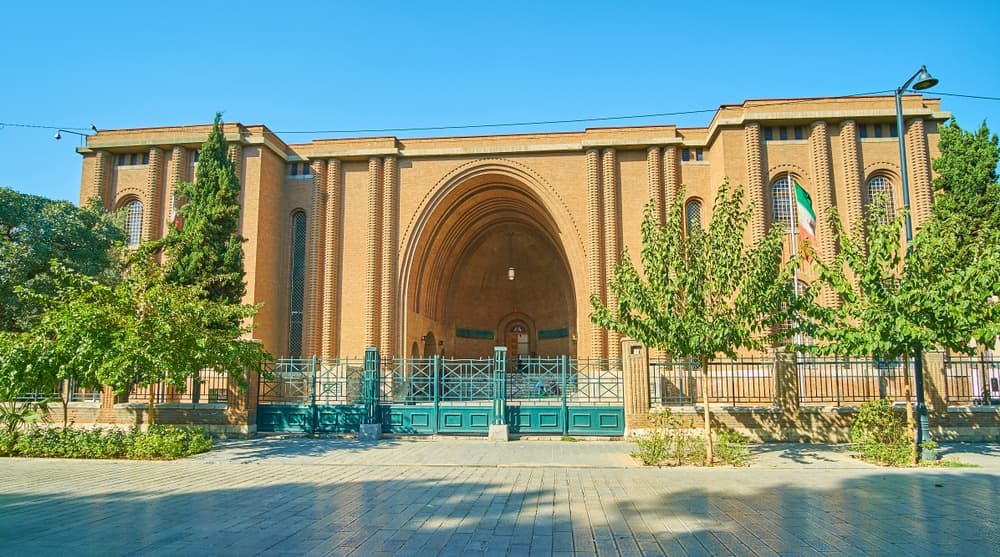
The Iran National Museum, located in Tehran, brings together the country's most important archaeological and artistic collections. Divided between two distinct buildings—one dedicated to ancient Iran, the other to the Islamic period—it traces more than nine millennia of Persian history, from the earliest prehistoric civilizations through the Safavid and Qajar dynasties.
Why Visit the Iran National Museum
The museum is the principal center for research and documentation on Persia's historical, cultural, and artistic heritage. Its collections span the civilizations of the Medes, Achaemenids, Seleucids, Parthians, and Sassanids, followed by the Islamic period through Qajar art. For those seeking to understand Iran's historical depth before exploring the country, a visit here enriches your understanding of the archaeological sites and monuments encountered along the way. Allow 2 to 3 hours to move through the collection without rushing.
Museum History
The project is launched at the initiative of Reza Shah, founder of the Pahlavi dynasty, who wishes to provide Iran with a culturally significant institution on the international stage. The design is entrusted to French architect André Godard, who draws inspiration from the Sassanid palace Taq Kashra: exposed brick and characteristic large barrel vault. The building, initially named Museum of Ancient Art, is inaugurated in 1937.
A second building, of decidedly contemporary design, is later constructed to house collections from after the Arab-Muslim conquest. This Museum of Islamic Art is completed in 1992. The two structures merge in 1997 to form the Iran National Museum. The reinauguration ceremony is honored by the Iranian president and several international delegations, underscoring the diplomatic and heritage significance of the complex.
What to See in the Collections
The museum comprises eight thematic sections distributed between the two buildings. The ancient section arranges objects in chronological order, from prehistoric tools to Sassanid pieces. The Islamic section presents across three floors the artistic production after the 7th century, the period of Islam's arrival in Persia.
Masterpieces of Ancient Iran
- The Statue of Darius I: sculpture standing 2 meters tall, dated to around 500 BCE. At its base are Egyptian hieroglyphics, as well as a trilingual inscription (Babylonian, Elamite, Old Persian) listing the 24 provinces conquered by the Achaemenid Empire.
- The Parthian Warrior in Bronze: statue measuring 1.94 m. The left hand and right arm are missing, but the quality of the modeling makes it a reference work for Parthian sculpture.
- The Ibex Cup from Shahr-e Sukhteh: prehistoric ceramic whose illustrated frieze depicts an ibex leaping toward a tree. It is often regarded as the world's first graphical animation.
- Copy of the Code of Hammurabi: reproduction of the oldest known legal code (the original is housed in the Louvre).
- The Salt Man of Zanjan: a human naturally mummified by salt from a mine, striking testimony to organic preservation in saline environments.
Masterpieces of Islamic Art
- A 19th-century hookah in goldsmithing: tobacco was introduced to Persia in the 16th century by Europeans, before the object became widespread under the Safavids.
- An 18th-century watercolor signed by Sani ol Molok, court painter of the Qajar era.
- Persian miniature paintings from the schools of Shiraz, Isfahan, and India, including a prominent fragment of Mughal art.
- Carpets, Quranic manuscripts, glassware, pottery, and textiles complete the collection.
Practical Information
The museum is open daily except Mondays. Hours generally cover the full day, with closing in the late afternoon: it is wise to verify current hours with your guide or the institution before your visit. The entry fee for foreign visitors is considerably higher than for residents, but remains reasonable by international standards. Payment is made in Iranian rials, in cash.
Allow 2 to 3 hours to tour both buildings. Photography is generally permitted, without flash. English-language explanations exist but remain uneven: an English-speaking guide greatly facilitates understanding of the collections.
Nearby Attractions
The museum is located in a sector rich in monuments. In the immediate vicinity:
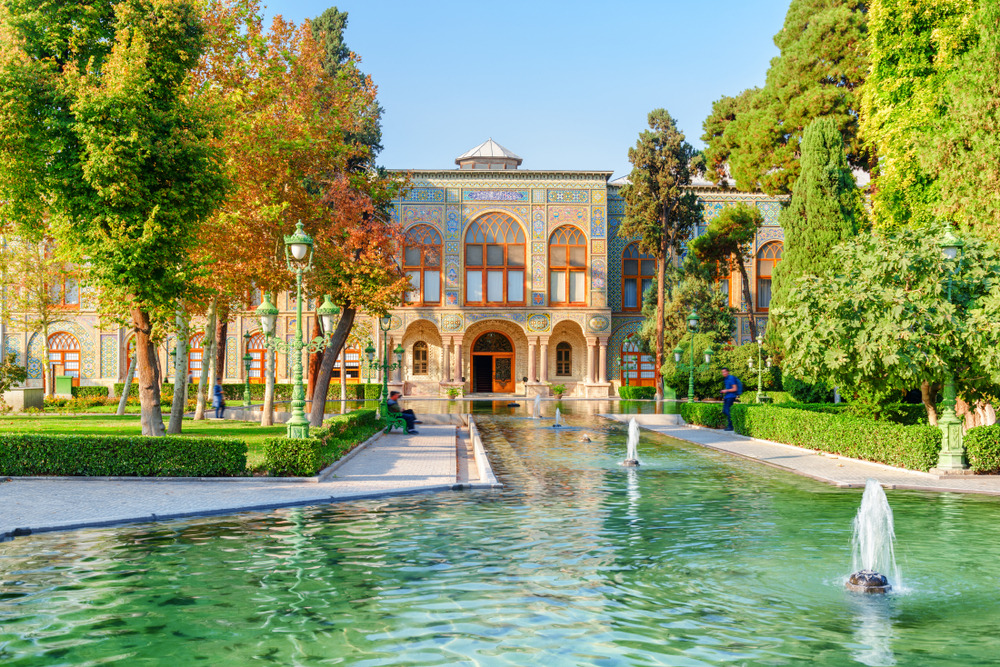
- The Golestan Palace, a Qajar complex inscribed as a UNESCO World Heritage site;
- The Crown Jewels Museum, housed within the Central Bank;
- The Moghadam Museum, a former residence of a 20th-century collector;
- The Tehran Peace Museum, in the municipal park.
To extend your exploration of Persian heritage beyond the capital, you can combine this visit with stops such as Fin Garden in Kashan, the historic village of Abyaneh, or the Citadel of Ghoortan.
How to Get There
The Iran National Museum is located on the west side of Mashhq Square, in central Tehran. The simplest means is to use the metro and alight at Imam Khomeini station, a few minutes' walk from the entrance. Taxis and ride-sharing services like Snapp are a comfortable alternative from most neighborhoods in the capital.
Frequently Asked Questions
Frequently asked questions
Allow between 2 and 3 hours to tour both buildings. Those passionate about archaeology or Islamic art can easily spend a half-day here.
The museum is closed on Mondays. It welcomes visitors all other days of the week.
Yes, photographs without flash are generally permitted in the exhibition halls. Check the pictograms at the entrance of each section.
Yes. The Imam Khomeini station, on lines 1 and 2 of Tehran's metro, is located a few minutes' walk from the museum.
Absolutely. Golestan Palace, the Crown Jewels, and the Grand Bazaar are accessible on foot or just a few metro stops from the museum.
Preparing Your Trip
The Iran National Museum is a recommended stop early in your visit, before exploring Persepolis, Isfahan, or Yazd. To build a coherent itinerary incorporating this visit, consult our customized Iran journeys.
Nearby
Interested in this visit?
We can include it in your personalised itinerary.