Nasir ol-Molk Mosque
Nasir ol-Molk Mosque
The Nasir ol-Molk Mosque, known as the 'Pink Mosque,' is celebrated for its stained glass windows that cast a kaleidoscope of colored light across Persian carpets each morning. A unique Qajar-era gem in the heart of Shiraz.
The Nasir ol-Molk Mosque stands in the Gowad-e-Arabân neighborhood of Shiraz. Built during the Qajar era, it is renowned for its vibrant stained glass windows that cast a tapestry of colored light across the Persian carpets of the prayer hall each morning. This ephemeral and precise optical phenomenon makes it one of the most photographed sites in Iran.
Quick Facts
- Entrance: paid entry (rates vary by nationality; bring cash in rials or tomans)
- Best time: early morning, shortly after opening, for the light displays
- Suggested duration: 45 minutes to 1.5 hours
- Dress code: modest attire required; headscarves provided at the entrance for women
- Access: central Shiraz neighborhood, reachable by taxi or on foot from Vakil Bazaar
What to See
The mosque is organized around a central courtyard with a rectangular pool at its center. Two iwans frame the space. The winter prayer hall on the southeast side holds the main attraction: its windows are filled with stained glass in shades of pink, blue, green, and yellow that decompose the rising sun's light into colored beams, which dance across the floor and columns.
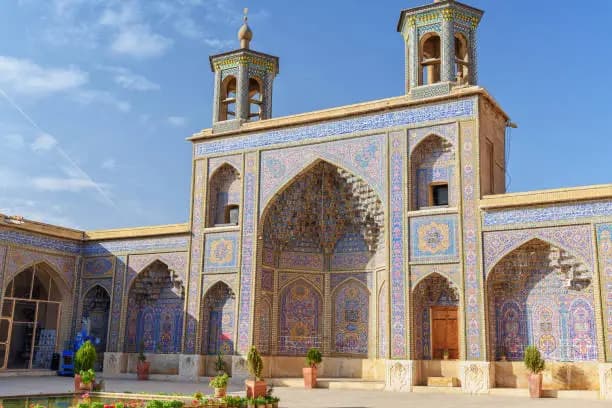
The exterior facades are covered with faïence tiles adorned with floral and geometric patterns, characteristic of late Qajar style. The muqarnas of the iwans and Quranic calligraphy complete the ensemble.
History and Context
The mosque was commissioned by Mirza Hasan Ali Nasir ol-Molk, a Qajar governor of Shiraz, and constructed between 1876 and 1888. Architects Mohammad Hasan-e-Memar and Mohammad Reza Kashi-Paz oversaw the work. The popular name "Pink Mosque" derives from the rosy hue dominating its faïence tiles, unusual in Iranian Islamic architecture.
Highlights of Your Visit
Stained Glass at Sunrise
Between sunrise and approximately 10 a.m. (depending on the season), light passes through the stained glass and projects shifting colored patterns across the carpets and columns. This phenomenon lasts less than an hour at full intensity. Arriving at opening time is essential.
Exterior Tilework
Hand-painted faïence panels cover both iwans and the courtyard walls. The floral motifs—stylized roses, arabesques—are rendered in a pastel palette rare for an Iranian mosque. Take time to appreciate the details up close.
The Courtyard and Pool
The central courtyard, planted with orange trees, offers a tranquil setting outside peak tourist hours. The rectangular pool mirrors the iwans, allowing for striking symmetrical photography.
Etiquette and Visiting Rules
- Modest dress is mandatory: shoulders and legs covered for all visitors.
- Women must wear a headscarf; wraps are available at the entrance.
- Remove shoes before entering the prayer hall.
- The mosque is an active place of worship: respect those praying and speak quietly.
- Avoid walking on carpets with dirty or damp socks.
Photography Tips
Colored light is most intense between sunrise and approximately 9:30 a.m. in summer, slightly later in winter. Position yourself in the prayer hall facing the stained glass windows, at ground level, to capture the beams on the carpets. A lightweight tripod can help if light is still soft. Photography is permitted; avoid using flash during prayers.
For exterior shots, late-morning light is gentler. The courtyard pool offers reflective opportunities at midday.
Location and Access
The mosque is located in the Gowad-e-Arabân neighborhood, within walking distance of Vakil Bazaar and the Vakil Mosque. Shiraz's historic center is compact, with most major sites accessible on foot or by short taxi ride. No specific wheelchair access is confirmed due to courtyard thresholds and steps.
Nearby Attractions
- Vakil Bazaar — a covered Qajar-era market a few minutes' walk away, ideal for crafts and spices.
- Vakil Mosque — an 18th-century grand mosque famous for its twisted columns.
- Karim Khan Citadel (Arg-e Karim Khan) — a well-preserved Zand-era fortress at Shiraz's heart.
- Eram Garden — a UNESCO-listed Persian garden featuring a Qajar pavilion and centuries-old cypress trees.
- Hafez Mausoleum — the tomb of Persian poet Hafez, a site of literary and cultural pilgrimage.
Interested in this visit?
We can include it in your personalised itinerary.