Naqsh-e Rostam (Royal Necropolis of Persepolis)
Naqsh-e Rostam (Royal Necropolis of Persepolis)
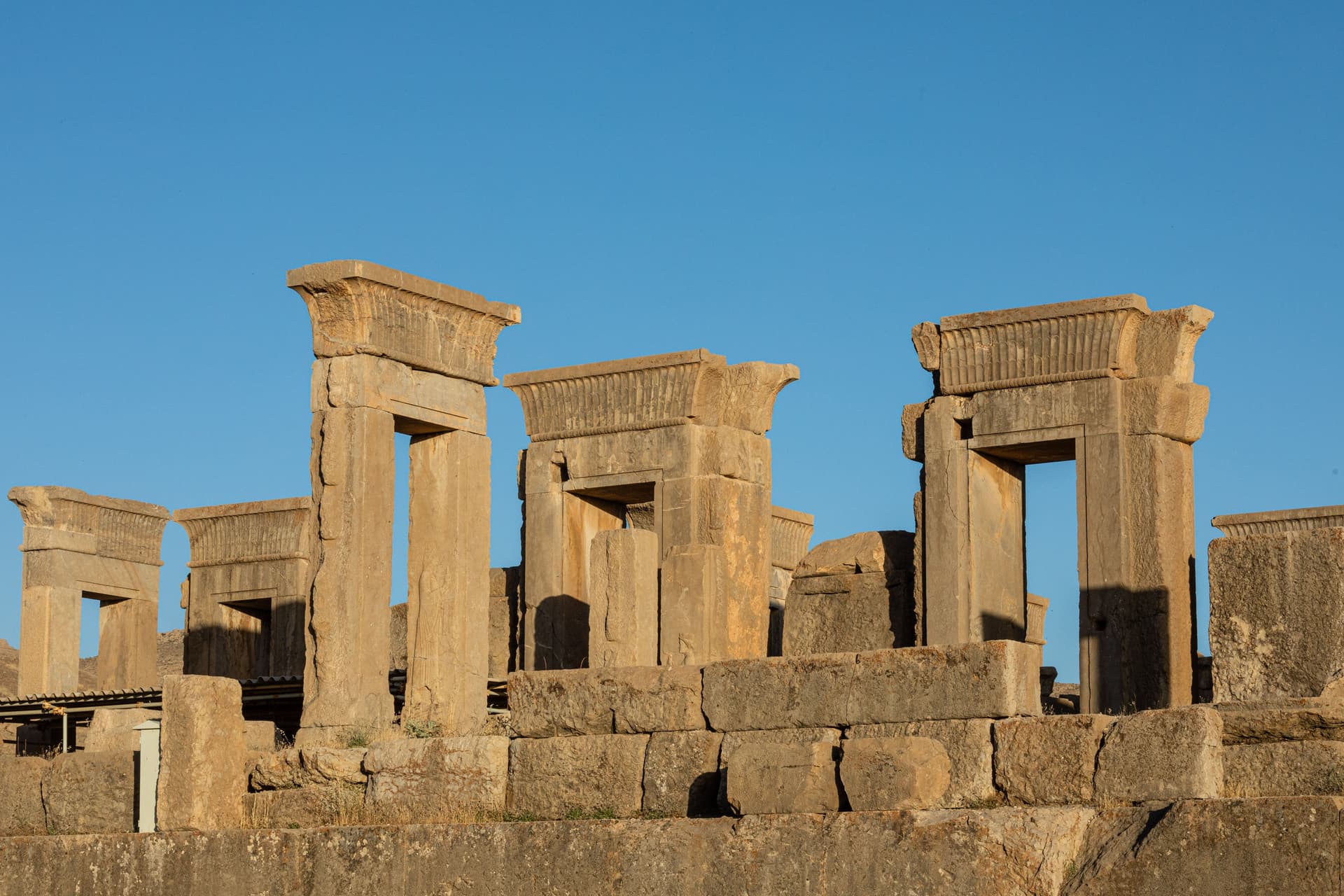
Six kilometers from Persepolis, the Naqsh-e Rostam cliff shelters the rock-cut tombs of Darius I, Xerxes I and two other Achaemenid kings, flanked by Sasanian bas-reliefs and the mysterious Ka'ba-ye Zartosht.
A few kilometers north of Persepolis, a limestone cliff shelters the rock-cut tombs of four Achaemenid kings. Naqsh-e Rostam — meaning "carving of Rostam" in Persian — is the name given to this burial site carved directly into the living rock, where Darius I, Xerxes I, Artaxerxes I and Darius II rest. The cross-shaped façades, adorned with finely sculpted reliefs, overlook an arid and silent plain. The site also contains Sasanian bas-reliefs and a mysterious tower, the Ka'ba-ye Zartosht.
Quick reference guide
- Access: approximately 6 km north of Persepolis, reachable by taxi or car from Shiraz (approximately 60 km).
- Admission: paid entry, usually combined with Persepolis ticket; check with your local agency.
- Suggested duration: 1 to 1.5 hours to explore the entire site.
- Dress code: modest dress required (shoulders and legs covered); scarf mandatory for women.
- Terrain: rocky and uneven ground; closed-toe shoes recommended.
What to see
The cliff features four Achaemenid royal tombs carved into the upper rock face, each with a cross-shaped façade. The sculpted reliefs depict the king in prayer before Ahura Mazda, supported by representatives of the empire's peoples. Below, seven Sasanian bas-reliefs (3rd-4th century CE) illustrate scenes of victory and royal investiture. Facing the tombs stands the Ka'ba-ye Zartosht, a white stone square tower whose function remains debated — a fire temple, reliquary, or royal archive.
History and context
The tombs date to the 5th-4th century BCE, at the height of the Achaemenid Empire. Darius I was the first to choose this site, inaugurating a rock-cut funerary tradition followed by his successors. After Alexander the Great's conquest (330 BCE), the site fell into relative obscurity before being reinvested by the Sasanians, who carved their own tales of glory on the same cliff, layering two empires upon a single stone.
Highlights of the visit
The Achaemenid royal tombs
Each cross-shaped façade rises several dozen meters in height. The burial chambers, inaccessible to the public, are carved into the central section. Identification of the kings relies on cuneiform inscriptions engraved directly into the rock.
The Sasanian bas-reliefs
At the cliff's base, scenes sculpted under Ardashir I and Shapur I depict triumphant riders, defeated Roman emperors and divine investitures. These reliefs rank among the finest surviving examples of Sasanian-era craftsmanship.
The Ka'ba-ye Zartosht
This white stone square tower, rising approximately 12 meters, faces the tombs. Its popular name links it to Zoroaster, though its exact purpose remains uncertain. Its symmetry and architectural simplicity make it one of Iran's most enigmatic Achaemenid structures.
Photography tips
Morning light (before 10 AM) illuminates the tomb façades directly and reveals the relief detail of the sculptures. Late afternoon finds the cliff in shadow — less favorable for the tombs, but interesting for Sasanian bas-reliefs backlit. A wide-angle lens captures the entire cliff with the plain in the foreground. The Ka'ba-ye Zartosht photographs well from the southeast angle, with the tombs in the background.
Location and access
Naqsh-e Rostam lies in Fars province, approximately 6 km north of Persepolis and roughly 60 km northeast of Shiraz. Most visitors combine both sites in a single day. No direct public transport is available; a taxi or private car with driver remains the most practical option from Shiraz. The terrain is flat but rocky; disabled accessibility is limited.
Nearby attractions
- Persepolis — the Achaemenid ceremonial city, a few kilometers to the south, is the natural complementary visit.
- Naqsh-e Rajab — small Sasanian site in immediate proximity, featuring four well-preserved rock-cut bas-reliefs.
- Pasargades — the first Achaemenid capital, with the tomb of Cyrus the Great, approximately 90 km to the north.
- Shiraz — the essential starting point for exploring the Fars region, with its historic mosques, bazaars and gardens.
Frequently asked questions
Yes, the two sites are approximately 6 km apart. Allow half a day for Persepolis and 1 to 1.5 hours for Naqsh-e Rostam. Most organized tours from Shiraz combine them into a single day.
While the site is not an active place of worship, Iranian dress codes apply: shoulders and legs covered, scarf mandatory for women. Closed-toe shoes are advised for the rocky terrain.
Spring (March–May) and autumn (September–November) offer pleasant temperatures. Summer is extremely hot on the Fars plain; if visiting July–August, prioritize early morning hours.
No. The burial chambers carved into the cliff are closed to the public. Visits take place from ground level, observing the façades and sculpted reliefs.
Yes, photography is generally allowed throughout the site. No particular restrictions are reported for personal cameras.
The most practical solution is to hire a taxi for the day from Shiraz, including both Persepolis and Naqsh-e Rostam in the same itinerary. Your local agency can arrange this transfer with an English-speaking driver.
Interested in this visit?
We can include it in your personalised itinerary.