Persépolis
Persépolis
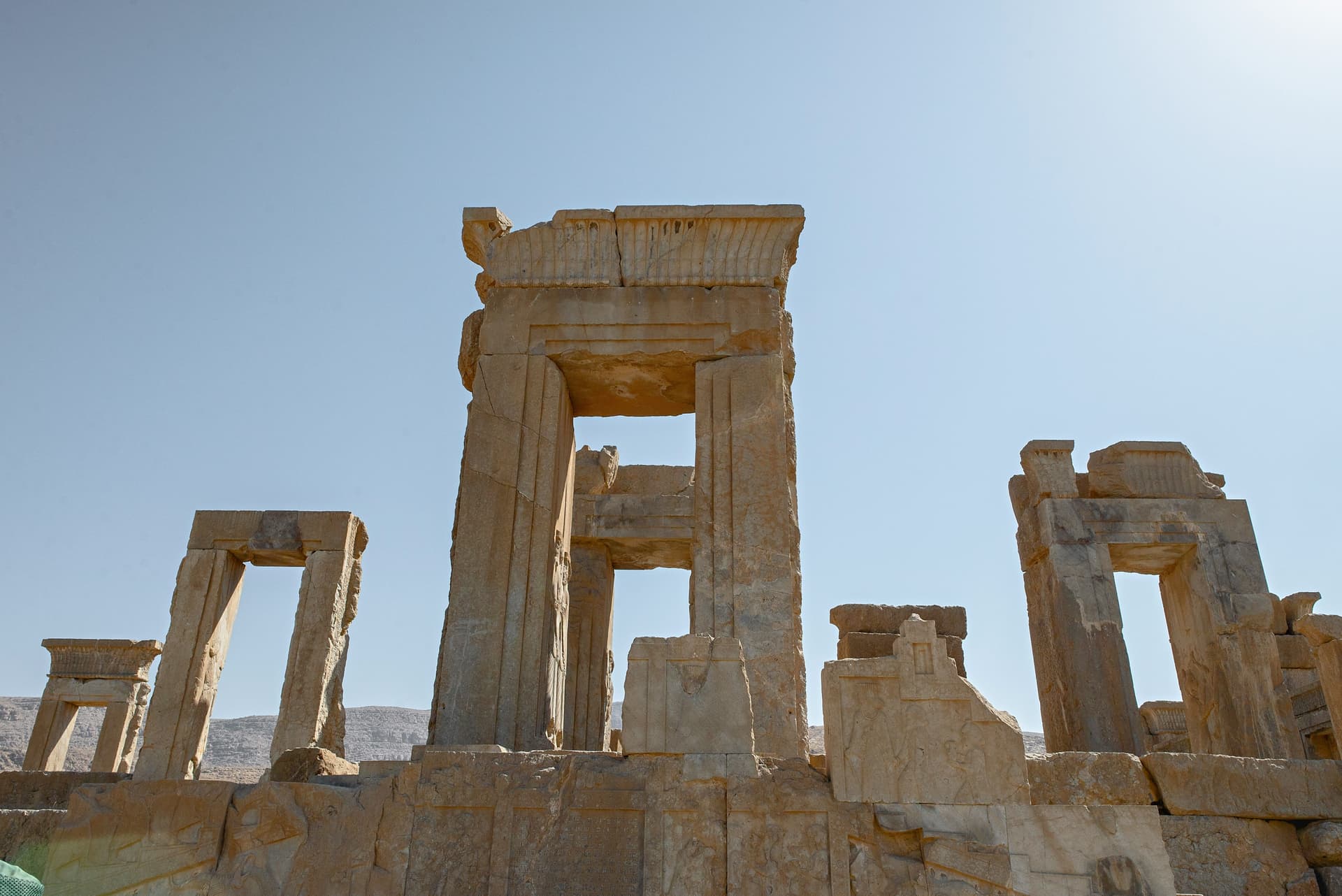
Founded by Darius I around 518 BCE, Persépolis preserves monumental terraces, sculpted friezes, and standing columns. Located 60 km from Shiraz, this UNESCO site stands as the most eloquent testimony to Achaemenid grandeur.
Persépolis — Takht-e Jamshid in Persian — is the former ceremonial capital of the Achaemenid Empire, founded by Darius I around 518 BCE. Its monumental terraces, sculpted reliefs, and still-standing columns make it one of the best-preserved archaeological sites of the ancient Near East. Designated a UNESCO World Heritage site in 1979, the site lies approximately sixty kilometers northeast of Shiraz, in the Marvdasht Plain.
Quick practical facts
- Access: from Shiraz by taxi, minibus, or organized tour; paved road to the site entrance.
- Recommended duration: 2 to 3 hours for a complete visit of the terrace and museum.
- Dress code: appropriate dress required; women must cover their hair and wear loose-fitting clothing.
- Best time to visit: spring (March–May) and fall (September–November) to avoid intense summer heat.
- Accessibility for people with reduced mobility: the main terrace is partially accessible; certain areas remain difficult due to stairs and uneven ground.
What you'll see
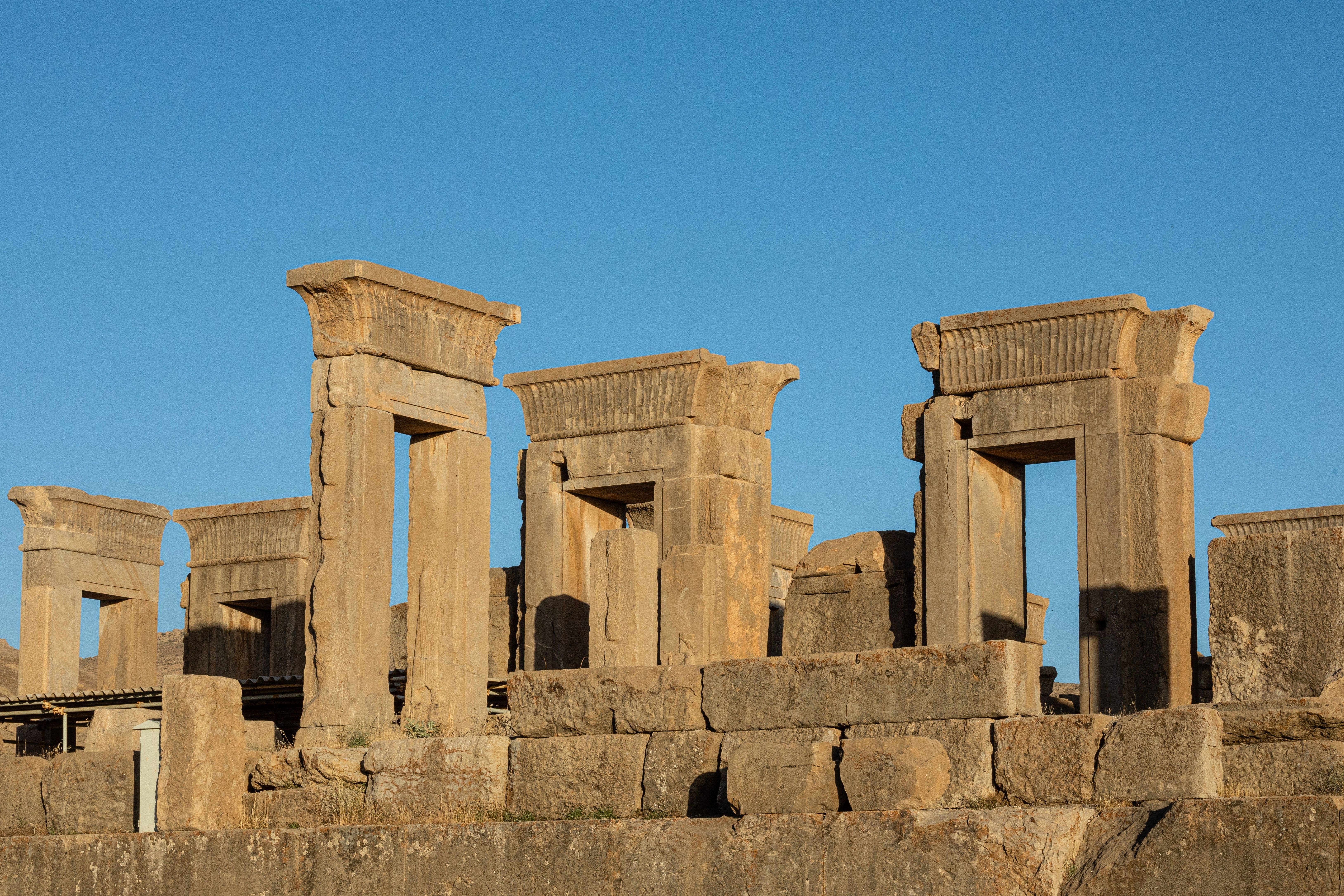
The artificial terrace, roughly 12 meters high, supports the ruins of several palaces. The Propylaea of Xerxes (Gate of All Nations) welcomes visitors with its winged bull-headed creatures. The Apadana, the audience hall of Darius, preserves 20-meter-tall columns and friezes depicting delegations from 23 tributary peoples. The Palace of a Hundred Columns and the Tachara (Darius's winter palace) complete the ensemble. An on-site museum presents objects unearthed during excavations.
History and context
Darius I launched construction around 518 BCE; Xerxes and Artaxerxes I continued the work over more than a century. The city served as the setting for great Persian New Year festivals (Nowruz) and tribute-reception ceremonies. In 330 BCE, Alexander the Great seized it and burned Xerxes' palace — whether deliberate act or accident remains historically contested. The site subsequently fell into gradual oblivion, buried beneath sand until systematic excavations in the twentieth century.
Highlights of your visit
The Gate of All Nations
Two pairs of winged bull-headed creatures guard the eastern and western passages. Inscriptions in cuneiform Old Persian, Elamite, and Babylonian attest to the empire's multilingual character. This is the natural starting point for any tour.
The Apadana friezes
The north and east staircases of the Apadana are covered with reliefs of remarkable precision: Persian and Median guards, lions attacking bulls, delegations bearing their tributes. These sculptures constitute the richest iconographic source on Achaemenid society.
The royal tombs of Naqsh-e Rostam
A few kilometers to the north, four rock-cut tombs hewn into the cliff face house the burials of Darius I, Xerxes, Artaxerxes I, and Darius II. This site is often visited in combination with Persépolis.
The panorama from the terrace
From the edge of the terrace, the Marvdasht Plain stretches to the horizon. In late afternoon, raking light gilds the columns and accentuates the reliefs — a privileged moment to grasp the scale of the site.
Etiquette and visiting rules
- Do not touch the sculpted reliefs: the oils on your skin accelerate erosion.
- Climbing on structures or columns is forbidden.
- Respect protective cordons around areas undergoing restoration.
- Photography is permitted for personal use; check for any restrictions in the museum.
Photography tips
Morning light (early after opening) is soft and avoids harsh shadows. In late afternoon, golden light enhances the Apadana reliefs. Position yourself at the base of the east staircase to frame the friezes in upward perspective. A wide-angle lens is useful for the columns; a telephoto allows you to detail the sculpted faces from ground level.
Location and access
Persépolis lies approximately 60 kilometers northeast of Shiraz, accessible via the main Marvdasht road. Most visitors depart from Shiraz by negotiated day taxi, which allows you to include Naqsh-e Rostam and Pasargades in the same tour. Local agencies offer English-speaking guided tours from Shiraz.
Nearby sites
- Naqsh-e Rostam — Achaemenid rock-cut tombs and Sassanid reliefs carved into the cliff face, a few kilometers to the north.
- Pasargades — the first capital of Cyrus the Great, with his modest tomb and royal gardens, approximately 90 km away.
- Shiraz — city of poets and gardens, the essential logistical base for visiting the Fars region.
- Nasir ol-Molk Mosque — mosque with colorful stained glass in Shiraz, nicknamed the "Pink Mosque."
Want to discover this destination?
Our local advisors design your tailor-made trip.