Pasargadae
Pasargadae
Pasargadae, founded by Cyrus the Great in the 6th century BCE, preserves the royal tomb, columned palaces, and some of the world's earliest formal gardens. An unmissable UNESCO site in Fars Province.
Pasargadae is the first capital of the Achaemenid Empire, founded by Cyrus the Great in the 6th century BCE on the Morghab plain in Fars Province. Inscribed on the UNESCO World Heritage List since 2004, the site preserves the tomb of Cyrus, columned palaces, and royal gardens among the oldest in the world. Here the very idea of a Persian empire takes shape.
Practical Information at a Glance
Access: approximately 130 km north of Shiraz, reachable by car or taxi from Shiraz or Marvdasht.
Recommended duration: 2 to 3 hours to explore the entire site.
Dress code: modest clothing mandatory (Iranian national requirement); headscarves for women.
Terrain: open-air site with uneven ground — hiking shoes recommended.
What You'll See
The site sprawls across a vast arid plain. The main remains are dispersed over several hundred meters: the tomb of Cyrus, ruins of the audience hall, the residential palace, a stone tower called Zendan-e Soleiman, and a fortified terrace. Irrigation channels carved into the rock bear witness to the first formal gardens in history.
History and Context
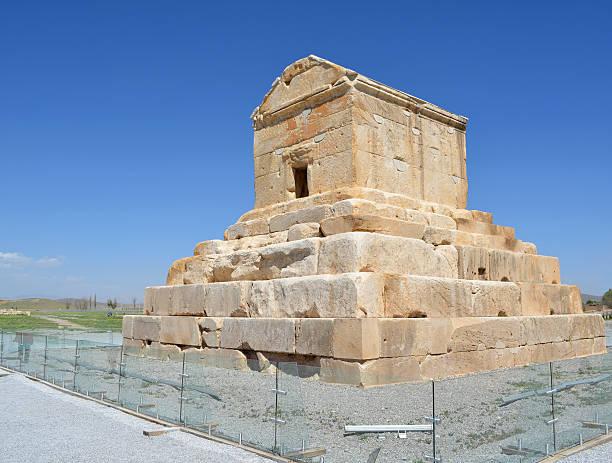
Cyrus II founded Pasargadae around 550 BCE following his victory over the Medes. The city became the symbolic heart of the empire, though Darius I later moved the capital to Persepolis. The tomb of Cyrus, a stone chamber on a stepped base, has remained intact for twenty-five centuries. Alexander the Great, following his conquest, reportedly ordered its restoration out of respect for Cyrus.
Highlights of Your Visit
The Tomb of Cyrus
Standing isolated in the middle of the plain, the tomb consists of a rectangular burial chamber resting on a stepped podium. Its simplicity contrasts with the grandeur of the empire it represents. It is one of the best-preserved funerary monuments from antiquity.
The Audience Hall (Palace P)
A few columns and carved capitals remain. The bas-reliefs of a doorway depict a winged figure with four wings—possibly Cyrus himself—which constitutes one of the rare known Achaemenid royal portraits.
Royal Gardens and Channels
The stone-carved channels that irrigated the formal gardens (chahar bagh) are visible on the ground. This system is considered the ancestor of the classical Persian garden, itself also inscribed on the UNESCO list.
Zendan-e Soleiman
This square stone tower, whose exact function remains debated (fire temple, tomb, treasury), echoes the Ka'ba-ye Zartosht at Naqsh-e Rostam. It testifies to Achaemenid monumental architecture in its earliest forms.
Photography Tips
Morning light is ideal for the tomb of Cyrus: low-angle sunlight brings out the texture of the limestone blocks. At midday, the plain often offers clear skies, useful for wide shots. No known photography restrictions on this open-air site.
Location and Access
Pasargadae lies on the Morghab plain in Fars Province. The road from Shiraz passes through Marvdasht and skirts the Persepolis region, approximately 43 km to the southeast. A taxi or rental car from Shiraz is the most practical option. No direct, regular public transport exists. The site is open-air; accessibility for people with reduced mobility is limited due to the unimproved natural terrain.
Nearby
Persepolis — the ceremonial capital of the Achaemenid Empire, with its sculpted terraces and monumental gateways.
Naqsh-e Rostam — a royal necropolis carved into the cliff face, tombs of Darius and Xerxes.
Shiraz — a city of poetry and gardens, the logical starting point for the region.
Frequently asked questions
Spring (March–May) and autumn (September–November) offer pleasant temperatures. Summer is very hot on the Fars plain; winter can be cold and windy.
Yes, both sites are often visited on the same day from Shiraz. Pasargadae is typically explored in the morning and Persepolis in the afternoon, or vice versa depending on where you start.
Is dress code strict on the site?
Iranian dress codes apply throughout the country. Women must wear a headscarf and clothing covering the arms and legs, even in open-air settings.
A small reception area exists at the site entrance. Bring sufficient water, especially in summer: the plain offers little shade.
Want to discover this destination?
Our local advisors design your tailor-made trip.