Rayen
Rayen
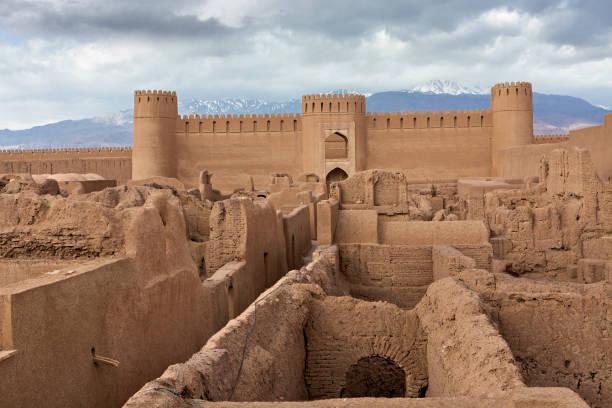
Rayen is home to one of the world's largest adobe citadels, less famous than Bam yet remarkably intact. A medieval fortress off the beaten path, deep in Kerman's desert landscape.
Rayen is a fortified settlement in southeastern Iran, nestled at the foot of Hezar volcano in Kerman province. It houses one of the world's largest adobe citadels, often compared to Arg-é Bam but far less visited. Between raw earth architecture, arid landscape, and near-total silence, Rayen offers a direct immersion into medieval Iran.
Quick practical information
Admission: fee required (Iranian national museum rates, ticket in rials on-site)
Recommended duration: 1.5 to 2 hours to explore the citadel
Dress code: Islamic dress required — headscarf for women, shoulders and legs covered
Footwear: closed-toe shoes recommended (uneven earth floors)
Access: Rayen is located about 100 km south of Kerman; paved road, accessible by car or shared taxi from Kerman
Accessibility: very limited — narrow alleys and unmanicured earthen paths
What to see
The Arg-é Rayen citadel is the heart of the site. Built entirely of adobe (sun-dried brick and rammed earth), it sprawls across several hectares and includes residential quarters, watchtowers, an interior bazaar, and a governor's palace. The labyrinthine alleyways, earth domes, and carved wooden screens are remarkably well-preserved.
The modern town of Rayen, abutting the citadel, retains a few traditional houses and an animated local market on weekdays.
History and context
Arg-é Rayen is believed to date to the Sassanid period (3rd–7th century), though most visible structures are from the medieval Islamic era. The citadel was inhabited until the mid-19th century before gradually being abandoned. Unlike Arg-é Bam, it was not affected by the 2003 earthquake and thus retains superior structural integrity. It is designated a national monument of Iran.
Highlights of the visit
The governor's palace
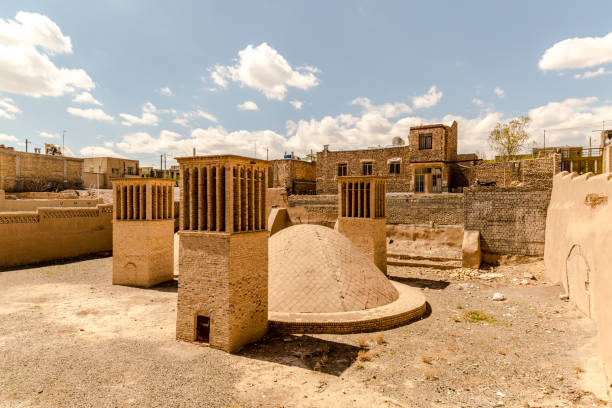
Situated in the upper section of the citadel, it offers clear views across the entire site and surrounding desert. Interior rooms display examples of stucco decoration and natural ventilation through badgir (wind towers).
Alleyways and residential quarters
The network of covered lanes creates a ghost-town atmosphere. Courtyard houses illustrate Iranian climatic architecture: thick walls for thermal insulation, minimal exterior openings.
Watchtowers
Positioned on the periphery, they allow you to gauge the scale of the fortification and appreciate the rammed-earth construction technique rising several meters high.
Etiquette and visit rules
Strict Islamic dress code required at entry.
Do not climb walls or fragile structures — adobe is sensitive to moisture and pressure.
Respect marked zones; some sections may be closed for restoration.
Photography tips
Morning light (before 10 a.m.) and late afternoon reveal the ochre textures of adobe with maximum relief. Covered alleyways offer interesting play of shadow and light at midday. Avoid flash in fragile interior spaces. No known photography restrictions, but ask before photographing residents.
Location and access
Rayen is located in Kerman province in southeastern Iran, approximately 100 km from the city of Kerman. The road crosses a desert and semi-arid landscape at the foot of the Hezar massif. The most practical option is a rental car or a negotiated taxi from Kerman for the day. No regular public transit connection is known with certainty.
Nearby attractions
Arg-é Bam — another major adobe citadel in Kerman province, UNESCO-listed, approximately 200 km to the southeast.
Kerman — provincial capital featuring the Vakil Bazaar, Jameh Mosque, and nearby Shazdeh Garden.
Mahan — town known for the Shah Nematollah Vali mausoleum and Shazdeh Garden, on the route between Kerman and Rayen.
Frequently asked questions
Spring (March–May) and autumn (September–November) are the most pleasant seasons. Summer is extremely hot in this desert region; winter can be cold at altitude.
The distance between Rayen and Bam is roughly 200 km. It is possible to visit both by car over two days based from Kerman, with a stop in Bam.
Yes. Arg-é Rayen was not affected by the 2003 earthquake and is structurally better preserved. It receives far fewer visitors, giving it a more authentic atmosphere.
A local guide is not essential but enriches the visit: historical context and architectural details are difficult to grasp without accompaniment. Your local agency can arrange one from Kerman.
Lodging options in Rayen itself are extremely limited. Most travelers visit as a day excursion from Kerman, where hotel availability is wider.
Want to discover this destination?
Our local advisors design your tailor-made trip.