Namakdan Salt Cave (Qeshm)
Namakdan Salt Cave (Qeshm)
Beneath the dome of Namakdan, one of the world's longest salt caves reveals its crystalline galleries on Qeshm Island, at the heart of the UNESCO geopark of the Strait of Hormuz.
On Qeshm Island, in the Strait of Hormuz, the Namakdan salt cave stretches beneath a salt dome millions of years old. With its galleries carved by water and translucent crystals, it ranks among the world's longest salt caves. The site belongs to the Qeshm geopark, designated by UNESCO, and offers an underground landscape radically different from the rest of Iran.
Practical information at a glance
- Access: from Qeshm city, head northwest toward the Namakdan dome; a vehicle (taxi or rental car) is essential.
- Footwear: closed-toe shoes with non-slip soles are essential; the ground is uneven and slippery.
- Recommended duration: 1 to 2 hours to explore the accessible galleries.
- Rules: do not break or remove anything; salt formations are fragile.
- Accessibility: not suitable for visitors with mobility challenges — rough terrain and narrow passages.
What you'll see
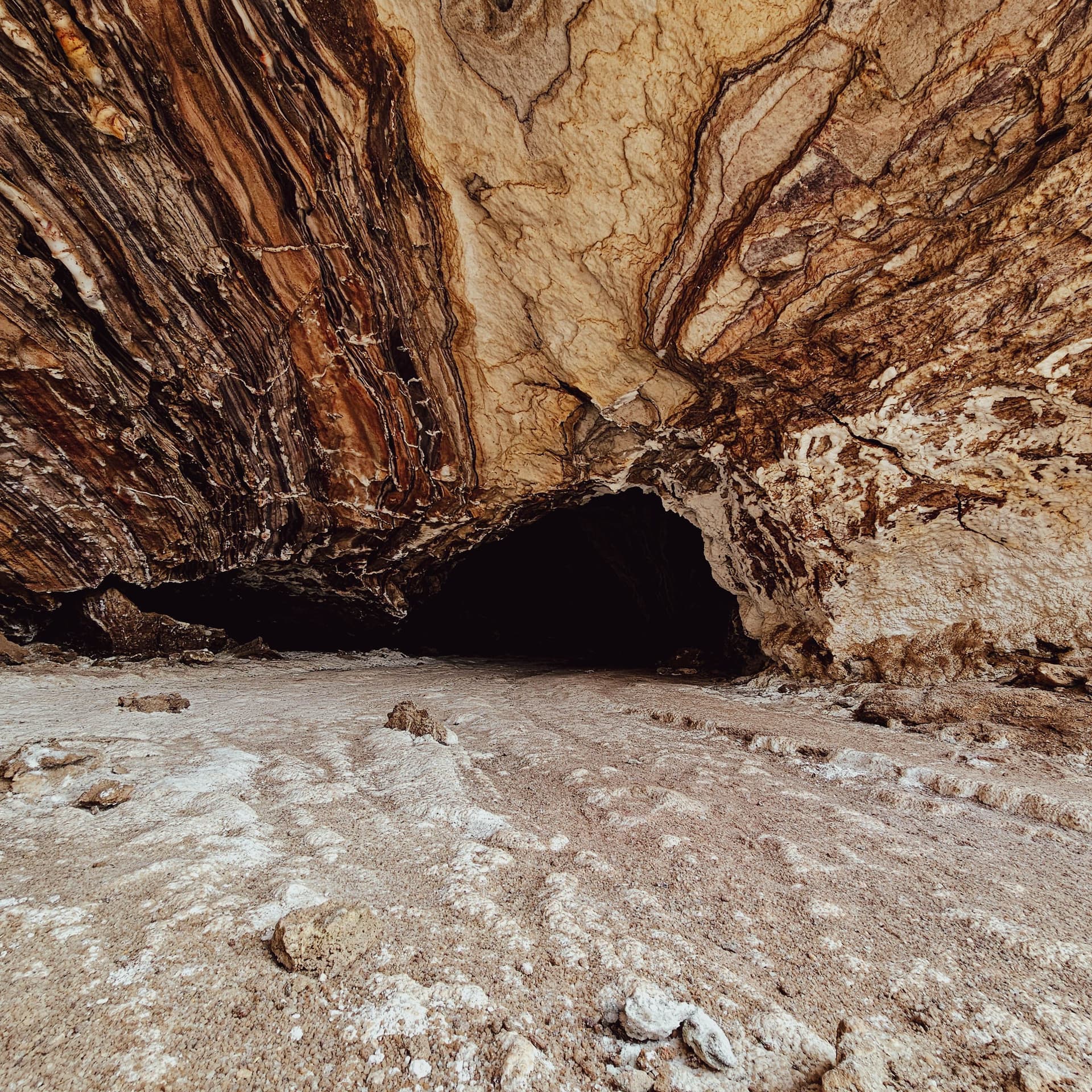
Namakdan's galleries reveal walls streaked with white, gray and ochre, shaped by centuries of water seepage. Salt stalactites hang from the vaults; some reach impressive dimensions. The beam of a headlamp makes crystals shimmer and transforms every corner into a mineral masterpiece. A few passages open onto small chambers where silence is absolute.
History and context
The Namakdan dome is a geological structure formed by the slow rise of a salt diapir from the depths of the Earth's crust over millions of years. Rainwater, rare but intense, has carved a network of galleries extending several kilometers. The cave is part of the Qeshm geopark, recognized by UNESCO in 2006, alongside the mangrove forest and Chahkouh canyon.
Highlights of the visit
The salt stalactites
Unlike limestone caves, the formations here are entirely saline. Their granular texture and partial translucency set them distinctly apart. Some formations resemble draperies or columns in the making.
The colors of the walls
Pure salt is white, but mineral impurities — iron oxides, clay — tint the layers rust, beige and gray. These colored strata tell the geological story of the dome, layer by layer.
Total darkness
Without a headlamp, the cave plunges into absolute blackness. This rare sensory experience heightens the feeling of being in an entirely separate underground world.
Photography tips
A powerful headlamp or external flash significantly improves results: natural light is absent. Photograph walls in close-up to capture crystalline textures. Avoid direct flash on stalactites — side lighting reveals relief better. Consider a lightweight tripod if you want long exposures.
Location and access
The cave is located in the northwestern part of Qeshm Island, on the flank of the Namakdan dome. From Qeshm city, allow approximately 45 minutes to an hour of travel depending on track conditions. No regular public transport serves the site: a taxi arranged for the day or a rental car remains the most practical solution. Local guides offer excursions from Qeshm city and know the galleries accessible with safety in mind.
Nearby attractions
- Chahkouh Canyon — sandstone gorges with walls sculpted by erosion, one of the island's most photographed sites.
- Qeshm Mangrove Forest (Hara) — biosphere reserve where mangroves shelter remarkable birdlife.
- Valley of the Stars (Sitters Valley) — eroded rock formations with fantastic shapes, particularly striking at sunset.
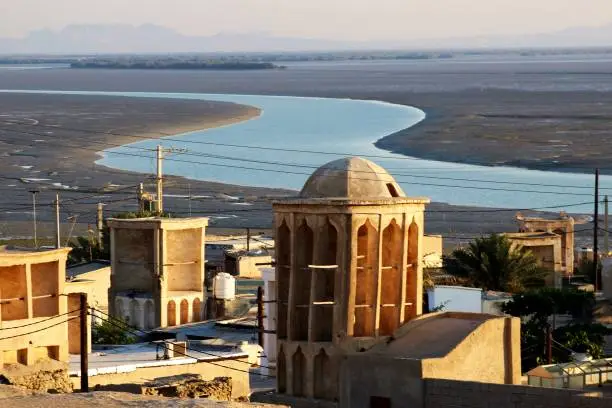
- Laft Village — historic port with its wind towers (badgir) and coral houses, witnesses to traditional Gulf architecture.
Frequently asked questions
It's not mandatory, but highly recommended. The network of galleries is complex and some areas can be dangerous without local knowledge. A local guide ensures a safe visit and points out passable routes.
Autumn and winter (October to March) offer pleasant temperatures on Qeshm Island. Summer is very hot and humid in the Persian Gulf; the underground visit remains cool, but the journey to the site can be taxing.
Headlamp (essential), closed-toe shoes with non-slip soles, covering clothing for women in accordance with Iranian regulations, and a small water supply. The damp, uneven ground makes sandals or smooth shoes hazardous.
Yes. Namakdan cave pairs well with Chahkouh Canyon or Valley of the Stars in a single day, provided you start early and have your own vehicle.
Children in good physical condition can visit the main galleries, but narrow passages and slippery ground require caution. Not recommended for very young children or people with mobility challenges.
Interested in this visit?
We can include it in your personalised itinerary.