Bishapur
Bishapur
Founded in the 3rd century by Sassanid king Shapur I, Bishapur preserves cliff reliefs, rare Roman mosaics in Iran and palatial ruins inscribed as a UNESCO World Heritage site.
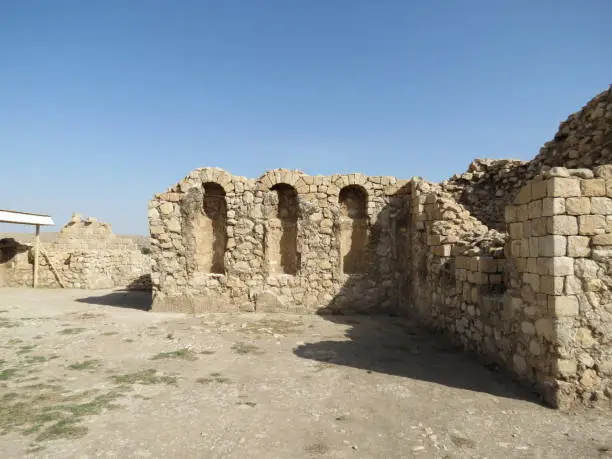
Bishapur is a Sassanid city founded in the 3rd century by King Shapur I, midway between Shiraz and Bushehr, in the gorge of the Shapur River. Its cliff reliefs, Roman mosaics and palatial ruins make it one of the best-preserved archaeological complexes of ancient Iran. The site was inscribed on the UNESCO World Heritage list in 2018 as part of the "Sassanid Cultural Landscape" file.
Quick Facts
- Access: approximately 23 km northeast of Kazerun, on the Shiraz–Bushehr road (Route 65); accessible by taxi or rental car from Kazerun or Shiraz.
- Recommended duration: 2 to 3 hours for the city ruins; allow an extra half-day for the gorge and reliefs.
- Dress code: Islamic dress required (headscarf for women, covering clothing).
- Admission: paid (separate tickets for the city and the relief gorge).
What to See
The site is divided into two distinct zones. The urban ruins include a fire temple, a palace with central courtyard, a hall with mosaics and a temple known as the "Temple of Anahita." A few kilometers away, the Shapur River gorge contains five reliefs carved into the cliff face, depicting scenes of royal triumph and the subjugation of Roman emperors.
History and Context
Shapur I founded Bishapur around 266 AD to celebrate his victories over Rome, notably the capture of Emperor Valerian in 260. The name means "beautiful city of Shapur." The city welcomed Roman craftsmen and prisoners, which explains the presence of Hellenistic-style mosaics, extremely rare in Iran. Bishapur remained an important center until the Arab conquest in the 7th century.
Highlights of Your Visit
The Reliefs of Shapur Gorge
Five panels carved high on the limestone cliff illustrate the victories of Shapur I and his successors. You can recognize Emperor Valerian kneeling, Philip the Arab supplicating and Parthian horsemen. Low morning light reveals the relief with striking clarity.
The Mosaic Hall
Unique in Iran, this royal palace hall preserves fragments of figurative mosaics with white background, depicting musicians, dancers and banquet scenes. The style is distinctly Roman, direct testimony to the forced exchanges between the two empires.
The Fire Temple and Temple of Anahita
The fire temple, with its cruciform plan, is one of the best-preserved examples of Sassanid religious architecture. The building known as "Anahita," on the riverbank, impresses with its stone blocks cut with unusual precision for the period.
The Statue of Shapur in the Cave
At the entrance to the gorge, a natural cave houses a colossal statue of Shapur I carved from a single limestone block, several meters high. It fell at an unknown date and was re-erected in the 20th century.
Photography Tips
Photograph the reliefs early in the morning: lateral light accentuates the carved relief. For the Shapur statue, a wide-angle lens lets you capture the scale within the cave. The mosaics are partially covered indoors; avoid flash to prevent color saturation. No known photographic restrictions on the archaeological site.
Location and Access
Bishapur is located in Fars Province, approximately 130 km west of Shiraz and about forty kilometers east of Kazerun. The road winds through spectacular limestone gorge scenery. From Shiraz, a private taxi or rental car is the most practical option. There is no direct public transport to the site. Wheelchair access to the urban ruins is partial (flat terrain in places); the gorge involves an unimproved rocky trail.
Nearby
- Shiraz — cultural capital of Fars Province, the natural starting point for visiting Bishapur.
- Persepolis — ceremonial capital of the Achaemenid Empire, approximately 60 km northeast of Shiraz, unmissable in the region.
- Naqsh-e Rostam — Achaemenid and Sassanid royal necropolis with cliff reliefs, near Persepolis.
- Pasargades — first capital of the Achaemenid Empire, with the tomb of Cyrus the Great.
Interested in this visit?
We can include it in your personalised itinerary.