Sanctuary of Sheikh Sufi Abd al-Samad
Sanctuary of Sheikh Sufi Abd al-Samad
An Ilkhanate funerary complex from the early 14th century, the Abd al-Samad Sanctuary in Natanz comprises a mosque, minaret, and octagonal pavilion housing the tomb of the Sufi sheikh.
The sanctuary of Sheikh Abd al-Samad, in Natanz within Isfahan Province, preserves one of Iran's best-preserved Ilkhanate funerary complexes. This early 14th-century complex brings together a mosque with minaret, an octagonal pavilion housing a canopied tomb, and a later mosque, all within the same refined architectural perimeter.
Why Visit the Abd al-Samad Sanctuary
The site offers rare testimony to Ilkhanate architecture, a period during which Mongol rulers established in Persia commissioned local artisans and architects. Glazed tile facades, stucco ornaments, muqarnas, and triangular arcades compose a decorative vocabulary found at larger scale in the monuments of Isfahan or Soltaniyeh. At Natanz, the scale remains intimate: visitor numbers are low, allowing you to observe details without the pressure of major tourist sites.
Beyond its architectural merit, the place remains an active sanctuary. The faithful come to pay respects at the sheikh's tomb, which requires observing the customs of Iranian mosques (appropriate dress, quiet, shoe removal in certain areas).
History of the Sanctuary
Abd al-Samad—whose name also appears as Abd-ul-Samad or Abdul Samad—lived in the 13th century under the Ilkhanate dynasty, a Mongol branch established in Iran following the conquests of Hulagu Khan. A Sufi attached to the Suhrawardi order of Shiite tradition, he guided a community of dervishes in a mystical approach to Islam.
Upon his death in 1299, his disciple the vizier Zayn al-Din Mastaria ordered the construction of a sanctuary in his honor. The principal mosque, adjoining the tomb, was completed between 1304 and 1305—dates attested by the epitaph engraved on the portal. The complex later enriched itself with additional elements, including a more recent mosque erected between 1930 and 1940. Archaeological studies indicate that the octagonal pavilion, which houses the tomb, is actually the site's oldest structure, predating the mosque itself.
What to See On-Site
The complex comprises four distinct parts, visited in succession.
The Principal Mosque
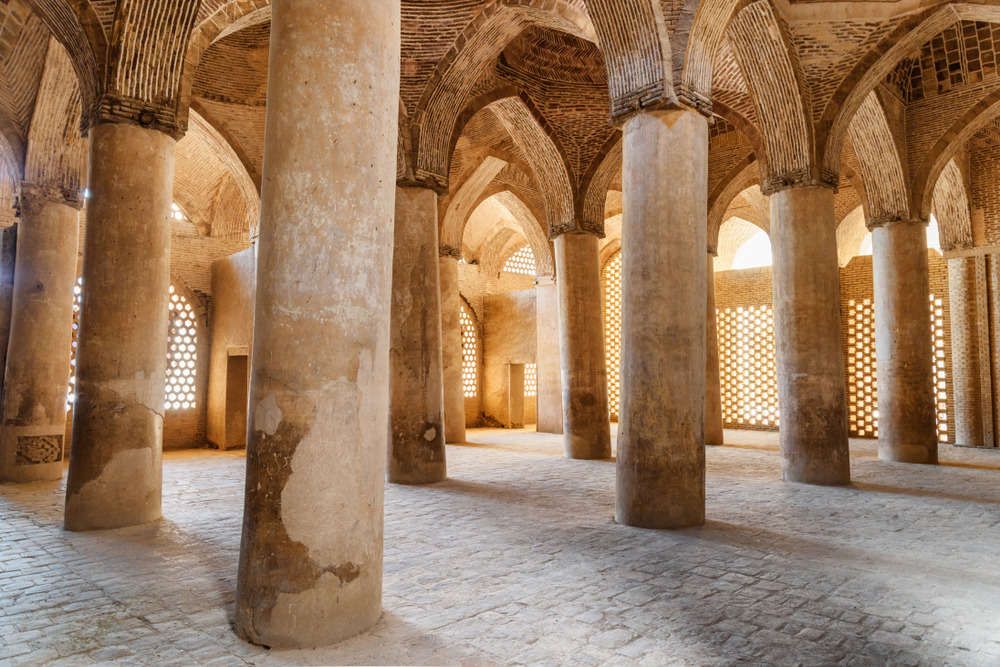
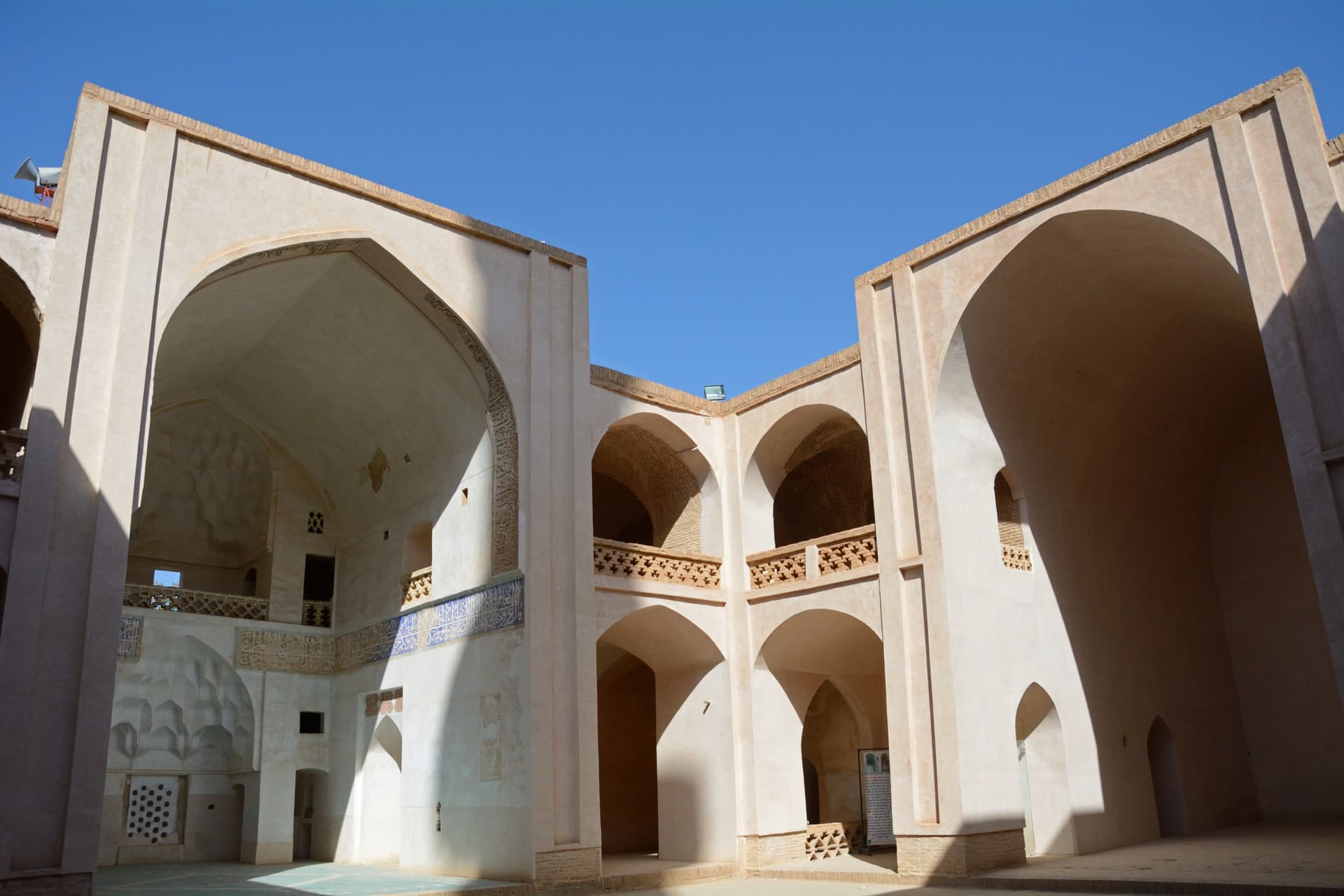
This is the most accomplished part architecturally. Its facade combines glazed tiles, clay, and elaborate stucco. Inside, the succession of iwans, triangular arcades, and corridors is rhythmed by muqarnas (honeycomb-patterned vaulting) characteristic of the Ilkhanate period. The entrance portal, dated 1304–1305, bears the inscription that serves as the reference for dating the complex.
The Octagonal Pavilion and Tomb
The site's oldest structure, the octagonal pavilion houses a canopied tomb beneath which the sheikh rests. The octagonal form recurs throughout medieval Iranian funerary architecture.
The Minaret
The minaret rises through three distinct levels, separated by decorative bands. It completes the complex's silhouette as seen from the street.
The Modern Mosque
Built between 1930 and 1940, it was added to accommodate the faithful in a more functional space while blending with the overall ensemble.
Practical Information
- Duration of visit: Allow 45 minutes to 1 hour for a complete tour of the complex.
- Dress code: Modest covering required; headscarf for women. The sanctuary remains an active place of worship.
- Admission: Modest entry fee, payable in rials on-site.
- Photography: Permitted outside; inside, ask discreetly before photographing in the presence of the faithful.
When to Visit
The best periods to visit Natanz and the Isfahan region are spring (April–May) and autumn (September–October). Temperatures are mild and light is particularly favorable for observing the glazed tile facades. Summer (June–August) is very hot on the Iranian plateau, with daytime temperatures exceeding 35°C. Winter is cold but clear; some sites in the region reduce their hours, so it's best to check locally before visiting.
How to Get There
Natanz lies midway between Kashan and Isfahan, on the highway connecting Tehran to the south of the country.
- From Isfahan: Approximately 1.5 hours' drive north. Regular long-distance bus and shared taxi services available.
- From Kashan: Approximately 1 hour's drive south. It's the closest departure point.
- By car with driver: Recommended option for combining Natanz with other regional sites in a single day.
What to Combine in the Region
Natanz lends itself well to a grouped visit with other central Iran sites. The historic village of Abyaneh, perched about thirty kilometers away, naturally complements the outing with its red earthen houses. Further north in Kashan, the Fin Garden illustrates Persian garden design. For enthusiasts of ancient utilitarian architecture, the region's ice houses merit a detour. Further south, the Bibidokhtaran sanctuary and Gondab offer further examples of Iranian religious architecture.
Planning Your Journey
The Abd al-Samad Sanctuary integrates naturally into an itinerary centered on Isfahan, Kashan, and central desert villages. To build a customized itinerary including Natanz and Isfahan Province, explore our journeys in Iran.
Interested in this visit?
We can include it in your personalised itinerary.