Wandering from Shiraz to Tehran
From the ruins of Persepolis to the Towers of Silence in Yazd, ancient Persia unveils its treasures
Duration
11 days
From
€950/pers.
Ideal seasons
Mar, Apr, Oct, Nov
Style
Guided tour
Comfort
classique
Travelers
Couple, Solo, With friends, senior
The spirit of travel
As vast as three times the size of France, Iran is an immense country with astonishing diversity. Rich in a history spanning thousands of years, archaeological sites abound and reveal a fascinating, refined and multifaceted culture. Nature is no less impressive, with its snow-capped peaks reaching over 5,000 meters, its deserts, its verdant oases and its subtropical coastline.
This itinerant circuit from south to north of the country crosses the most remarkable cities and sites in Iran, from Chiraz to Téhéran passing through Abarkouh, Yazd, Ispahan, Kachan, not to mention ancient and archaeological sites such as Persepolis or the Natanz region.
From the bazaars of Ispahan or Kachan to the Varzaneh desert, from mosques to thousand-year-old citadels, it is the entire magic of Persia that unfolds throughout this journey, punctuated by unforgettable encounters with a welcoming and endearing population.
NB: Turkish Airlines offers multi-city flights arriving in Chiraz and departing from Téhéran, adapted to this circuit.
The stages of your journey
Highlights
Day-by-day itinerary

Welcome to Shiraz!
We land at Shiraz airport where we are welcomed by our guide and taken to our hotel for some rest.
Shiraz, located at 1500m altitude at the foot of the Zagros mountains, capital of Persia under the Zand dynasty in the 18th century, amazes travelers. A sumptuous city of culture, poetry, perfumes and arts, it also contains ancient sites thousands of years old.
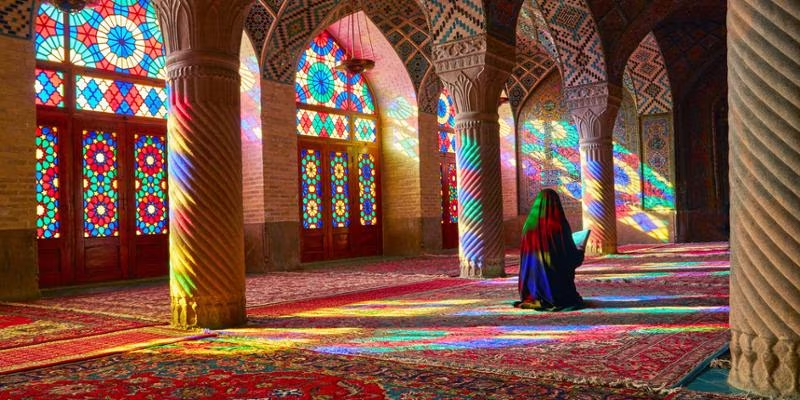
Our first steps lead us to the magnificent Karim Khan Palace, to the Vakil bazaar, its adjoining mosque and its Saraye Moshir caravanserai with its many shops, before reaching a jewel of the city: the splendid Nasir-al-Mulk mosque famous for its magnificent stained glass windows.
Our efforts are rewarded by a well-deserved moment of relaxation in a charming traditional restaurant in the city. In the afternoon, we visit the mausoleum of Ali-Ebn-e-Hamzeh and its thousands of mirrors, located near the tombs of the famous poets Hafez and Sa'adi, before taking a few steps through the superb Jahan Nama garden amid its giant cedars. At sunset, the view of Shiraz city is particularly striking from the tomb of Khajoy-e-Kermani.
Program subject to modifications depending on your arrival time and the closure days of certain museums.
History and Heritage
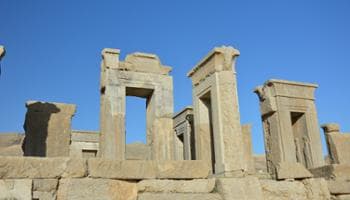
An hour's drive takes us this morning to a mythical place: the city of Persepolis, capital of the Achaemenid Empire, founded 2500 years ago by the "King of Kings" Darius I. The ruins of the buildings, partly carved into the rock, are remarkably well preserved and showcase architecture influenced by Mesopotamian models. It is likely that the city served both as a government center and as a sumptuous venue for spectacles and royal receptions.
A few nautical miles to the north, the Necropolis site is where Achaemenid kings were buried.
We resume our journey to Shiraz. After some rest at our hotel we set out to explore the Sang-e-sia historic quarter. This quarter, one of the oldest in the city, includes many passages, the most important of which reveals a series of historical sites and sacred sanctuaries including the famous Bibidokhtaran sanctuary. Mosques, tombs and historic houses dot our wanderings and testify to the evolution of Iranian architecture from the Qajar era to the present day. In particular, the architecture and decoration of the old Pahlavi houses, organized around very beautiful inner courtyards, are sure to charm visitors.
Towards Abarkouh
We leave Shiraz this morning and head north. After 140 kilometers of road we reach an exceptional remnant of the Achaemenid civilization: the ancient city of Pasargades, created by Cyrus the Great in the 6th century BC and first capital of the Achaemenid Empire.
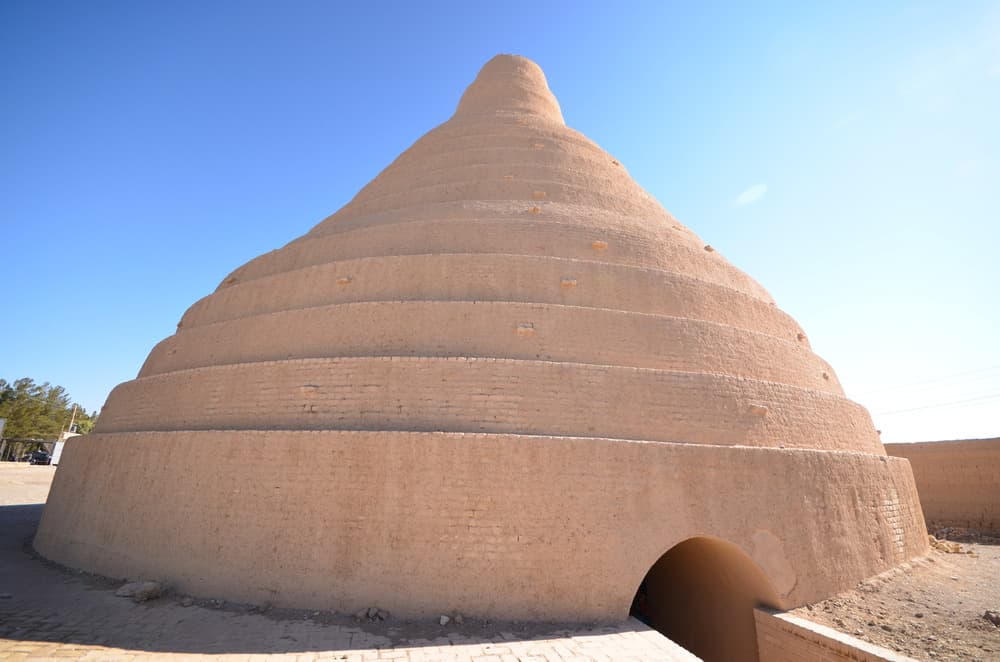
We continue our journey towards Abarkouh. In the heart of the desert, this ancient city exudes a mysterious aura with its remarkable ruins. Those large domes of white stones, for example, are nothing other than ice houses where ice was preserved. That old cypress tree aged 4,500 years and shrouded in legends. Or the Gondab-e Aali, a thousand-year-old funerary tower from the Daylami era, perched on a hillside.
We conclude this rich day at the Nizamiyyah school, named after these medieval institutions of higher education founded by the Persian vizier Nizam al-Mulk, which were the first organized and high-quality universities in the Muslim world.
On the Caravan Route
The word caravan comes from the Persian kârvân, which designates a line of camels and travelers. Since the caravan was generally a merchant convoy, it is hardly surprising that Persia, at the heart of the Silk Road, invented the term! In order to provide accommodation and other necessities for these convoys, the desert was dotted with caravanserais (the Persian sarây designates a large house), fortified places consisting of stables, warehouses and rooms.
On the road to Yazd, which crosses the desert, we pass by three of the oldest caravanserais: Zeinoddin (Safavid era and superbly restored), Saryazd (Seljuk and Safavid eras, and its Sassanid citadel) and Mehriz (Sassanid era).
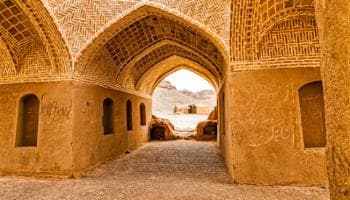
Upon arrival in Yazd, we visit two major Zoroastrian sites: the Towers of Silence, where corpses were exposed to be eaten by carnivorous birds, and the Fire Temple, one of the most important Zoroastrian places of worship in the world.
Finally, early in the evening we head to the Amir Chakhmaq complex. It is a square bringing together a mosque, a caravanserai, a tekyeh, a hammam, a well and a confectionery. As night falls, the lighting gives the place a magical appearance.

Yazd, one of the oldest cities in the world
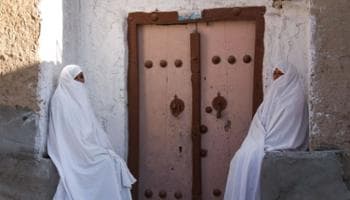
One of the oldest cities in the world, close to the Silk and Spice routes, Yazd built its fortune on trade, as evidenced in particular by its numerous caravanserais. It is also the capital of Zoroastrianism, and one of the rare ancient cities built of clay preserved and protected from modern urbanization. Its listed city center is a labyrinthine gem of clay alleyways. An oasis in the middle of the desert, Yazd is a captivating city.
We set off and discover the splendid Jameh Mosque, the 15th century domotics school which houses numerous craft workshops and of course we wander with delight through the alleyways of the magnificent old town.
Our steps then lead us to the Dowlatabad garden, a magnificent example of Persian garden, an ancient art dating back to 4000 BC and intended to create earthly paradises (the most famous example being none other than the Taj Mahal in India).
Finally, our last visit of the day allows us to understand one of the characteristics and one of the major heritage features of Yazd. The largest city in the driest region of Iran (barely 60 mm of rain per year), the city was able to develop thanks to an ingenious underground irrigation system dating back thousands of years, using a network of tunnels called qanats. It is at the Water Museum that we discover these ancestral techniques and tools.
Citadels and Desert
We continue our journey today and make our first stop at Meybod, an ancient city that was also the capital of the Mozaffarid kingdom in the 14th century. The Narin Citadel, from the Sassanid era, is one of the oldest in Iran and an important remnant.
Continuing our route towards the north, we enter Isfahan Province and arrive at the city of Nain. An ancient city, Nain houses one of the oldest mosques in Iran, the Jameh Mosque. It is also an ideal place to observe the qanats, which still function today and bring water from the mountains to the city.
Largely desert country, it is in Varzaneh that it is easiest to observe magnificent sand dunes at the gates of the city. What a sight! In town, we will not miss visiting the Jameh Mosque as well as the thousand-year-old citadel of Ghoortan.
Evening arrival in Ispahan, jewel of the Middle East and most beautiful city in the world in the hearts of many Iranians. Perched at 1500m altitude in the middle of the arid Iranian plateau, it appears as an oasis of greenery thanks to its irrigation systems. Ispahan was the capital of the Persian Empire under the Safavid dynasty between the 16th and 18th centuries.
Check-in at the hotel.

Isfahan Tour
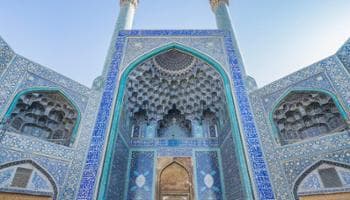
We take our first steps this morning in Ispahan, the Half of the World as it was nicknamed. After visiting the Chehel Sotoun Palace built by Shah Abbas II, we arrive at the jewel of the city, the heart of the metropolis, the vast Naqsh-e-Jahan Square. The eye doesn't know which architectural beauty of the Safavid period to turn towards: the Shah Mosque to the south, the Ali Qapou Palace to the west, the Sheikh Lotfallah Mosque to the east or the gate of the grand bazaar of Ispahan to the north.
Free evening to enjoy the charm of the places.
Visit to Isfahan (continued)
We continue our exploration of the city today and wander through the alleys discovering the splendors of the Jameh Mosque (the Friday Mosque or also Great Mosque of Isfahan) whose construction began over 1000 years ago, the amazing Shaking Minarets (Menar Jonban), tombs of the Sufi Amou Abdollah Soqla, as well as the Armenian Cathedral of Vank. Finally, we arrive at Si-o-se-pol, the "bridge of thirty-three arches" or also Allahverdi Khan Bridge, an arched double-level bridge spanning the Zayandeh River where the people of Isfahan like to stroll in the late afternoon.
The Natanz and Kashan region
On the northern route, we devote a good part of the day to the Natanz region, rich in historical heritage but also renowned for its climate and subsistence crops. Among the local sacred sites, we can mention the sanctuary of Sufi Sheikh Abd al-Samad dating from the 14th century.
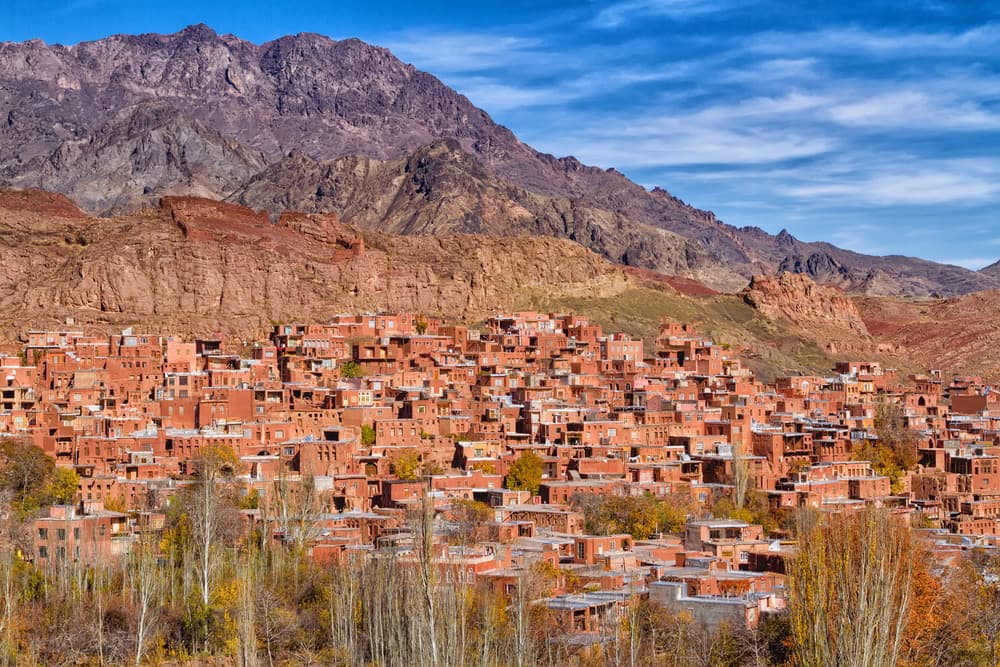
About forty kilometers west of Natanz, tucked at more than 2000m altitude in the Karkas mountains, lies one of the oldest and most beautiful villages in Iran, Abyaneh. Evidence from the Sassanid era is clearly visible here: ruins of an old fort, traditional clothing and local dialect steeped in remnants of the pahlavi language of the time.
Arrival in Kachan in the afternoon. This city with its rich architecture is also one of the great oases of the deserts in central Iran, and traces of human habitation date back to the 6th millennium BC. The city's remarkable buildings are relatively recent, particularly the magnificent traditional residences of the Tabatabaei and Boroudjerdi, which date from the Qajar era (19th century). The Fin Garden is the oldest garden in Iran.
Check-in at the hotel.

Discovery of Tehran
Early in the morning we head towards Tehran.
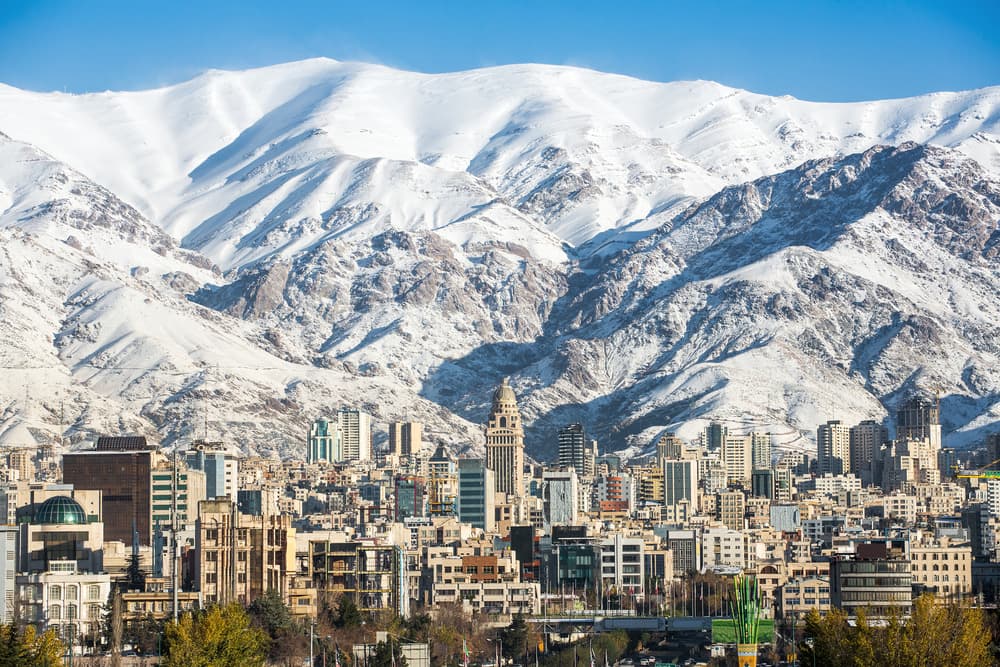
Without delay, we embark on our first discovery of Iran's capital. Given the city's legendary traffic jams, we travel by metro and taxi, which also gives us the opportunity to have our first encounters with Iranians. We visit the Carpet Museum where we discover the art of hand-woven Persian carpets, with more than a hundred magnificent pieces on display. We continue to the Sa'ad Abad complex, which houses gems of Iranian architecture: the palaces built in the 19th century by the Qajar monarchs and where notably the Pahlavi dynasty lived.
In the afternoon, we visit the Reza Abbasi Museum where we discover an exceptional collection of Persian art ranging from the 2nd millennium BC to the Islamic period. We continue to the Borj-e Milad tower, one of the tallest in the world at 435 meters, or even to the Pol-e Tabi-at (with additional charge), Iran's longest pedestrian bridge that overlooks one of the main thoroughfares in the northern part of the city.
Have a good trip!
We begin our day at the National Museum, which traces the rich history of the country from ancient Persia to the Islamic era. Ancient objects are numerous and testify to a flourishing past. The Golestan Palace, a former Qajar royal palace, is located in the citadel of Tehran, in the heart of the old city. Its superb architectural ensembles are arranged around a garden composed of pools and are filled with rich collections of Iranian craftsmanship. Our morning ends at the Grand Bazaar of Tehran. Bazaars (from old Persian vāzār) are true institutions here: people come to stroll, exchange, haggle, chat…
After lunch our final stop in the capital takes us to the National Museum of Crown Jewels, an absolutely stunning place that houses one of the greatest treasures in the world: jewels, precious stones, diamonds, … an absolutely unique collection of wonders gathered by the shahs.
Finally, we are transferred to the airport for our return international flight.
Price per person
Indicative price per person, based on double room. Each trip is customized according to your preferences.
This trip can be tailored to your preferences
This itinerary provides an excellent foundation for discovery, but it can be fully customized. Our local advisors build each trip tailored to your budget, dates and preferences.
Not included
- International flights
- Airport taxes & visa fees
- Lunches
- Beverages, personal expenses & tips
- Travel insurance & assistance
- Everything not indicated in the inclusions
Included
- Invitation Letter for Iranian Visa (or Authorization Number)
- Round-trip transfer from/to the airport
- Accommodations (mid-range 3*/4* class) with breakfasts
- Private vehicle and air-conditioned ground transportation
- The services of an experienced English-speaking guide throughout your stay
- The dinners
- All entrance fees
- An Iranian credit card
Practical Information
Registration is considered firm and final after payment of a deposit of 30% of the total price and acceptance of the specific terms of sale.
The balance must be paid no later than 45 days before the departure date.
See our specific terms of sale for full details.
In the event of cancellation by the traveller, the following fees apply:
- Plus de 60 jours avant le départ : 40 % du prix total (acompte retenu)
- Entre 60 et 30 jours avant le départ : 50 % du prix total
- Moins de 30 jours avant le départ : 100 % du prix total
We strongly recommend taking out cancellation insurance. See our specific terms of sale for full details.
The information below concerns travelers who are nationals of the European Economic Area (EEA), Switzerland, and Canada traveling to Iran for a tourist stay. Entry rules may change, and we recommend that you verify this information with the official authorities and consular services of your country before your departure.
Passport
To enter Iran, your passport must be valid for a minimum of six months after the date of entry into the country and must contain at least two blank pages for immigration stamps.
The document must be in good condition (no damaged, torn, or altered pages).
Holders of a passport bearing entry or exit stamps from Israel may be refused entry to Iranian territory.
Visa
Nationals of the European Economic Area, Switzerland, and Canada must in principle hold a valid visa to enter Iran. There is no generalized visa exemption for these nationalities.
Several options are available for obtaining a visa:
the visa on arrival (VOA), issued at certain international airports (notably Imam Khomeini Airport in Tehran), generally valid for 30 days, and extendable on site;
the electronic visa (e-visa), to be requested online before departure via the official Iranian authorities portal;
the consular visa, to be requested from the Iranian embassy or consulate in your country of residence.
The authorized length of stay is generally 30 days, with the possibility of extension through Iranian immigration services.
Please note: nationals of the United States, United Kingdom, and Canada are subject to specific restrictions and must generally conduct their visits as part of a guided tour led by an authorized guide. Canadian nationals are particularly advised to consult their government's recommendations before any travel.
Prior Authorization
In certain cases, a prior authorization issued by the Iranian Ministry of Foreign Affairs (authorization reference) is required before the visa can be granted, particularly for consular visa or e-visa applications. An authorization number is then provided by the Iranian embassy or via the online portal and must be presented upon arrival.
Health
No vaccination is mandatory to enter Iran from the EEA, Switzerland, or Canada. However, certain vaccinations are recommended as a preventive measure:
updating routine vaccinations (diphtheria, tetanus, poliomyelitis, measles);
vaccination against hepatitis A and hepatitis B is recommended;
vaccination against typhoid is advised depending on the areas visited.
It is recommended that you consult a doctor or international vaccination center before departure.
Traveling with Children
Minors must hold their own valid passport covering the duration of the stay.
When a minor travels without one of their parents, an authorization to leave the country may be required according to the regulations of the country of residence. Documents proving parental authority or custody of the child may also be requested by Iranian authorities.
Other Nationalities
Entry conditions may vary depending on nationality. Travelers concerned should inquire with the Iranian embassy or consulate in their country of residence.
To participate in our trips, it is strongly recommended to be covered for repatriation assistance and medical expenses abroad.
Your local agency encourages you to review the specific contract developed with our partners CHAPKA ASSURANCES and AXA ASSISTANCE.
To subscribe to insurance, learn about coverage and rates, follow the link below.
CAP EXPLORER: The comprehensive insurance solution designed for a worry-free trip!
Choose the plan that suits you best:
Explorer'Multirisque
Explorer'Annulation
Explorer'Assistance
Explorer' Complementary Credit Card Coverage
Specific to our trips, we strongly recommend subscribing to them.
If you choose to subscribe to one of these plans, the terms and conditions detailing all coverage and claim procedures are available on the insurer's website.
Your local agency will be aware of this, but only the participant is responsible for complying with claim notification procedures. The participant must therefore keep this terms and conditions document with them throughout their trip.
Frequently asked questions
A tourist visa is required and must be obtained through an approved agency with an official invitation letter. Your passport must be valid for at least 6 months and must not bear an Israeli stamp. The geopolitical context requires active vigilance: consult your government's official recommendations before booking. Also verify entry conditions applicable to your nationality with the consular authorities of your destination.
Go to the My Trips section to find all your projects.
You can send a message to your host directly from the Tea Lounge.
For a tailor-made quality trip, budget between €130 and €200 per day and per person, including accommodation, meals, internal transportation and English-speaking guide. International flights (€600-900 return) are additional. Foreign bank cards do not work: plan to bring euros in cash.
Your documents are accessible in the Documents tab of your trip.
Absolutely. We adapt each itinerary to the traveler's profile. For families, we prioritize relaxed paces, family-friendly accommodations, educational and engaging activities, and comfortable private transfers. Our local English-speaking guides know how to capture children's attention with age-appropriate anecdotes.
It's simple. You exchange with our local team to define your wishes, your budget and your dates. You receive a detailed itinerary proposal within 48 hours. You adjust together each detail until the perfect version. You confirm and set off with peace of mind. Your local agency remains available 7 days a week throughout your trip.
In case of emergency, contact your local agency immediately.
Payment is generally made in two installments.
Our agency is part of the Nomadays network, registered in France. You benefit from APST (Association Professionnelle de Solidarité du Tourisme) guarantee which covers 100% of your funds. Secure payment, repatriation insurance included, and English-speaking assistance 24/7 on the ground throughout your stay.
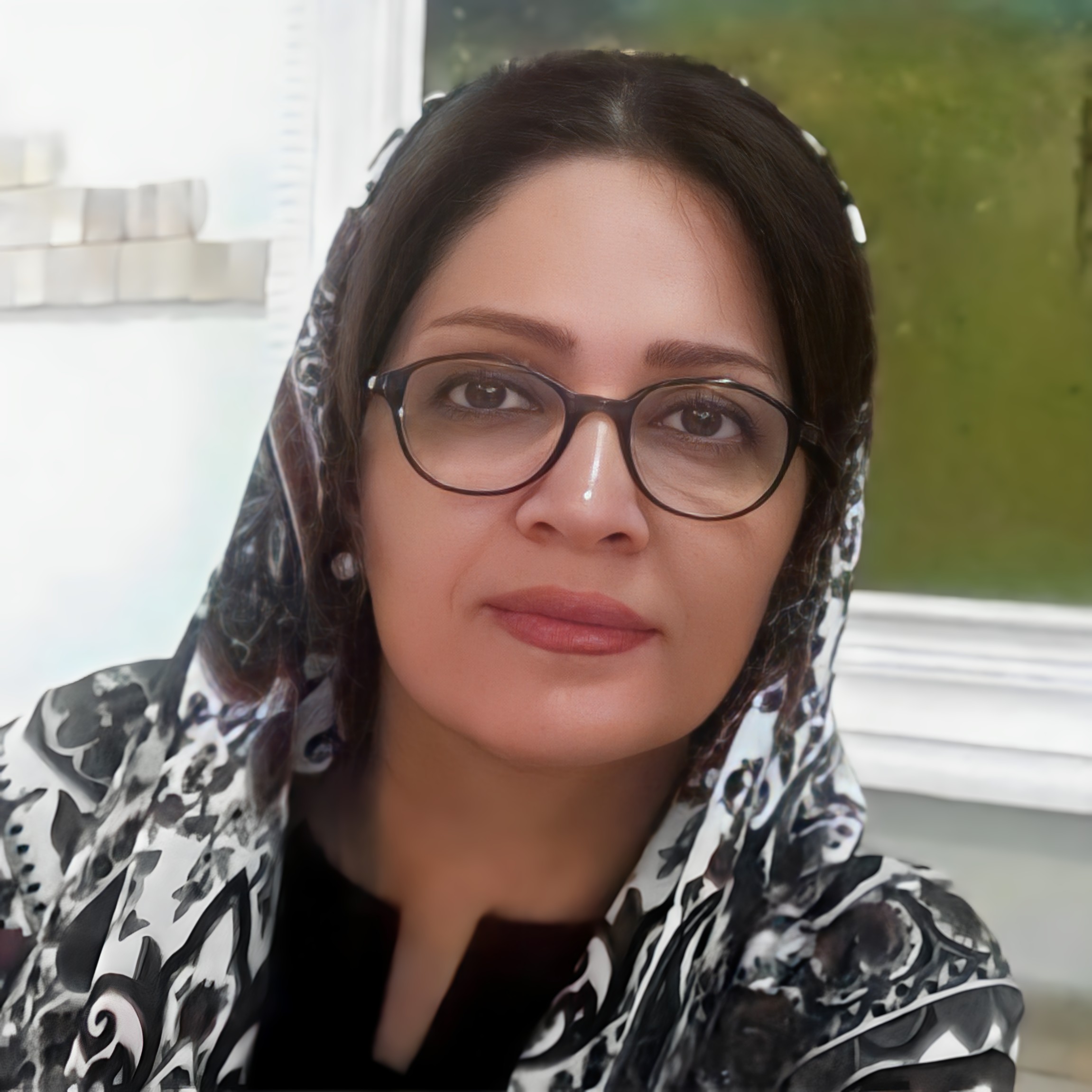
Let's talk about your adventure — South Shiraz
English-speaking Advisor, Persian Routes, based in Chiraz
Iran often surprises people with the warmth of its welcome. My role is to help travellers discover it with confidence, curiosity and openness.
— Afrooz